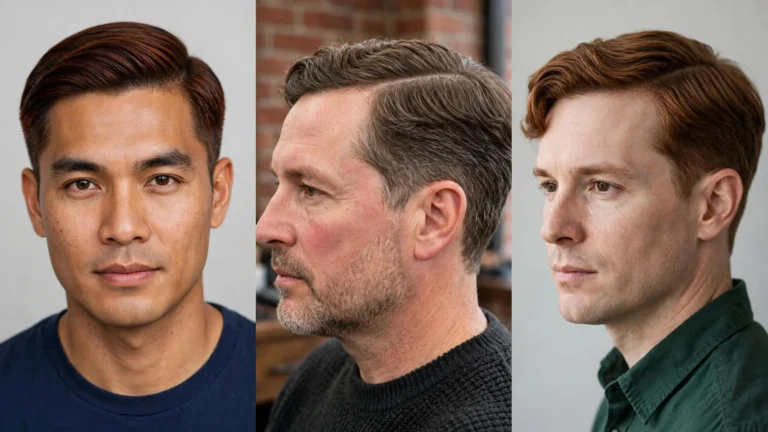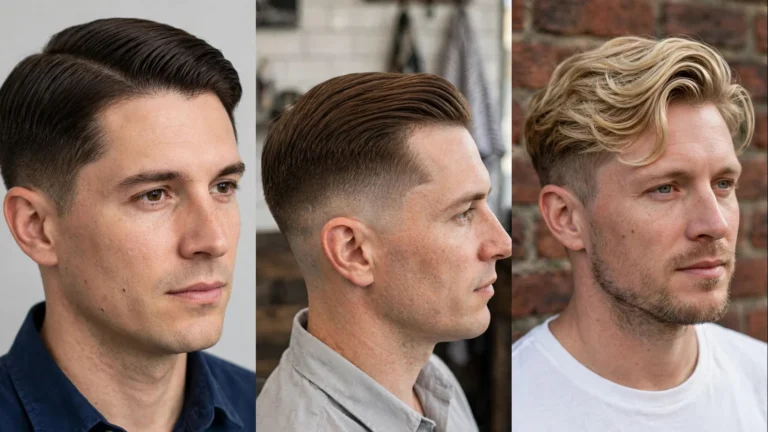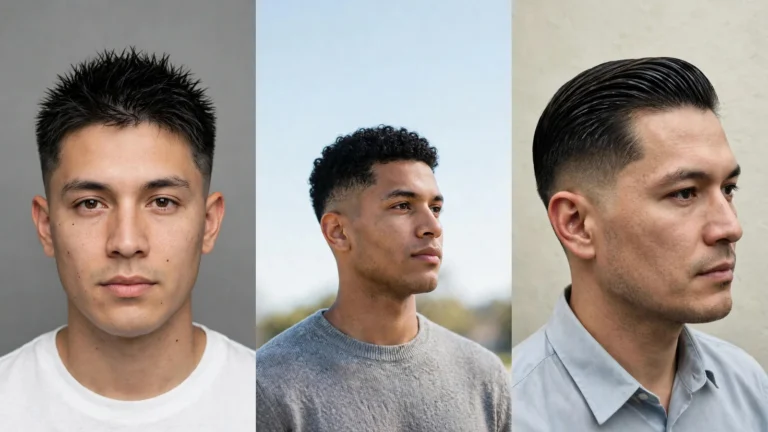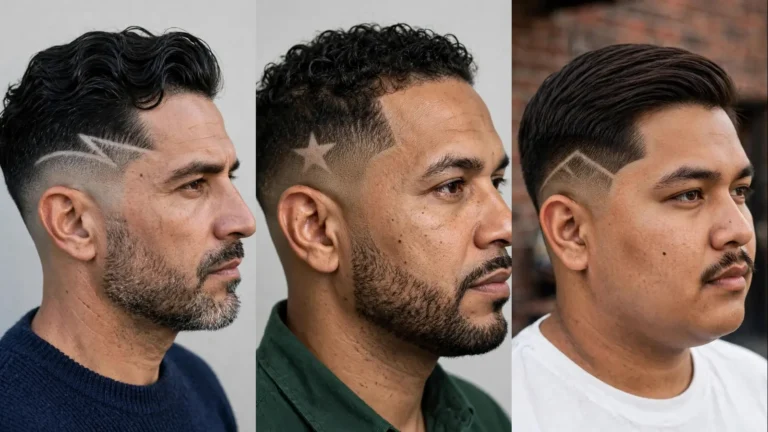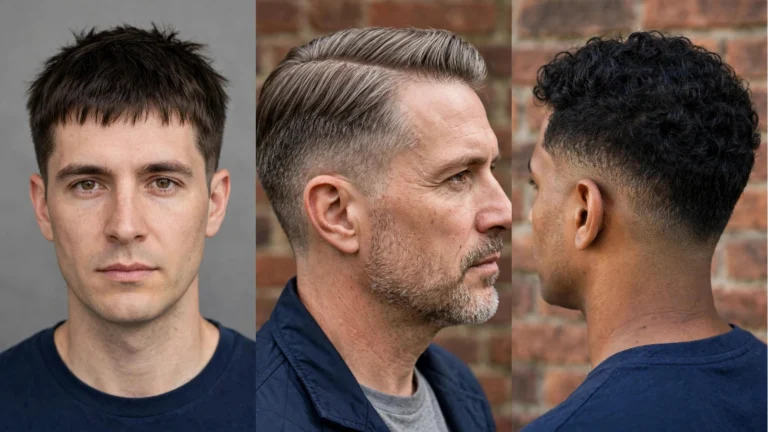
Short cuts go wrong when sides stay bulky while top length stays unclear. Low maintenance men’s haircuts keep top short, sides neat, and back clean. Straight, wavy, curly, and coily hair can suit short cuts with small changes in length. Short crops, side parts, buzz cuts, curls, and swept tops give plain daily choices. Shorter tops dry fast and need less combing, while longer tops need more care.
Trims every four to six weeks keep edges neat, because hair grows about half an inch each month. Choose by top length first, then by upkeep, then by how hair dries each morning.
Short Crew Cut

Top stays near half an inch and lies flat in one even layer. Sides shorten bit by bit down to ears, which keeps bulk away from temples. Back follows same short length and ends in a clean neckline. Hairline stays natural, with no hard line drawn across forehead. Finish looks matte and dry, with no shine or wet look. Length sets this cut apart from longer crops that need combing.
Ask barber for a number 4 guard on top and a number 2 guard on sides. Guard means a clipper guide that sets hair length. Keep sides short near ears, then blend up to top length. Style takes towel drying and a quick comb forward, with no product on most days. Straight and wavy hair hold shape well, while thick hair may need thinning at crown. Book a trim every four weeks, because short sides show growth fast.
Textured Crop Cut

Top runs about one inch long with choppy ends cut at varied lengths. Sides use a taper, which shortens hair bit by bit down toward ears. Back stays short and follows head shape without weight at neck. Hairline keeps a soft edge, with fringe pushed slightly forward. Texture comes from point cutting, where scissors snip into ends to break up lines. Choppy ends set this cut apart from smooth crops.
Name one inch on top and a taper on sides with a number 3 guard. Ask for choppy ends, not blunt ends, so top keeps movement. Rub a pea-sized amount of matte clay through damp hair, then push strands forward with fingers. Wavy and straight hair take texture well, while very fine hair needs less thinning. Trim every four to five weeks, because choppy ends lose shape as hair grows.
Classic Side Part

Part sits on one side, with top near two inches long and combed across. Sides shorten with a taper that keeps length near sideburns and neckline. Back stays neat and short, with hair combed down toward neck. Hairline follows natural part, with no shaved line added. Finish looks smooth and dry, with light hold from cream. Side sweep sets this cut apart from crops that push hair straight forward.
State two inches on top and a taper on sides, with part placed where hair falls. Use a comb to set part while hair stays damp, then add light cream for hold. Comb top across once, because over-combing pulls part out of place. Straight hair holds a part well, while wavy hair may need cream to stop lift at crown. Trim every four weeks, so part stays clear and sides stay neat.
Short Ivy League

Length runs near one and a half inches and sweeps to one side. Sides shorten with a taper that keeps some length near sideburns. Back stays short and clean, with hair combed down in a neat line. Hairline stays natural, with top brushed away from forehead. Finish looks smooth, with light shine from cream or none at all. Extra length sets this cut apart from crew cuts that sit flat.
Request one and a half inches on top and tapered sides. Ask for side sweep, not a flat top, so length shows at front. Comb damp hair to one side with a comb, then add light cream. Straight hair sweeps well, while thick hair may need thinning near crown to lie flat. Book a trim every four to five weeks, because top length starts to flop as it grows.
Tapered Buzz Cut

Sides taper down toward ears, while top stays very short and even, near one eighth inch. Top covers whole head in one even length, with clean edges. Back follows same length to a tapered neckline. Hairline stays natural, with no line drawn across forehead. Finish looks matte and even, with scalp showing slightly through short hair. Even length sets this cut apart from fades that blend down to skin.
Low maintenance men’s haircuts include this even buzz, which needs no styling at all. Ask barber for a number 1 guard on top and a taper on sides and back. Wash and towel dry, then leave hair as it dries, because no styling is needed. Coily, curly, straight, and wavy hair all take this cut, with coily hair showing clean edges. Trim every three weeks, because very short hair shows growth fast at neckline.
Caesar Cut Short

Fringe runs about one inch long and brushes straight forward toward forehead. Sides shorten with a taper that keeps length near sideburns. Back stays short and even, with no weight at neckline. Hairline forms a straight edge across forehead, with fringe covering it. Finish looks matte, with fringe lying flat and even. Forward fringe sets this cut apart from crops that push hair up or back.
Give barber one inch on top and ask for fringe brushed forward. Ask for a straight hairline, not a curved one, so fringe sits even. Comb damp fringe forward with fingers, then let it dry, because no product is needed on most days. Straight hair lies flat well, while wavy hair may need a light cream to stop fringe lifting. Trim every four weeks, so fringe stays above brows and sides stay neat.
Short Quiff Taper
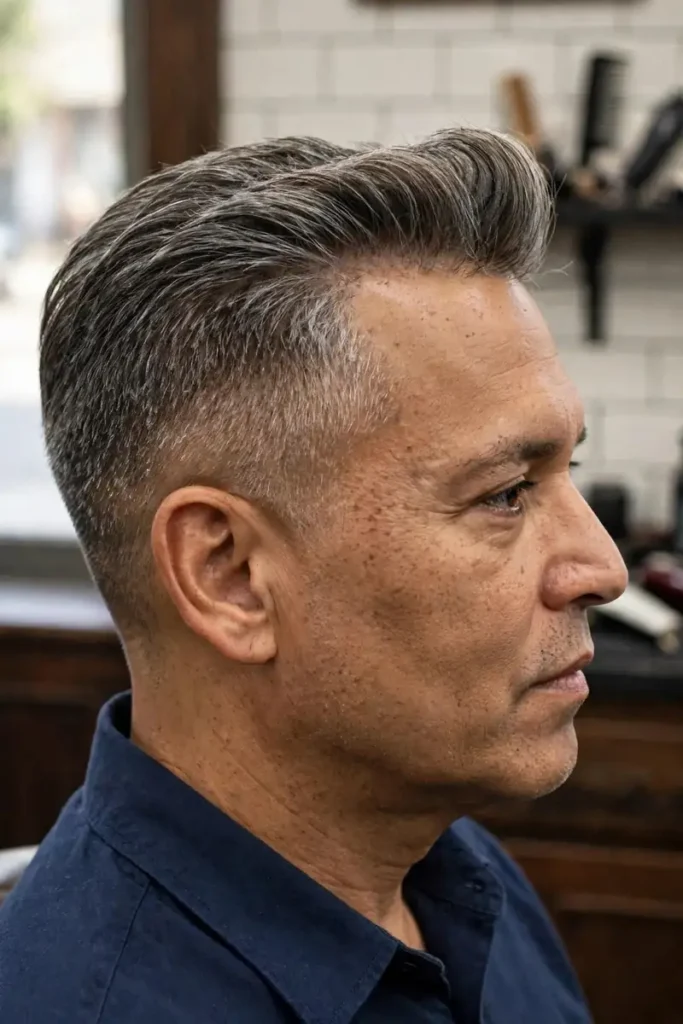
Front lifts near two inches high and sweeps up and back. Sides shorten with a taper that keeps length near sideburns and neckline. Back stays short and combed down, with no lift at crown. Hairline shows a clear front edge, with quiff rising just behind it. Finish holds a soft lift, with matte clay giving hold without shine. Raised front sets this cut apart from flat crops that stay low.
Keep two inches at front and shorter length toward crown. Tell barber to taper sides, not fade them to skin. Blow dry front up with a brush, then work matte clay through damp hair for hold. Straight hair lifts well, while wavy hair needs more clay to hold shape. Trim every four weeks, because front length starts to fall forward as it grows.
Brushed Back Crop

Hair runs near two inches long and brushes straight back from forehead. Sides shorten with a taper that keeps some length near sideburns. Back stays short and combed down toward neckline. Hairline stays open, with hair pulled back to show forehead. Finish looks smooth, with light cream giving hold and slight shine. Back direction sets this cut apart from side parts that sweep across.
Comb damp hair straight back, then add light cream for hold. Tell barber to leave two inches on top and taper sides short. Use fingers to lift roots while drying, because flat roots make top look thin. Wavy and straight hair brush back well, while curly hair needs more length to stay back. Trim every four to five weeks, so back length stays under control.
French Crop Short

Fringe runs about one inch long and pushes forward with choppy ends. Sides use a fade, which blends hair shorter toward skin near ears. Back stays short and fades down to a clean neckline. Hairline keeps a straight edge, with fringe covering forehead. Finish looks matte and textured, with ends standing slightly apart. Short fringe sets this cut apart from Caesar cuts that lie smooth and even.
Choose one inch on top and a low fade on sides. Low fade starts just above ears, so blend stays low. Rub matte clay through damp hair, then push fringe forward with fingers. Straight hair takes choppy ends well, while thick hair may need thinning at fringe. Trim every three to four weeks, because fades lose their blend as hair grows.
Wavy Top Taper

Wave runs near two inches long and keeps natural shape across whole top. Sides shorten with a taper that keeps length near sideburns and neckline. Back stays short and follows wave direction down toward neck. Hairline stays natural, with wave falling softly near forehead. Finish looks matte, with wave shape showing without heavy product. Natural wave sets this cut apart from straight crops that lie flat.
Cut top to two inches and taper sides with scissors, not clippers alone. Ask barber to cut with wave direction, so shape stays even. Scrunch sea salt spray through damp hair, then let hair air dry. Wavy hair holds shape well, while straight hair needs spray to add bend. Trim every five weeks, because wave grows out more gently than a fade.
Curly Top Taper
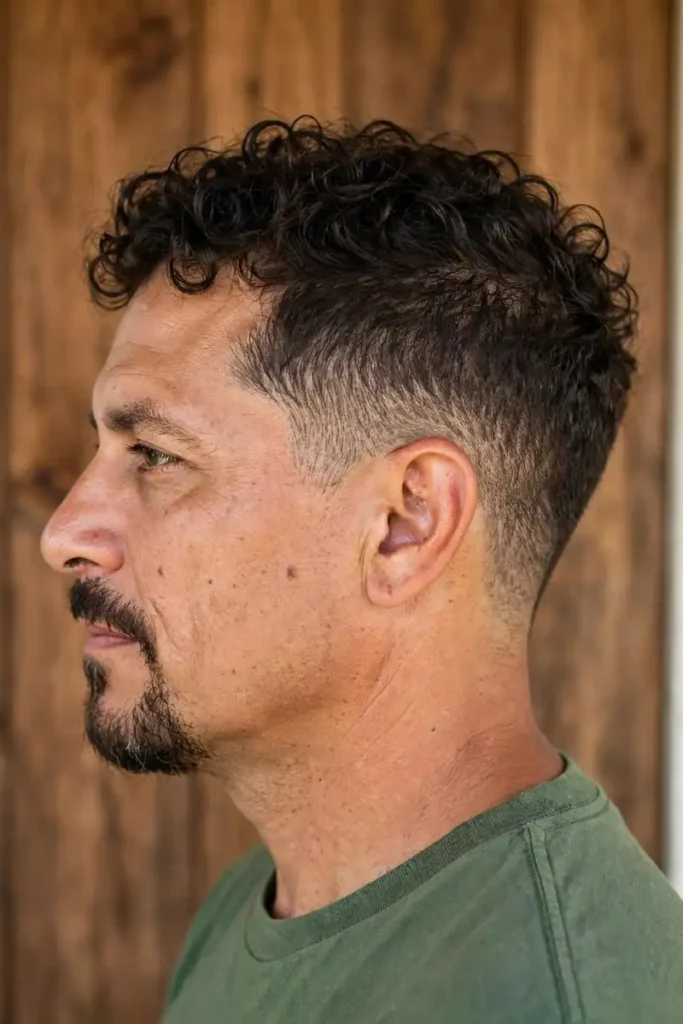
Curls run near two inches long on top and form soft coils across crown. Sides shorten with a taper that keeps length near sideburns. Back stays short and follows curl pattern down toward neckline. Hairline stays natural, with curls falling near forehead. Finish looks matte, with curl shape clear and ends soft. Curl length sets this cut apart from buzz cuts that hide curl shape.
Leave two inches of curl on top and taper sides. Tell barber to cut curls dry or damp, but never pull them straight first. Apply light cream to damp curls, then scrunch gently with hands. Curly hair holds shape well, while wavy hair needs more length to form curls. Trim every five weeks, because curls grow out gently and keep shape longer.
Coily Short Taper

Coils run near one inch long on top and form tight curls across crown. Sides shorten with a taper and clean edges near temples and neckline. Back stays short and follows coil pattern down toward neck. Hairline keeps a clean edge, with coils starting just behind it. Finish looks matte, with coil definition clear and ends soft. Tight coils set this cut apart from loose curls that fall longer.
Shape coils with light cream on damp hair, then use a soft brush. Ask barber for one inch of coil on top and a taper on sides. Tell barber to keep edges clean, not rounded, so shape stays sharp. Coily hair holds shape well with moisture, while dry coils may need cream each morning. Trim every three to four weeks, because edges blur fast as hair grows.
Slicked Back Taper

Sweep runs near two inches long and combs straight back from forehead. Sides shorten with a taper that keeps length near sideburns and neckline. Back stays short and combed down, with no weight at neck. Hairline stays open, with hair pulled back to show forehead. Finish looks smooth, with pomade giving hold and light shine. Back sweep sets this cut apart from brushed back crops that use less hold.
Smooth damp hair back with a comb, then add pomade for hold. Tell barber to leave two inches on top and taper sides short. Use a small amount first, because too much pomade makes hair look wet. Straight hair slicks back well, while thick hair may need thinning to lie flat. Trim every four weeks, so sides stay neat and top keeps shape.
Short Spiky Crop

Spikes run near one inch long and stand up across crown. Sides shorten with a taper that keeps length near sideburns. Back stays short and even, with no spikes at crown. Hairline keeps a soft edge, with spikes rising just behind forehead. Finish looks matte, with spikes holding shape through day. Raised spikes set this cut apart from flat crops that lie down.
Pinch ends up with matte clay after towel drying damp hair. Ask barber for one inch on top and a taper on sides. Add texture at ends, so spikes form with ease. Rub matte clay through damp hair, then pinch ends up with fingers. Straight hair spikes well, while wavy hair needs more clay to hold lift. Trim every four weeks, because spikes lose shape as top grows longer.
Messy Textured Top

Pieces fall in loose, uneven strands near two inches long. Sides shorten with a taper that keeps length near sideburns and neckline. Back stays short and follows head shape without weight. Hairline stays natural, with pieces falling softly near forehead. Finish looks matte, with strands moving in varied directions. Uneven pieces set this cut apart from neat crops that sit in one line.
Push strands in varied directions with matte clay through damp hair. Tell barber to leave two inches on top and add texture through ends. Ask for a taper on sides, not a fade, so grow-out stays soft. Rub matte clay through damp hair, then push strands in varied directions. Wavy hair takes this shape well, while straight hair needs clay to stop pieces falling flat. Trim every five weeks, because texture grows out gently.
High And Tight
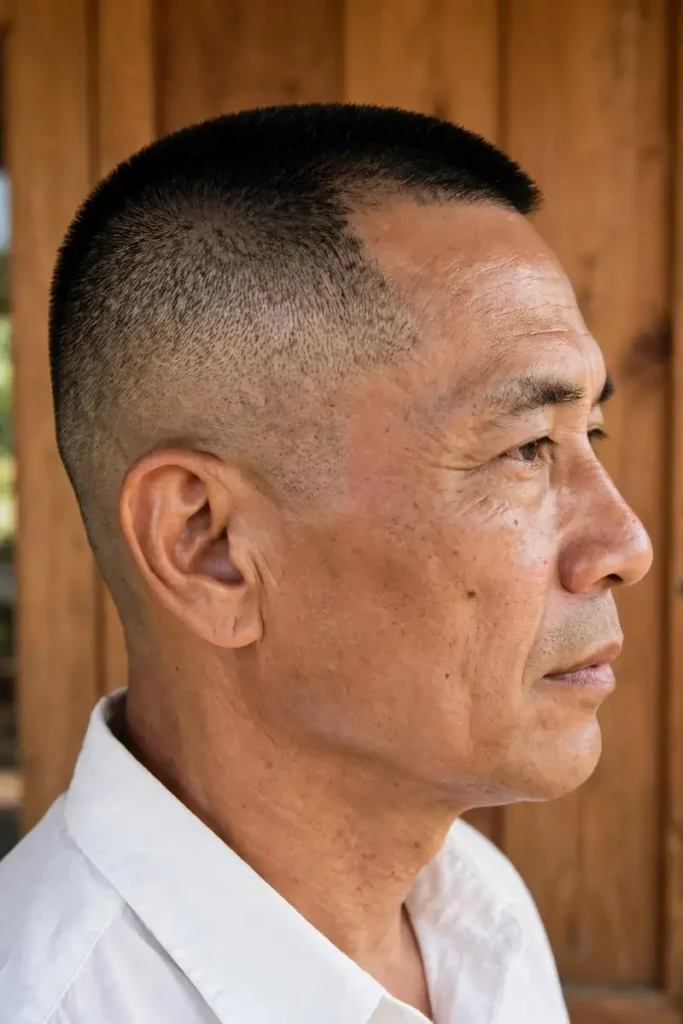
Contrast stays strong, with top near half an inch across crown. Sides use a high fade, which starts high on sides toward crown and blends to skin. Back follows same high fade down to a clean neckline. Hairline stays natural, with short top meeting faded sides. Finish looks matte and even, with strong contrast between top and sides. High blend sets this cut apart from low fades near ears.
Wash and towel dry, then leave hair as it dries, because no styling is needed. Ask barber for a number 2 guard on top and a high fade on sides. High fade starts higher on sides toward crown, so blend sits high. Straight, wavy, and coily hair all take this cut, with coily hair showing clean edges. Trim every two to three weeks, because fades look softest after two to three weeks.
Short Comb Over

Part sits clear on one side, with top near two inches long combed across. Sides shorten with a taper that keeps length near sideburns. Back stays short and combed down toward neckline. Hairline follows part, with top sweeping across forehead. Finish looks smooth, with light cream giving hold. Clear part sets this cut apart from side sweeps that lack a set part line.
Set part on left or right, with two inches on top and tapered sides. Comb damp hair from part across crown, then add light cream. Use a comb, not fingers, because comb keeps part line clear. Straight hair holds a comb over well, while wavy hair may need cream to stop lift. Trim every four weeks, so part stays clear and sides stay neat.
Short Flat Top

Level top runs near one inch long and forms a flat surface across crown. Sides shorten with a taper that keeps edges straight and clean. Back stays short and follows level shape down toward neck. Hairline keeps a straight edge, with flat top rising just behind it. Finish looks matte, with top brushed up and even. Level top sets this cut apart from rounded crops that follow head curve.
Brush damp hair up with a brush, then add matte clay for hold. Tell barber to leave one inch on top and cut top level, not rounded. Ask for tapered sides with straight edges. Coily and curly hair hold a flat top well, while straight hair needs clay to stand up. Trim every three weeks, because level shape blurs fast as hair grows.
Side Swept Taper

Sweep moves to one side with soft movement, near two inches long on top. Sides shorten with a taper that keeps length near sideburns and neckline. Back stays short and combed down toward neck. Hairline stays natural, with top falling across forehead. Finish looks matte, with sweep showing light movement. Soft sweep sets this cut apart from comb overs that use a hard part.
Move damp hair to one side with a comb, then add light cream for hold. Ask barber for two inches on top and a taper on sides. Keep sweep soft, not slicked down, so movement stays. Comb damp hair to one side, then add light cream for hold. Wavy hair sweeps well, while straight hair may need cream to stop sweep falling flat. Trim every four to five weeks, because sweep grows out gently.
Tapered Pompadour Cut

Roll rises near two inches high and sweeps back from forehead. Sides shorten with a taper that keeps length near sideburns. Back stays short and combed down, with no lift at crown. Hairline shows a clear front edge, with pompadour rising behind it. Finish holds soft height, with pomade giving hold and light shine. Rolled front sets this cut apart from quiffs that lift straight up.
Dry front up and back with a brush, then add pomade. Ask barber for two inches at front and shorter length toward crown, with sides tapered, not faded. Straight hair rolls well, while wavy hair needs more pomade to hold shape. Use a brush, not fingers, because brush keeps roll even. Trim every four weeks, because front height falls as hair grows longer.
Short Faux Hawk

Ridge runs near one inch high down middle of head. Sides shorten with a taper that keeps length near sideburns. Back stays short and follows ridge down toward neck. Hairline keeps a soft edge, with ridge rising just behind forehead. Finish looks matte, with ridge holding shape through day. Centre ridge sets this cut apart from spikes that point in varied directions.
Form centre ridge with matte clay, then push centre up with fingers. Ask barber for one inch down centre and a taper on sides. Keep ridge short, not tall, so shape stays plain. Straight hair holds a ridge well, while thick hair needs thinning at sides. Trim every three to four weeks, because ridge loses shape fast as sides grow.
Short Shag Cut

Layers fall in varied directions, near two inches long on top. Sides shorten with a taper that keeps some length near ears. Back stays layered and short, with ends falling unevenly toward neck. Hairline stays natural, with layers falling near forehead. Finish looks matte, with layers showing movement. Layered ends set this cut apart from blunt crops that end in one line.
Rub light cream through damp hair, then let hair air dry. Tell barber to leave two inches on top and add layers through ends. Ask for a taper on sides, so length stays near ears. Rub light cream through damp hair, then let hair air dry. Wavy hair takes layers well, while straight hair needs cream to show movement. Use fingers to separate layers, because fingers keep ends soft. Trim every five to six weeks, because layers grow out gently.
Short Layered Cut

Crown holds short layers near two inches long across top. Sides shorten with a taper that keeps length near sideburns. Back stays layered and short, with ends blending down toward neck. Hairline stays natural, with layers falling softly near forehead. Finish looks matte, with layers adding lift at crown. Short layers set this cut apart from shag cuts that fall longer near ears.
Lift crown with light cream on damp hair, then comb forward. Ask barber for two inches on top with short layers through crown. Tell barber to taper sides, not fade them. Comb damp hair forward, then add light cream for lift. Fine hair gains lift from layers, while thick hair may need thinning to stop bulk. Use a vent brush while drying, because brush lifts roots at crown. Trim every five weeks, because layers lose lift as hair grows.
Short Military Crop

Even length stays near half an inch across whole head. Sides use a short fade that blends down toward skin near ears. Back follows same short length and ends in a clean neckline. Hairline stays natural, with no line drawn across forehead. Finish looks matte and even, with no styling needed. Even short length sets this cut apart from crew cuts that leave more top.
Rinse and towel dry, then leave hair as it dries, because no product is needed. Ask barber for a number 2 guard on top and a short fade on sides. Short fade blends down toward skin near ears. Straight, wavy, curly, and coily hair all take this cut. Trim every three weeks, because very short sides show growth fast at neckline.
Grey Blended Taper
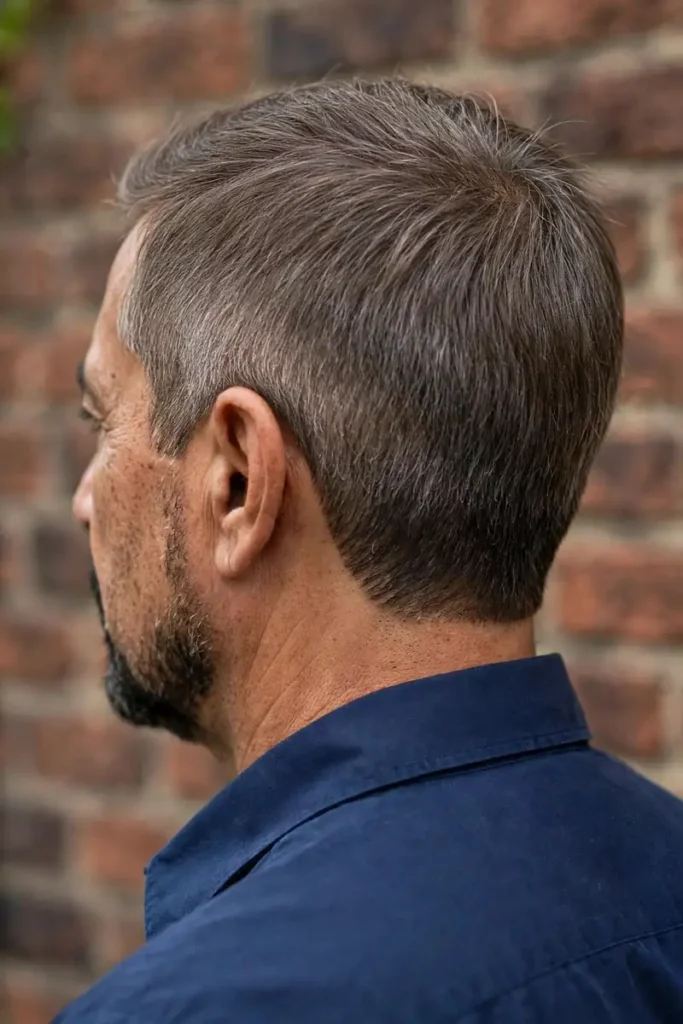
Grey strands mix with dark strands, near one and a half inches long on top. Sides shorten with a taper that blends grey through sides toward ears. Back stays short and follows blend down toward neckline. Hairline stays natural, with grey showing near temples. Finish looks matte, with grey blend softening contrast. Grey blend sets this cut apart from dark tapers that show one tone.
Low maintenance men’s haircuts suit grey hair well when taper blends tones at sides. Ask barber for one and a half inches on top and a taper on sides. Tell barber to blend grey, not cover it, so tones mix. Comb damp hair to one side, then add light cream. Straight and wavy grey hair blend well, while very dark hair may show more contrast. Trim every four to five weeks, because blend softens as hair grows.
Short cuts work when length, sides, and upkeep match daily life, work hours, and weekend plans. Ask for top length in inches first, then name side length, so barber hears clear numbers. Low maintenance men’s haircuts reward steady trims more than daily styling effort. Use matte clay on short tops and light cream on wavy tops, because each holds shape without weight. Wash hair, towel dry, then comb top once, which keeps mornings plain and quick. Bring one photo to next visit and state top length first, then side length and finish.
About Me
Hi, I am Beck, the voice behind Hairzaa. I share simple, real-life hairstyles, cuts and color ideas that busy women can actually do, because confidence starts in the morning mirror. Every style here is tested in real life first, so you can look beautiful without the fuss.