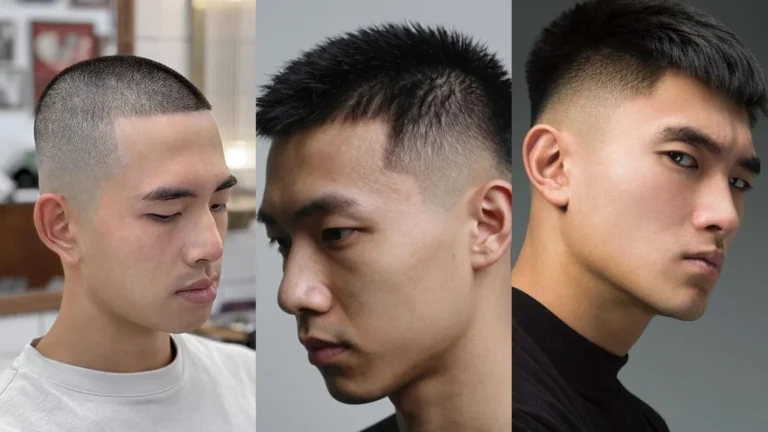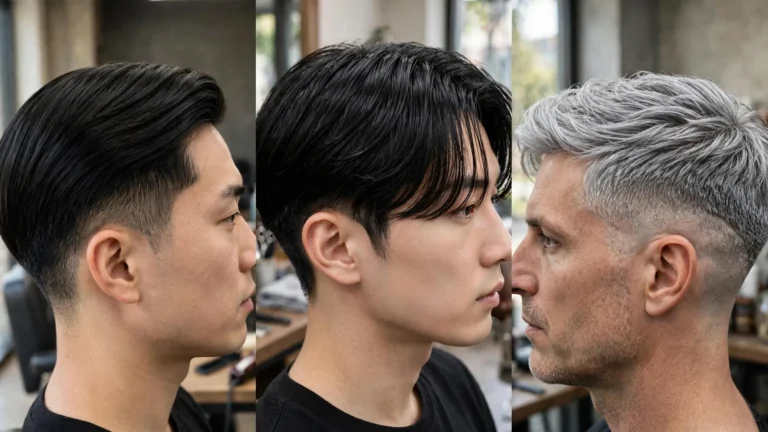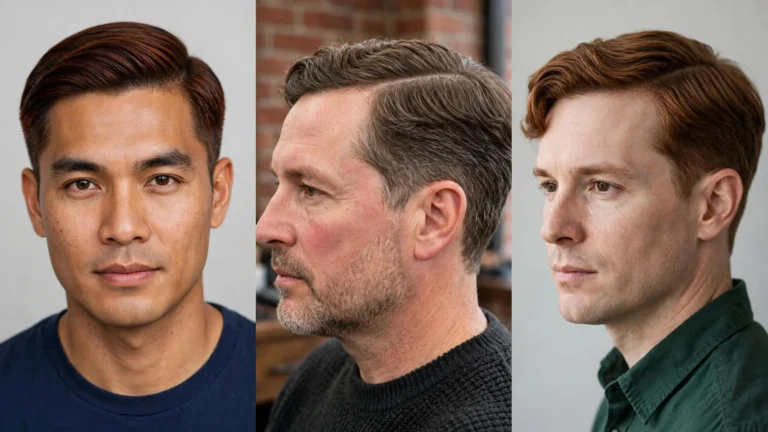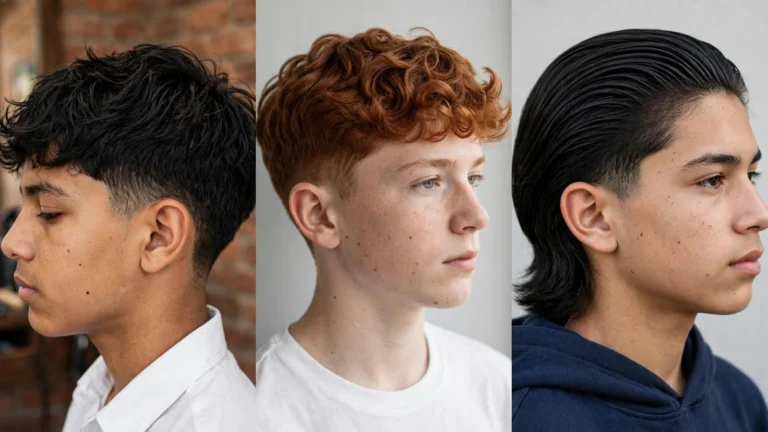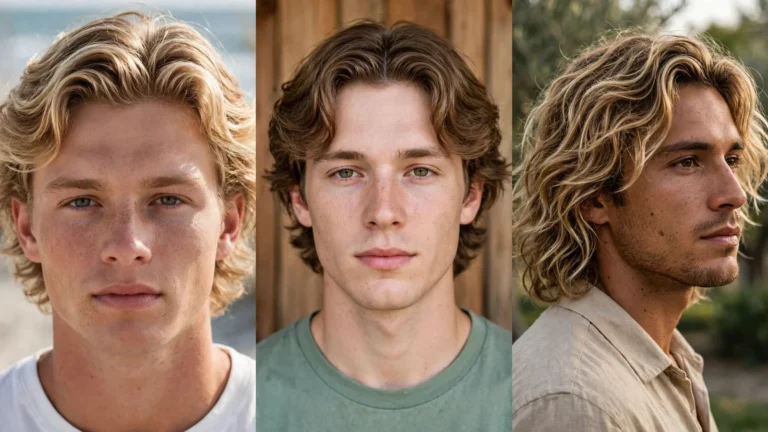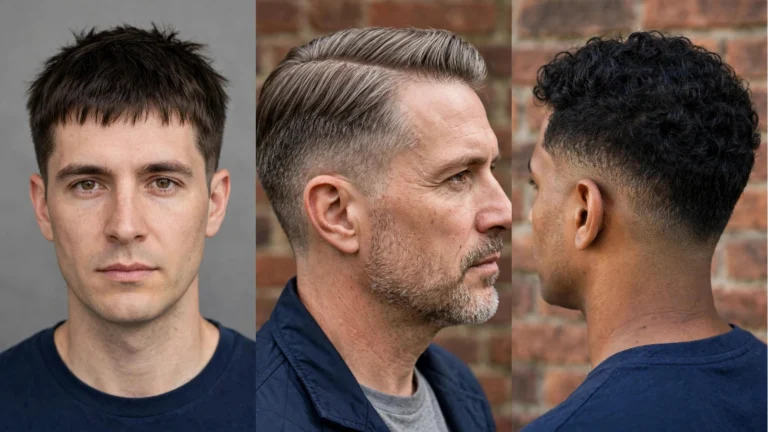
Coily tops lose shape fast when sides stay heavy and edges blur after two weeks. Edges need fresh work first. Fade haircuts for black men keep coily length on top, with sides blended short and back kept neat. Tight coils and loose curls hold these shapes well. Fine strands need more length for the same volume.
Choices run from short sponge coils to tall high tops. Twists, waves, and curls add more range, with low, mid, and high blends. Pick top length first, then blend height, then edge shape, because length decides daily care.
Coily High Top Fade
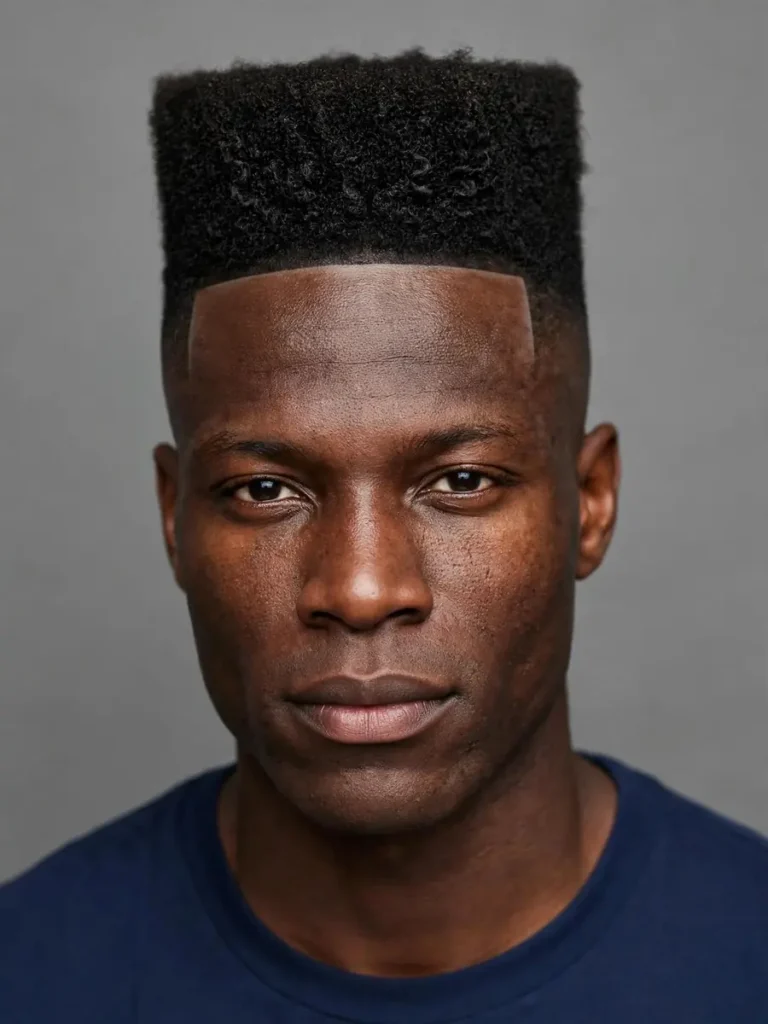
Coily hair rises about two inches on top, with a flat squared shape. Fade means hair blends shorter toward skin, and this blend starts high. Sides shorten bit by bit down to bare skin near the temples. Back follows the same high blend down to a clean neckline. Hairline keeps a straight edge, while the matte finish shows each coil. Tall shape sets it apart from short high tops.
Tell the barber to keep two inches on top and fade sides high to skin. Use a soft brush on damp coils, then add a pea-sized amount of light cream for definition. Soft brushing keeps coils defined, because hard brushing breaks coil shape apart. Coily hair holds this height well with moisture, while dry coils need cream each morning. Trim every three to four weeks, because edges blur fast as hair grows.
Twist Out Low Fade

Sides blend short just above the ears, while twists sit about an inch and a half on top. Twists separate into defined pieces, with curls at the ends that spring outward. Back follows the same low blend down to a tapered neckline. Hairline stays natural, with no hard line drawn across the forehead. Matte finish keeps twists soft. Low blend sets this cut apart from mid blends.
Rub light cream through damp twists, then let hair air dry without touching it. Air drying keeps twist shape, because heat and brushing break twists apart. Coily hair holds twists well with moisture, while looser curls may need more cream. Trim every four to five weeks, because twists lose shape as hair grows. Variation with shorter sides keeps twists as the focus, so sides stay calm.
Sponge Coil Skin Fade

Small sponge coils cover the top at about half an inch. Sides blend all the way to bare skin, which gives strong contrast with the coily top. Back follows the same skin blend down to a sharp, clean neckline. Hairline keeps a line-up, which means a straight edge cut along the hairline. Bare sides set this cut apart from tapers.
Use a sponge tool on damp hair in small circles, then add light cream for moisture. Circles form coils, because the sponge twists strands into small rings. Coily hair forms sponge coils fast, while looser curls need more passes with the sponge. Trim every two to three weeks, because skin blends show growth fast at the sides. Mistake to avoid is pressing too hard, which flattens coils instead of forming them.
Short Afro Burst Fade

Rounded afro shape sits about an inch on top, with coils that lift evenly. Burst fade means the blend arcs around the ear in a half circle. Sides shorten toward skin at the arc, while back keeps more length behind the ear. Hairline keeps a clean edge, and neckline ends in a soft tapered shape. Arc shape sets this cut apart from drop fades.
Name a burst blend round the ear, so the barber arcs the fade instead of dropping it. Work light cream through damp coils with fingers, then let hair air dry. Coily hair holds the rounded shape well, while fine coils may need cream each morning. Trim every three weeks, because arcs show growth fast at the sides. Mistake to avoid is blending the back too short, which removes length that makes the burst shape clear.
Defined Curl Drop Fade
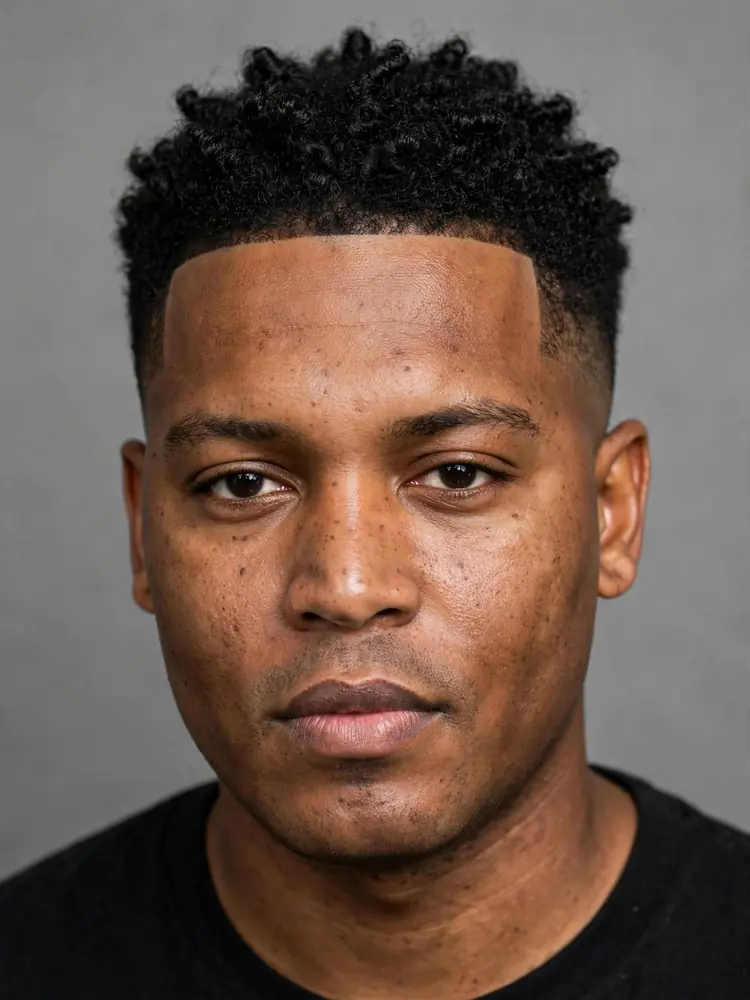
Defined curls sit about an inch on top, with each curl forming a clear ring. Drop fade means the blend curves down behind the ear, lower at the back than at the sides. Sides shorten toward skin near the temples, while back follows the curve down. Hairline keeps a straight edge, and neckline ends in a clean tapered shape. Curved blend sets this cut apart from straight fades.
Scrunch light cream through damp curls with fingers, then let hair air dry. Fade haircuts for black men keep curl definition best when strands stay moist. Cream goes on damp hair, so definition holds. Curly hair holds this shape best. Wavy hair needs more length for the same curl. Trim every four weeks, because curls grow out gently and keep shape longer. Mistake to avoid is cutting curls wet and short. Dry curls spring up shorter than planned.
360 Waves High Fade
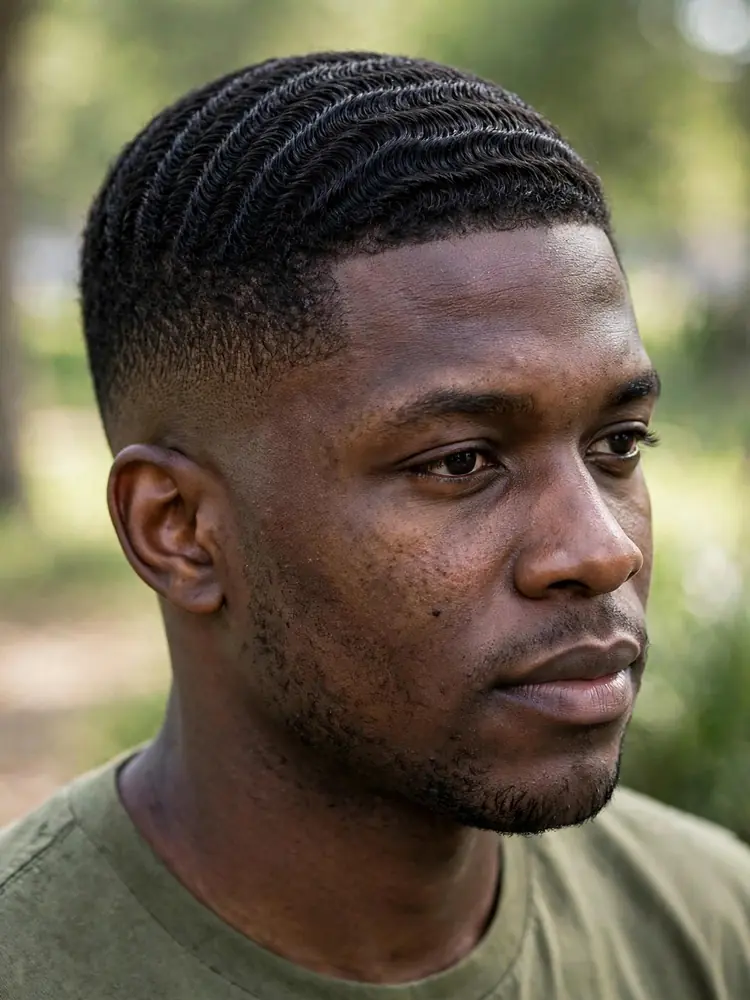
Rippled waves cover the top in neat rows, with hair brushed flat in a circular pattern. High fade starts high on the sides toward the crown and blends to skin. Sides shorten fast down to bare skin, while back follows the same high blend. Hairline keeps a straight edge, with waves meeting the forehead in a clean curve. Wave pattern sets this cut apart from coil tops.
Brush damp hair forward with a soft brush. Add a pea-sized amount of pomade for hold. Pomade adds hold, because waves need weight to stay flat through the day. Coily hair forms waves well with daily brushing, while looser hair needs more brush time. Trim every two weeks, because high blends show growth fast at the sides. Variation with a low blend keeps waves as the focus, so sides stay calm.
Curly Top Temple Fade

Loose curls sit about an inch and a half on top, with soft spirals across the crown. Temple fade means the blend sits only at the temples and sideburns, then stops. Sides below the temples keep more length, while back stays short and even. Hairline follows the curl pattern, and neckline keeps a soft tapered edge. Small blend area sets this cut apart from full fades.
Name a temple blend and a curly top, so the barber fades only at the temples. Work light cream through damp curls, then scrunch upward with fingers. Scrunching lifts curls, because cream adds definition without weight. Curly hair holds this shape well, while coily hair needs more cream for the same definition. Trim every three to four weeks, because temple blends blur fast as hair grows.
Two Strand Twist Fade
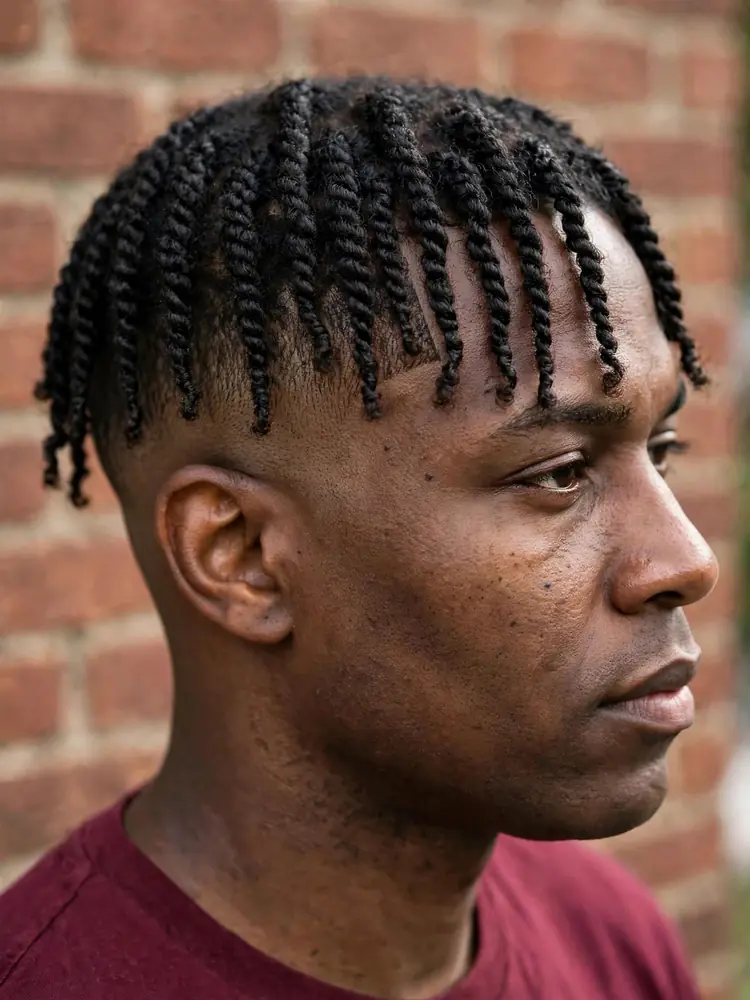
Two strand twists hang forward on top at about two inches. Each twist forms from two strands wound together. Mid fade starts around the temples and blends to skin. Sides shorten bit by bit down to bare skin, while back follows the same blend. Hairline keeps a straight edge, with twists starting just behind the forehead. Hanging twists set this cut apart from twist-outs that separate into loose curls.
Twist damp hair in pairs from root to end, then add light cream for moisture. Cream keeps twists soft, because dry twists pull apart at the ends. Coily hair holds two strand twists well, while fine hair may need smaller twists. Trim every four to five weeks, because twists hide growth well. Mistake to avoid is twisting too tight at the roots, which pulls the scalp and loosens the twist.
Finger Coil Mid Fade

Small finger coils cover the top at about an inch, with each coil wound round one finger. Mid fade starts around the temples and blends to skin near the ears. Sides shorten bit by bit, while back follows the same blend down to a clean neckline. Hairline keeps a straight edge, and matte finish shows each coil clearly. Finger wound coils set this cut apart from sponge coils.
Wind small sections round one finger on damp hair, then add light cream for definition. Finger winding shapes coils, because each strand follows the same curl. Coily hair holds finger coils well with moisture, while dry coils may need cream each morning. Trim every three to four weeks, because edges blur fast as hair grows. Variation with a low blend keeps coils as the focus, so sides stay calm.
Tapered Fro Shape-Up
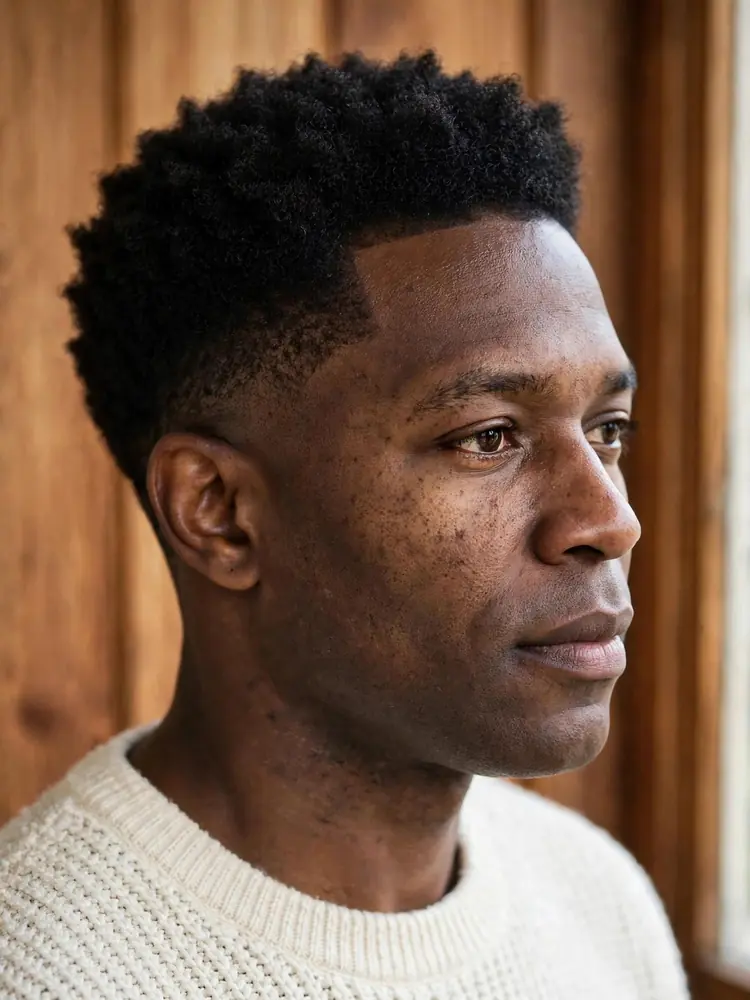
Tapered afro sits about an inch and a half on top. Taper means sides shorten bit by bit and keep length at the sideburns and neckline. Sides taper short, while back follows the taper to a soft edge. Shape-up means a straight edge cut along the hairline, temples, and sideburns. Soft taper sets this cut apart from skin fades that blend all the way to bare skin.
Ask for a taper, not a skin fade, so sideburns keep some length. Pick coils up with a wide tooth comb, then add light cream for moisture. Wide teeth lift coils, because narrow teeth pull strands apart. Coily hair holds the rounded shape well, while fine coils may need more cream. Trim every three to four weeks, because tapers grow out more gently than skin fades.
Afro Puff Low Fade
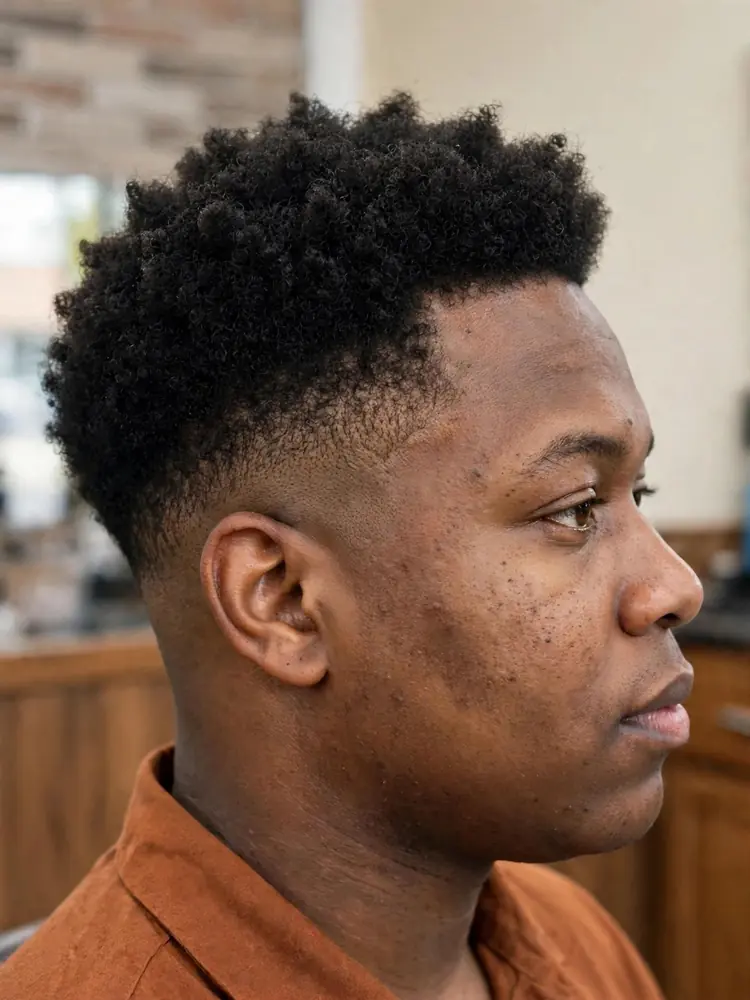
Soft afro puff sits about an inch on top, with coils that lift into a rounded cloud shape. Low fade starts just above the ears and blends to skin. Sides shorten bit by bit, while back follows the same low blend down to a tapered neckline. Hairline stays natural, with no hard line drawn across the forehead. Low blend sets this cut apart from high fades.
Pick the puff up with a wide tooth comb, then add light cream for moisture and shape. Cream adds moisture, because dry coils lose volume and fall flat. Coily hair holds the puff shape well, while looser curls need more length for the same lift. Trim every four weeks, because the puff grows out gently. Mistake to avoid is combing the puff dry, which breaks coil definition and adds frizz.
Wavy Coil Mid Fade
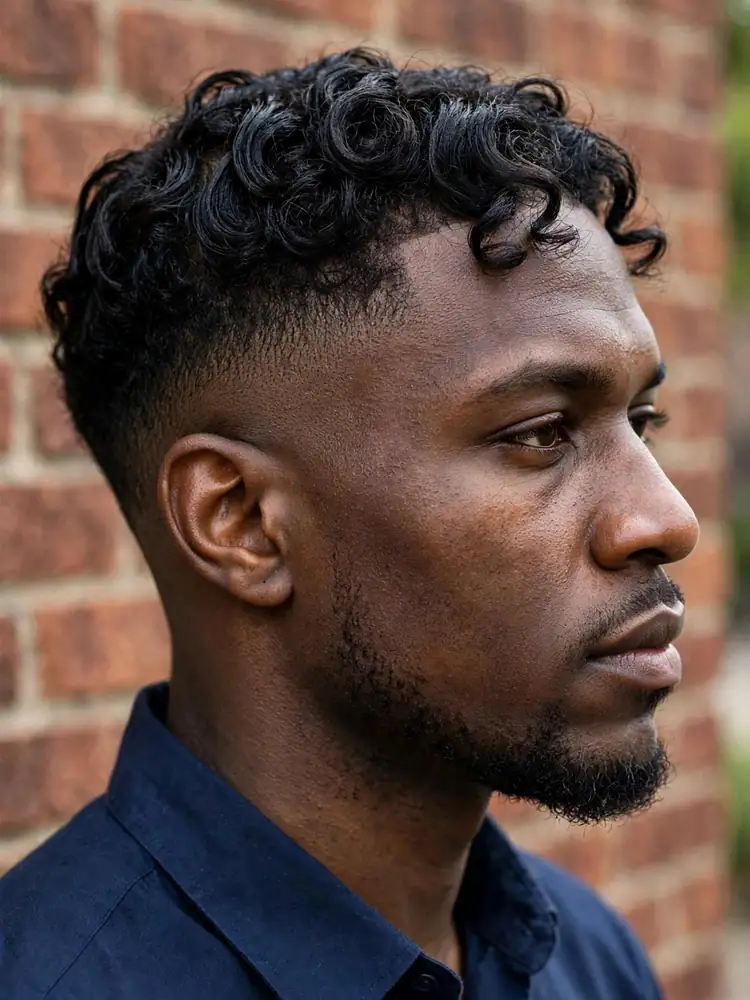
Wavy coils brush forward on top at about an inch, with curls that turn at the ends. Mid fade starts around the temples and blends to skin near the ears. Sides shorten bit by bit, while back follows the same blend down to a clean neckline. Hairline stays visible under forward hair, with no fringe line. Forward direction sets this cut apart from coil tops that stand straight up.
Push damp coils forward with fingers, then add a pea-sized amount of matte clay. Clay adds grip, so forward coils hold direction through the day. Wavy hair brushes forward well, while tight coils need more cream to lie forward. Trim every three to four weeks, because forward coils grow into the brows first. Variation with a low blend keeps sides calm, so the forward top stays the focus.
Textured Fro High Fade

Texture leads this fro, with uneven coily ends across the top at about two inches. High fade starts high on the sides toward the crown and blends to skin. Sides shorten fast down to bare skin, while back follows the same high blend. Hairline keeps a straight edge, and matte finish shows each textured piece clearly. Uneven ends set this cut apart from even afros.
Work matte clay through dry coils, then pinch small sections apart with fingers. Pinching separates ends, because clay adds grip without shine. Coily hair takes texture well, while very fine coils need less product. Trim every three to four weeks, because textured ends lose shape as hair grows. Mistake to avoid is using too much clay, because heavy product flattens lift and looks greasy.
Coil Buzz Skin Fade

Tight coils sit very short on top at about a quarter inch. Scalp shows slightly through the coils. Skin fade means sides blend all the way to bare skin. Blend starts around the temples and ends at skin near the ears and nape. Hairline keeps a straight edge, while neckline ends in a sharp, clean line. Bare sides set this cut apart from tapers.
State a skin blend and a short top, so contrast stays clear. Wash coils with mild shampoo, then towel dry and add light cream for moisture. Cream keeps coils soft, because very short coils dry fast. Coily hair takes this short length well, while looser curls show less coil at this length. Trim every one to two weeks, because skin blends show growth fast.
Twist Sponge Drop Fade
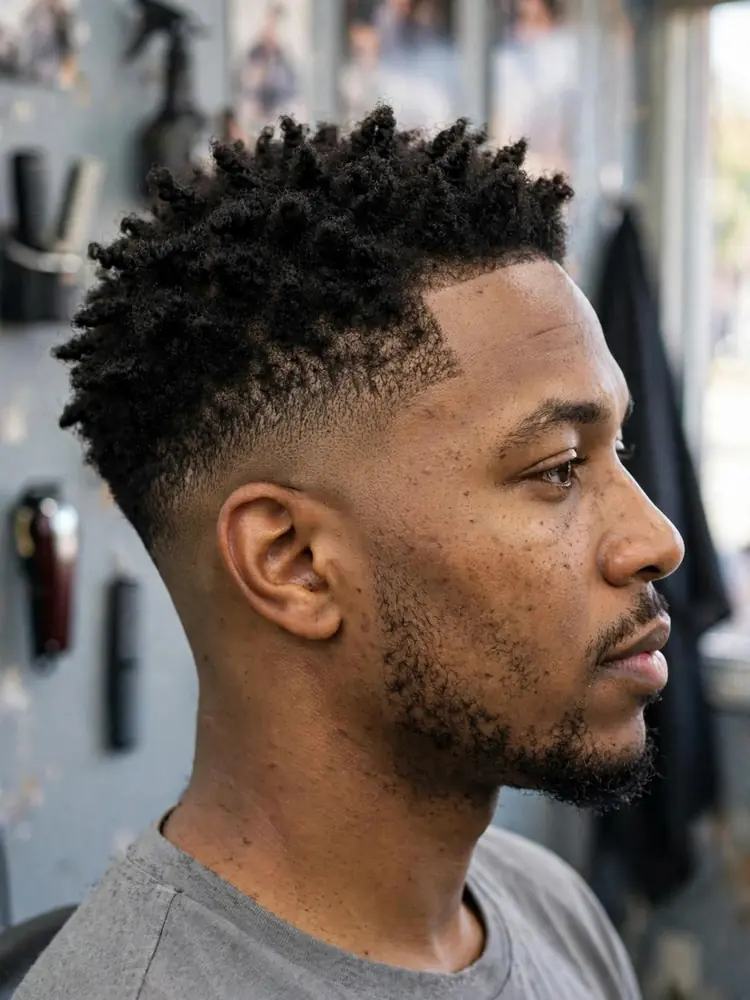
Sponge twists cover the top at about an inch. Drop fade means the blend curves down behind the ear, lower at the back than at the sides. Sides shorten toward skin near the temples, while back follows the curve down. Hairline keeps a straight edge, and neckline ends in a clean tapered shape. Curved blend sets this cut apart from straight fades.
Use a sponge tool on damp hair in small circles, then twist each piece with fingers. Circles form twists, because the sponge winds strands into small rings. Coily hair forms sponge twists fast, while looser curls need more passes. Trim every three weeks, because curved blends show growth at the back first. Mistake to avoid is fading the back too high. High back fades remove the curve.
Curly Fro Line-Up Fade
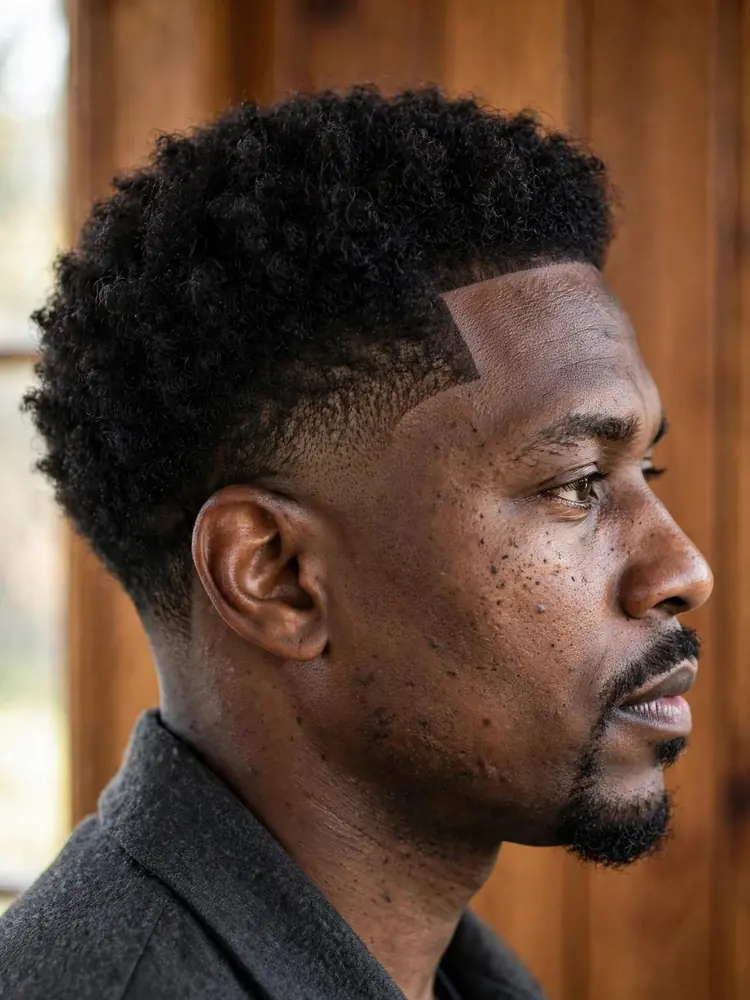
Rounded curly fro sits about an inch and a half on top. Curls lift evenly across the crown. Low fade starts just above the ears and blends to skin. Sides shorten bit by bit, while back follows the same low blend. Line-up means a straight edge cut along the hairline. Sharp edge sets this cut apart from fros that keep a natural hairline.
Give the barber a straight edge at the hairline, with a curly top and low sides. Work light cream through damp curls with fingers, then let hair air dry. Air drying keeps curl shape, because heat and brushing break curls apart. Curly hair shows the line-up well, while coily hair needs a steady edge. Trim every one to two weeks, because sharp edges blur fast as hair grows.
Short Twist Mid Fade
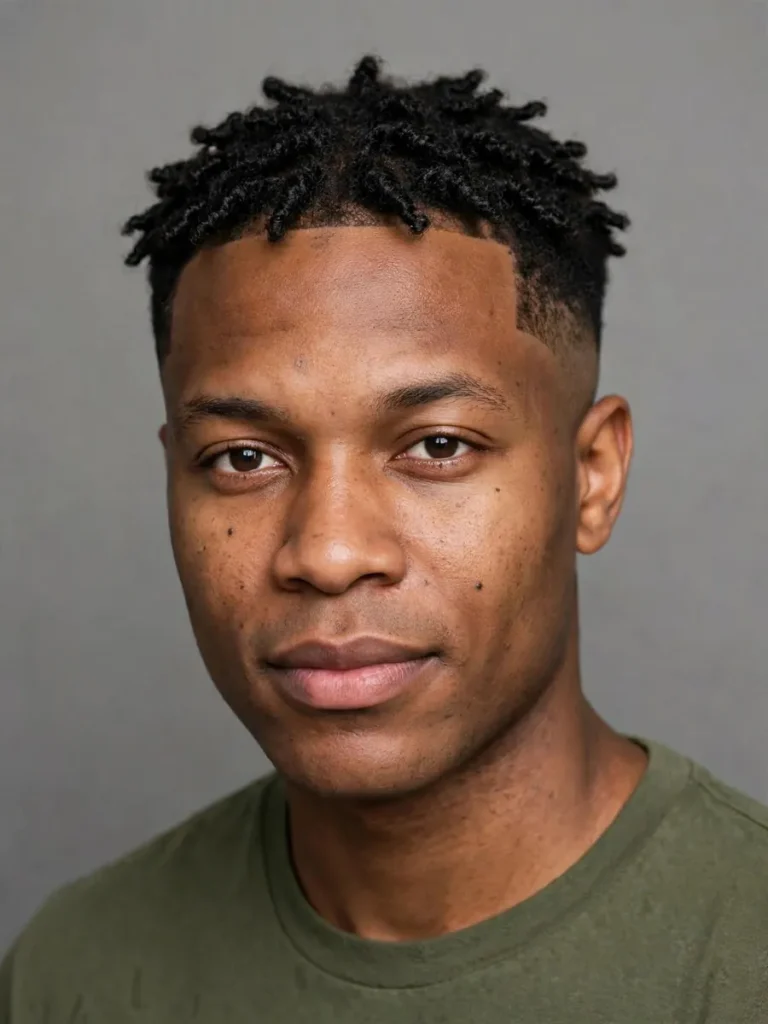
Short twists point forward on top at about an inch, with each twist ending in a small curl. Mid fade starts around the temples and blends to skin near the ears. Sides shorten bit by bit, while back follows the same blend down to a clean neckline. Hairline keeps a straight edge, with twists starting just behind the forehead. Short length sets this cut apart from longer twists.
Twist damp hair in small pairs, then add light cream for moisture and hold. Cream keeps twists soft, because dry twists pull apart at the ends. Coily hair holds short twists well, while fine hair may need smaller twists. Trim every four weeks, because short twists hide growth well. Variation with a tapered neckline softens grow-out at the back, so shape holds a few days longer.
High Top Curl Fade
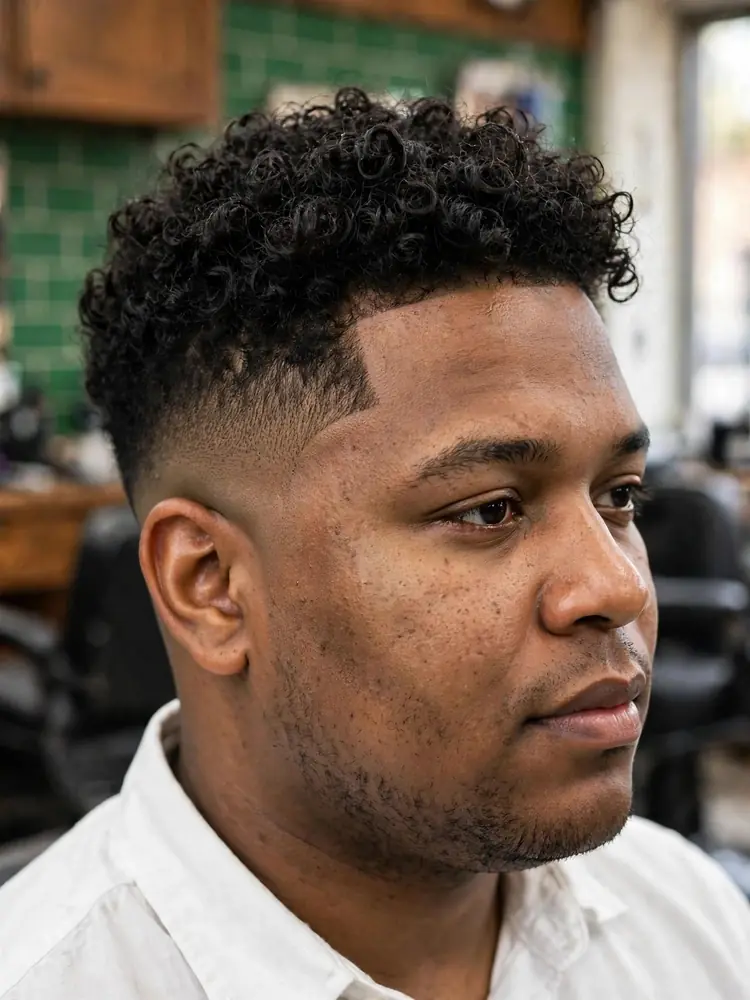
Curls rise about an inch and a half on top. Tall shape lifts from the crown. High fade starts high on the sides toward the crown and blends to skin. Sides shorten fast down to bare skin, while back follows the same high blend. Hairline keeps a straight edge, and matte finish shows each curl clearly. Tall curl shape sets this cut apart from flat tops.
Say tall curls on top, with sides faded high to skin. Work light cream through damp curls, then lift roots with fingers. Lifting roots adds height, because cream holds curls up without weight. Curly hair holds height well, while coily hair needs more cream for the same lift. Trim every three weeks, because high blends show growth fast at the sides.
Low Fade Coil Crop

Crop sits short on top at about half an inch, with tight coils across the crown. Low fade starts just above the ears and blends to skin. Sides shorten bit by bit, while back follows the same low blend down to a tapered neckline. Hairline stays natural, with no hard line drawn across the forehead. Short crop length sets this cut apart from longer coil tops that lift higher.
Ask for a number two guard on top, with a low blend at the sides. Guard means a clipper guide that sets hair length, and number two means about a quarter inch. Brush coils forward with a soft brush after towel drying damp hair. Soft brushing keeps definition, because hard brushing breaks coil shape apart. Trim every two to three weeks, because low blends show growth at the ears first.
Burst Fade Afro Top
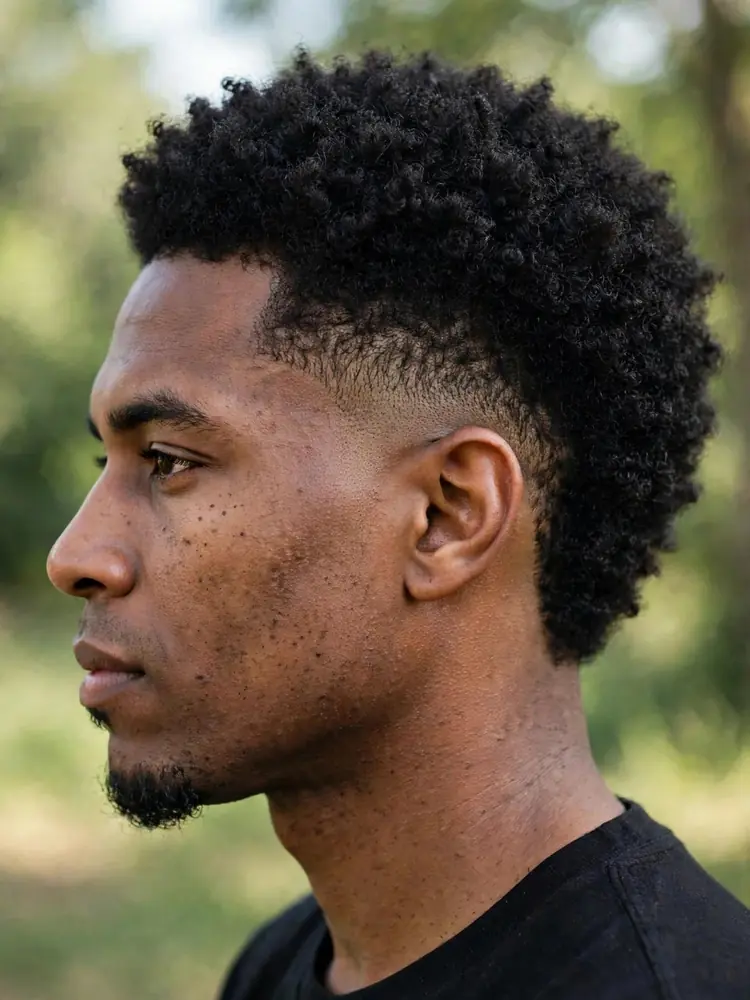
Full afro top sits about an inch and a half long, with coils that lift evenly. Burst fade means the blend arcs around the ear in a half circle. Sides shorten toward skin at the arc, while back keeps more length behind the ear. Hairline keeps a clean edge, and neckline ends in a soft tapered shape. Arc shape sets this cut apart from drop fades.
Request a burst blend round the ear, so the barber arcs the fade instead of dropping it. Work light cream through damp coils with fingers, then let hair air dry. Coily hair holds the rounded top well, while fine coils may need cream each morning. Trim every three weeks, because arcs show growth fast at the sides. Mistake to avoid is blending the back too short, which removes length that makes the burst shape clear.
Temple Fade Twist Out

Twist-out sits about an inch and a half on top, with twists separated into loose curls. Temple fade means the blend sits only at the temples and sideburns, then stops. Sides below the temples keep more length, while back stays short and even. Hairline stays natural, with no hard line drawn across the forehead. Small blend area sets this cut apart from full fades.
Call it a temple blend with a twist-out top, so the barber fades only at the temples. Rub light cream through damp twists, then let hair air dry without touching it. Air drying keeps twist shape, because heat and brushing break twists apart. Coily hair holds twist-outs well with moisture, while looser curls may need more cream. Trim every three to four weeks, because temple blends blur fast as hair grows.
Skin Fade Sponge Top

Sponge coils cover the top at about an inch, with tight rings that lift from the scalp. Skin fade means sides blend all the way to bare skin. Blend starts around the temples and ends at skin near the ears and nape. Hairline keeps a straight edge, while neckline ends in a sharp, clean line. Bare sides set this cut apart from tapers.
Run a sponge tool on damp hair in small circles, then add light cream for moisture. Fade haircuts for black men keep sponge coils defined best when strands stay moist. Cream goes on damp hair, so definition holds. Coily hair forms sponge coils fast, while looser curls need more passes with the sponge. Trim every two weeks, because skin blends show growth fast. Mistake to avoid is pressing too hard, which flattens coils instead of forming them.
Mid Fade Afro Curls

Afro curls sit about an inch on top, with each curl forming a clear ring. Mid fade starts around the temples and blends to skin near the ears. Sides shorten bit by bit, while back follows the same blend down to a clean neckline. Hairline keeps a straight edge, and the matte finish shows each curl clearly. Clear curl rings set this cut apart from smooth afros.
Scrunch light cream through damp curls with fingers, then let hair air dry. Air drying keeps curl shape, because heat and brushing break curls apart. Curly hair holds this shape best. Wavy hair needs more length for the same curl. Trim every four weeks, because curls grow out gently and keep shape longer. Variation with shorter sides keeps curls as the focus, so sides stay calm.
Drop Fade Coil Top
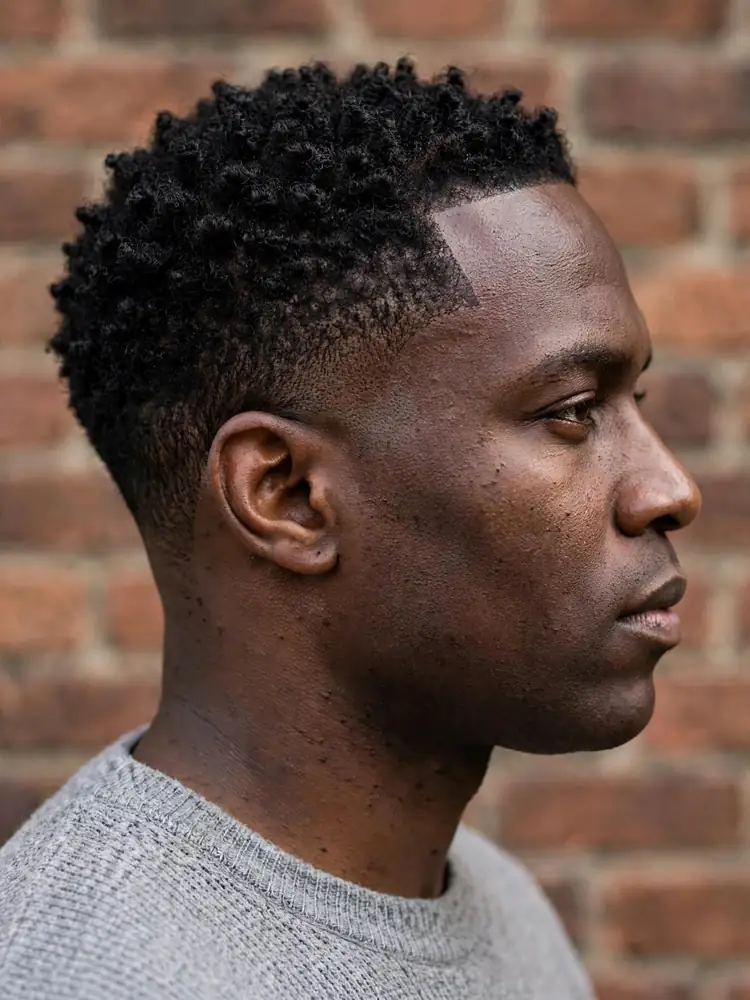
Tight coils sit about an inch on top, with small rings across the crown. Drop fade means the blend curves down behind the ear, lower at the back than at the sides. Sides shorten toward skin near the temples, while back follows the curve down. Hairline keeps a straight edge, and the neckline ends in a clean tapered shape. Curved blend sets this cut apart from straight fades.
Curve the blend down behind the ear, not hold it level. Work light cream through damp coils with fingers, then let hair air dry. Coily hair holds this shape well, while fine coils may need cream each morning. Trim every two to three weeks, because curved blends show growth at the back first. Mistake to avoid is fading the back too high. High back fades remove the curve.
Line-Up Afro Fade
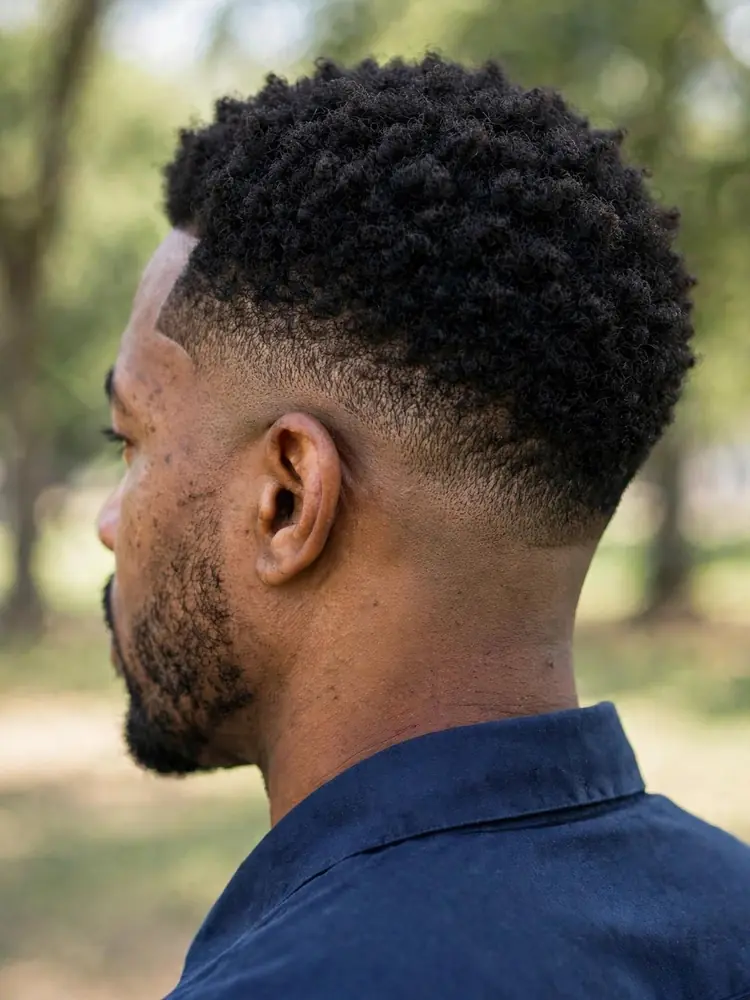
Even afro sits about an inch and a half on top. Coils lift evenly across the crown. Mid fade starts around the temples and blends to skin. Back view shows the blend running clean down to a tapered neckline. Line-up means a straight edge cut along the hairline, and this edge runs sharp at the temples. Sharp edge sets this cut apart from natural hairlines.
Give the barber a straight edge at the hairline, with an afro top and mid sides. Pick coils up with a wide tooth comb, then add light cream for moisture. Wide teeth lift coils, because narrow teeth pull strands apart. Coily hair holds the rounded shape well, while fine coils may need more cream. Trim every two to three weeks, because sharp edges blur fast as hair grows.
Conclusion
Clean edges, correct blend height, and honest top length decide most results. Name top length first at the chair, because that choice sets the whole shape. Keep a tapered neckline when grow-out should stay soft, and use light cream for definition between visits. Among many options, fade haircuts for black men reward steady trims and moisture more than heavy product. Brush coils gently with a soft brush, so definition holds without pulling strands apart. Book the next trim before sides cover the ears, then bring one photo to the visit.
About Me
Hi, I am Beck, the voice behind Hairzaa. I share simple, real-life hairstyles, cuts and color ideas that busy women can actually do, because confidence starts in the morning mirror. Every style here is tested in real life first, so you can look beautiful without the fuss.