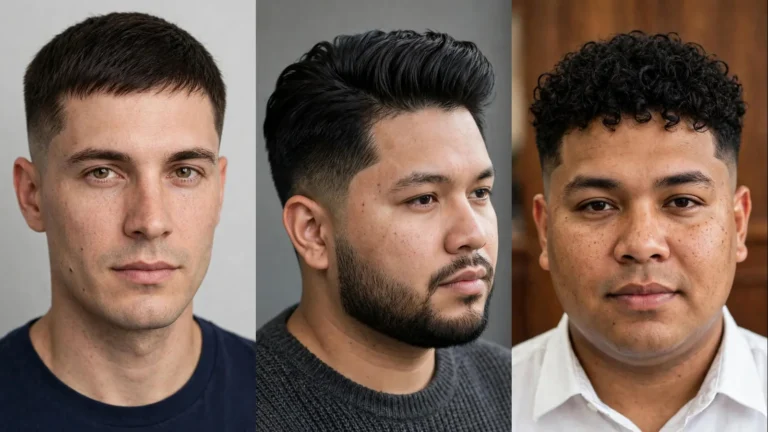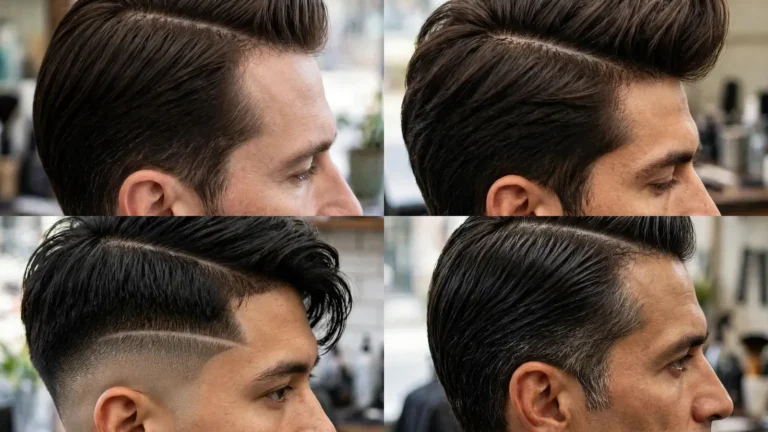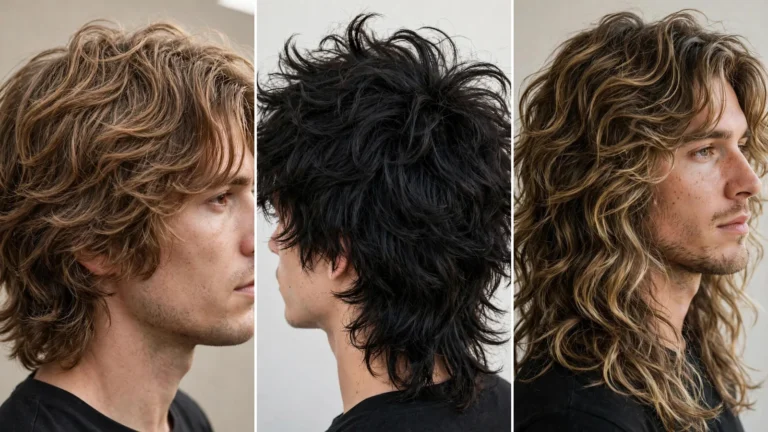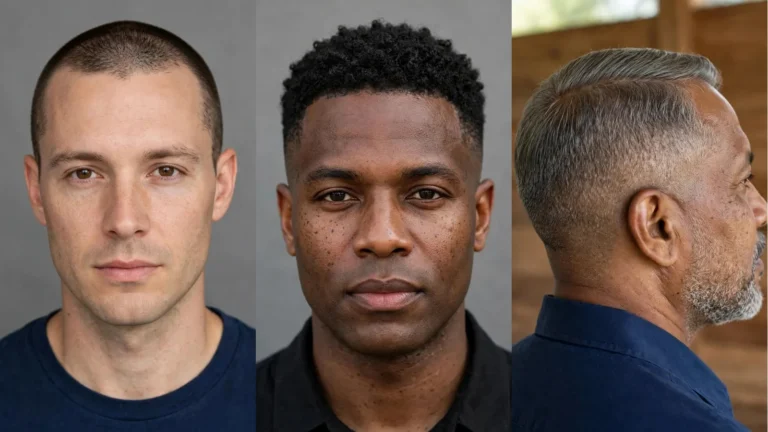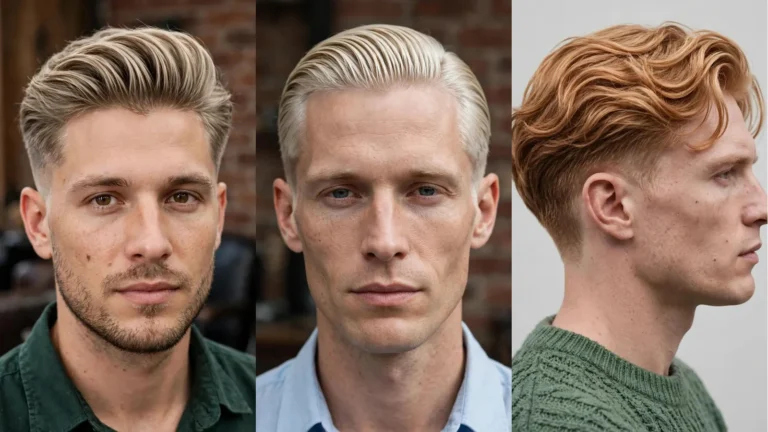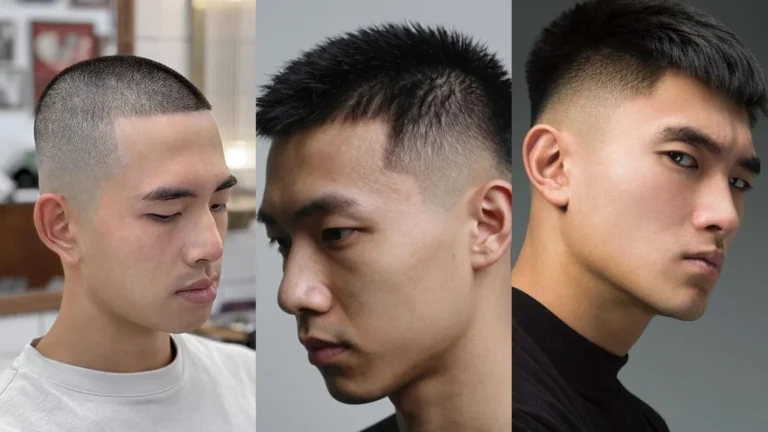
Trimmers can turn bare skin into a canvas in seconds. A line above the ear changes how a plain short cut reads from across the room. Faded sides carry the detail, so tops stay neat and simple. Stars, arcs, crescents, and zigzags all work in the same space. Haircut design works best when the fade leaves enough bare skin for the mark. Straight hair keeps each edge crisp, while curls add soft contrast. Shaved lines suit short crops, quiffs, and fringes alike. Growth blurs every mark fast, so upkeep matters as much as the pattern. Match the shape to fade height, top length, and the attention the mark should draw.
1. Single Temple Line
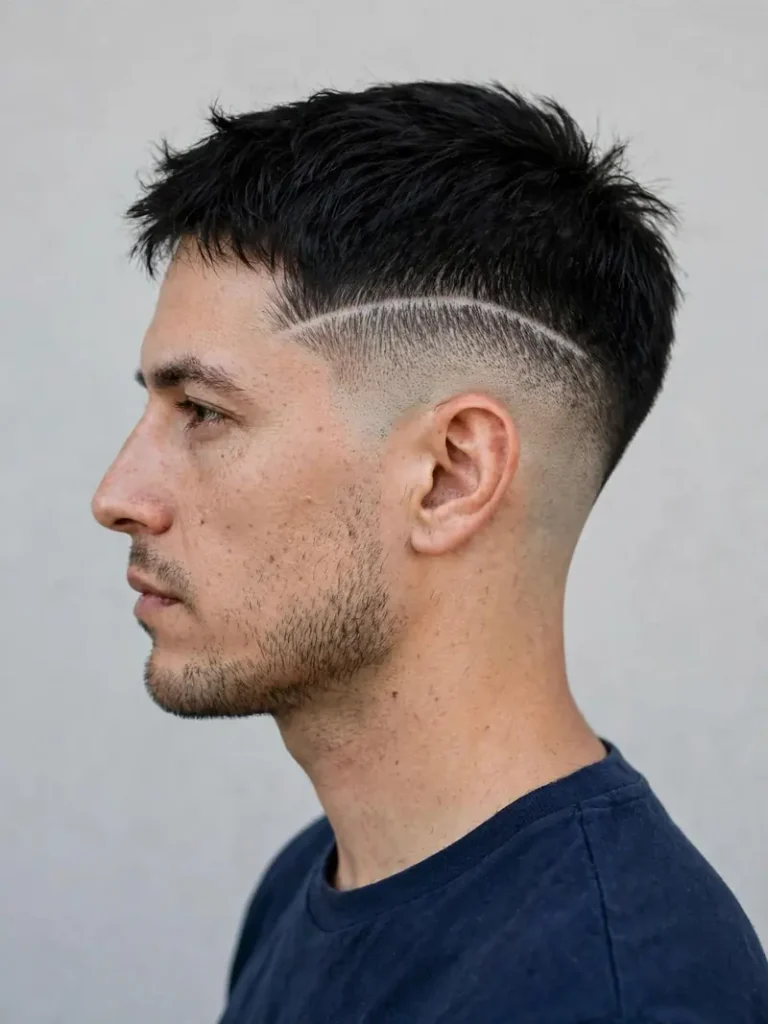
Textured crop keeps about two inches on top, with strands pushed forward. Mid skin fade starts just above the ears and blends to bare skin. One straight line runs from the temple toward the crown, cut clean through the fade. Hairline stays squared at the forehead, while the neckline tapers to a soft point. Only one mark sits on each side, which keeps the look quieter.
Ask for a number two guard on top, a mid skin fade, and one temple line. Work matte clay through damp hair with fingers, then push strands forward and let them dry. Straight or wavy hair holds the line best, because smooth strands leave the mark clear. Book a touch-up every week or so, since stubble softens the line fast. One common slip is asking for the line too low, which hides it in skin. Keep the line higher instead.
2. Double Parallel Lines
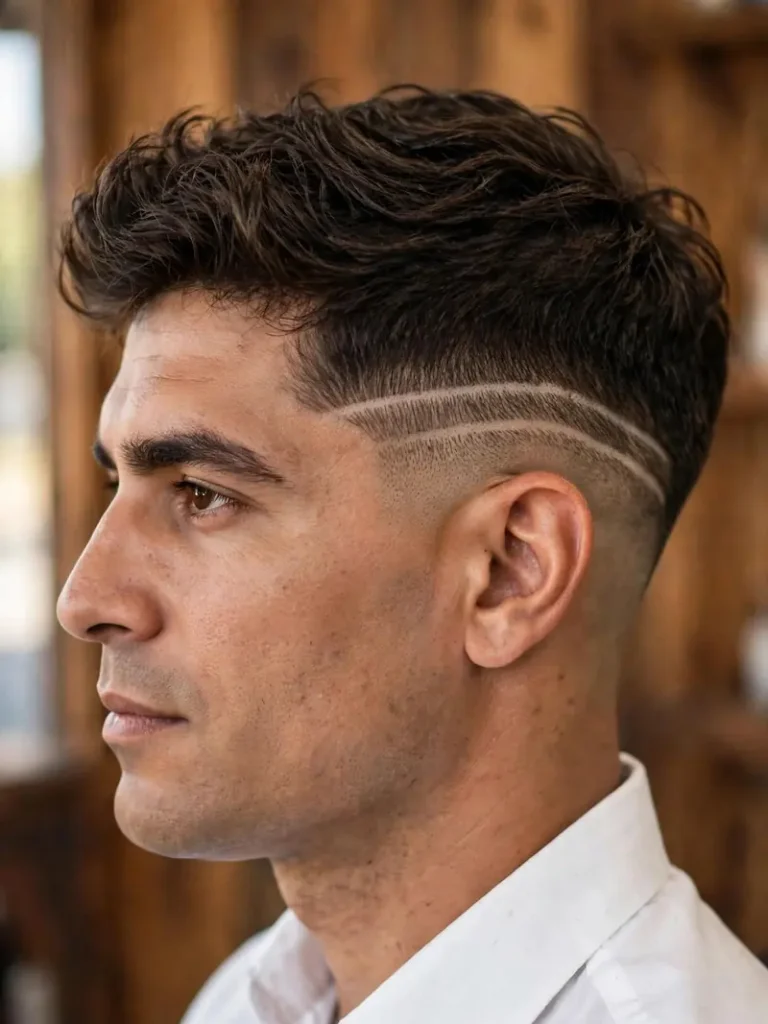
Brushed-up top lifts about three inches at the front, with strands swept back. Low fade begins just above the ears and drops to skin near the sideburns. Two even lines run side by side through the fade, spaced a finger width apart. Back blends into the same low fade, with a tapered neckline at the collar. Paired lines read stronger than a single mark, which sets this version apart.
Smooth sea salt spray through damp hair, then brush strands up and back. Matte clay adds hold at the roots without shine, so the top stays lifted. Ask for a number three guard on top and a low fade. Point to two parallel lines above the ear. Thick hair holds the lift well. Fine hair needs less clay to avoid flat roots. Lines blur fast as stubble grows, so plan a tidy-up each week.
3. Curved Arc Above Ear

Coily top keeps tight curls with clear definition on the crown. High skin fade starts near the temples and blends to bare skin down the sides. One smooth arc curves over the ear, carved clean through the fade. Edges stay lined up at the forehead, with a short tapered neckline at the back. Curved mark feels softer than a straight line, which suits the round shape of the curls.
Ask for a high skin fade with a number one guard at the sides. Keep the top long enough for curls to form, about two inches. Rub light cream between palms and press it into damp curls, then let them air dry. Coily hair holds the arc well, because the dark fade gives strong contrast. Book an edge touch-up every seven to ten days, since new growth fills the arc first. Skipping the touch-up lets the curve vanish into stubble.
4. Zigzag Side Stripe
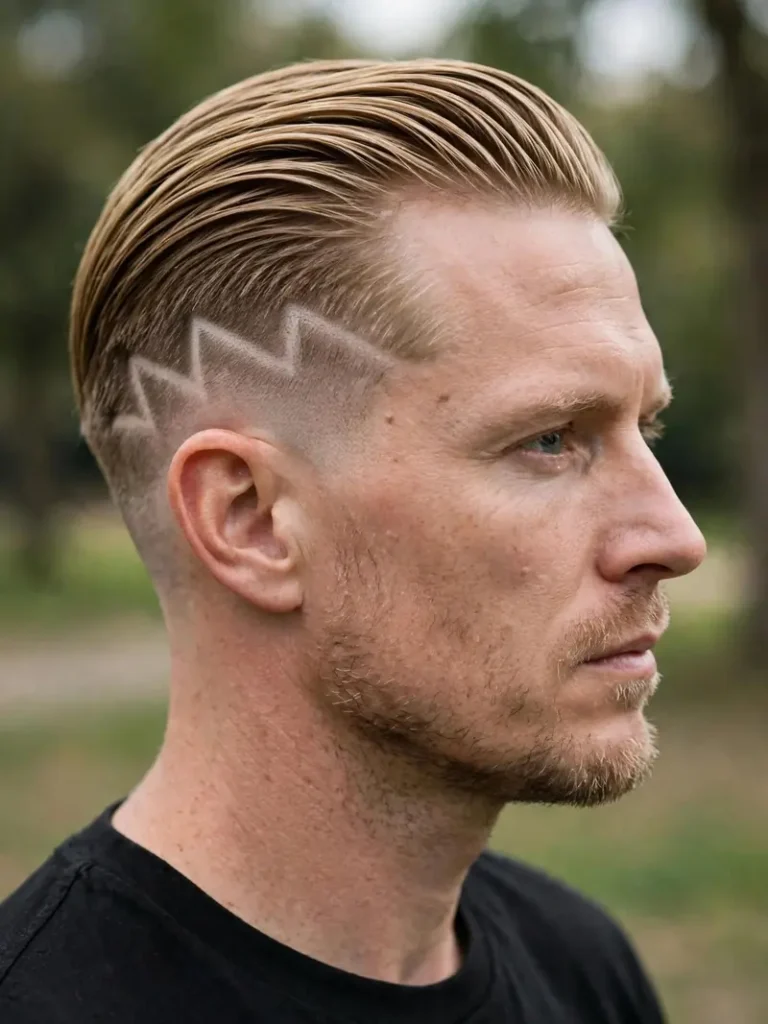
Slicked-back top runs about three inches long, combed straight back from the forehead. Mid taper starts around the temples and shortens in steps toward the ears. Zigzag stripe cuts through the taper in sharp peaks above the ear. Hairline stays natural at the forehead, while the back tapers down to the collar. Angled peaks catch more light than a plain line, which helps the stripe stand out.
Comb pomade through damp hair with a fine-tooth comb, then sweep it straight back. Ask for a mid taper with a number two guard and a zigzag stripe above the ear. Straight hair suits this cut best, because smooth strands keep the top neat against the angled mark. Grow-out softens the peaks within days, so book a trim every week. One mistake is combing the top forward, which covers the stripe; keep the sweep back instead.
5. Small Star Carving
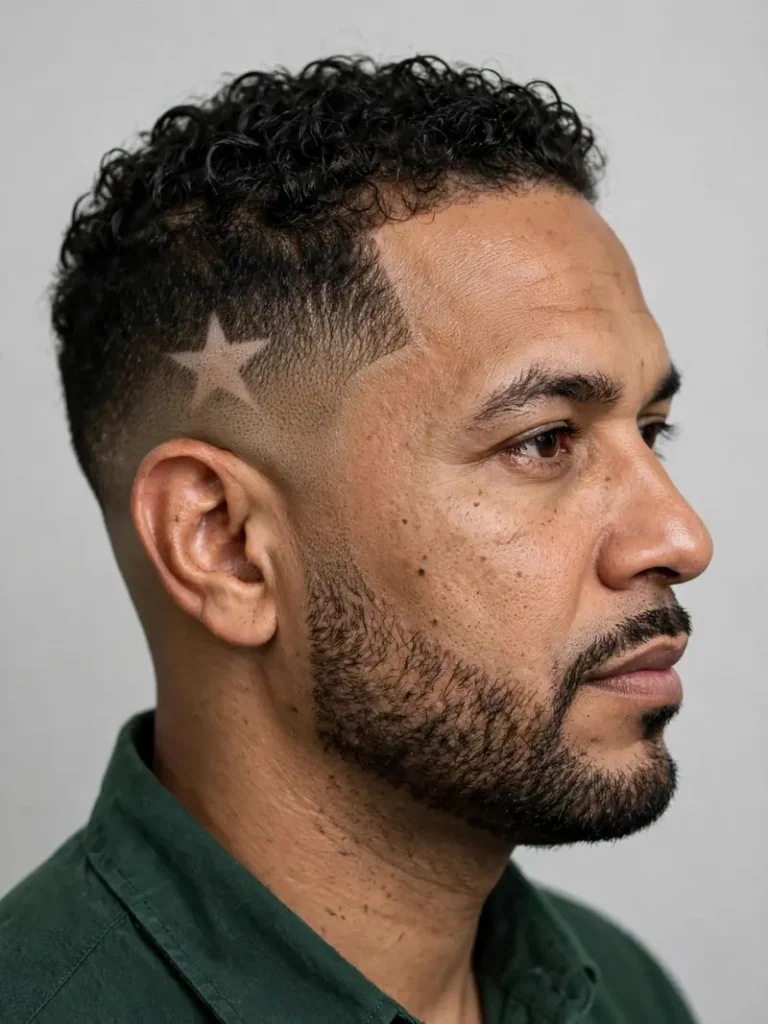
Curly top holds loose curls close to the crown, about two inches long. Low skin fade starts just above the ears and blends to bare skin. Five-point star sits in the fade above the ear, cut with a trimmer for crisp points. Forehead edges stay sharp and square, while the neckline tapers to a clean finish. One small shape draws the eye more than a plain line.
Name a low skin fade and a small star above the ear. Keep the top at two inches so curls keep their shape. Work light cream through damp curls with fingers, then let them dry without brushing. Curly hair frames the star well, because the pale shape stands out against the dark fade. Stars fade fast as hair grows, so plan a touch-up every week. Star placed too high blends into the curls, so keep it low in the fade.
6. Cross Mark Temple

Spiky top stands up in rough pieces, about two inches at the front. High taper starts high toward the crown and shortens fast down the sides. Small cross sits in the taper at the temple, formed by two short lines. Hairline runs straight across the forehead, with a tapered neckline at the back. Cross reads as one neat symbol, which sets it apart from plain stripes.
Request a high taper with a number two guard and a small cross at the temple. Push matte clay through damp hair, then pinch the ends upward with fingers. Straight hair spikes well, because stiff strands hold their shape through the day. Cross marks blur within a week, so book a quick trim often. One mistake is using too much clay, which weighs spikes down; use a pea-sized amount instead.
7. Diamond Shape Cut
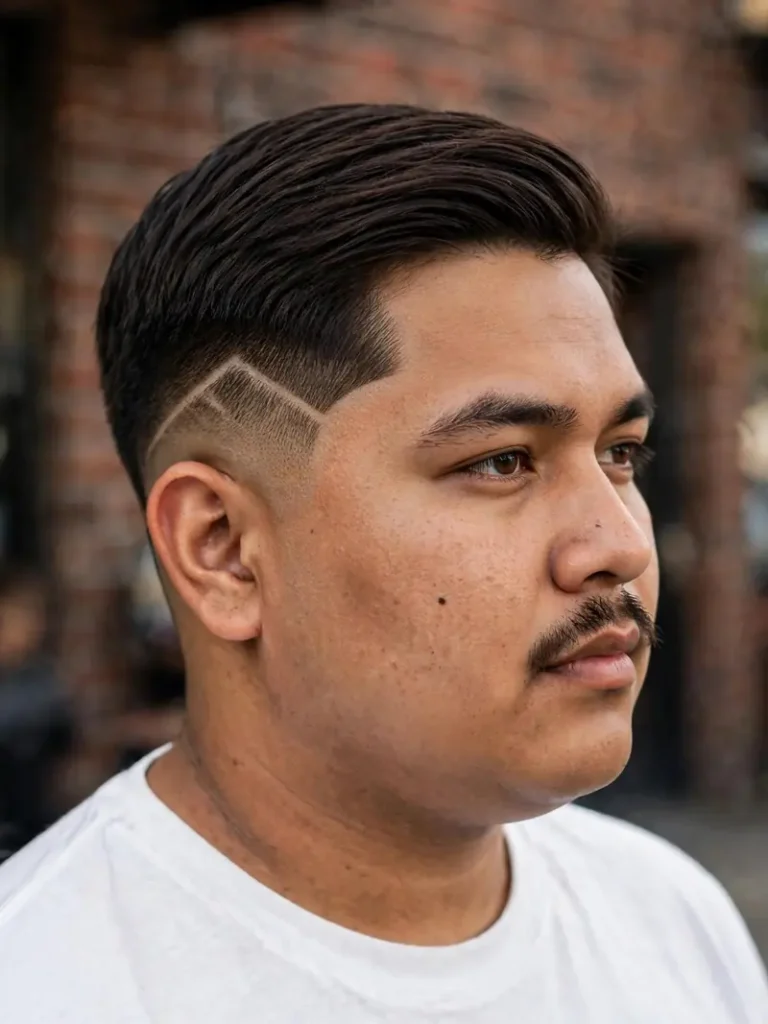
Side-parted top runs about two inches long, combed to one side. Mid fade starts around the temples and blends down to skin near the ears. Diamond shape sits in the fade above the ear, with four straight edges. Hairline stays neat at the forehead, while the back fades into a tapered neckline. Closed shape holds the eye longer than an open line, which makes the diamond stand out.
Name a number two guard, a mid fade, and a diamond above the ear. Comb light cream through damp hair, then part it to the side with a comb. Straight or wavy hair suits this cut, because smooth strands keep the part clear. Diamond edges soften as stubble grows, so plan a touch-up each week. One slip is parting the hair too far over, which hides the mark. Keep the part near the temple instead.
8. Tribal Curve Sweep

Brushed-forward crop keeps short strands pointing toward the forehead. Low taper starts just above the ears and keeps some length at the sideburns. Flowing tribal curves sweep through the taper above the ear in smooth bends. Hairline stays soft at the forehead, with a tapered neckline at the back. Curved bands feel looser than straight lines. Flowing curves turn this haircut design into one mark rather than separate lines.
Request a low taper and a curved tribal sweep above the ear. Work matte clay through damp hair, then brush strands forward with fingers. Straight hair shows the curves best, because flat strands leave the taper open to view. Curves blur quickly as hair grows, so book a trim every seven to ten days. One mistake is asking for curves too deep in the taper, which makes them hard to see. Keep them in the pale part instead.
9. Lightning Bolt Carve
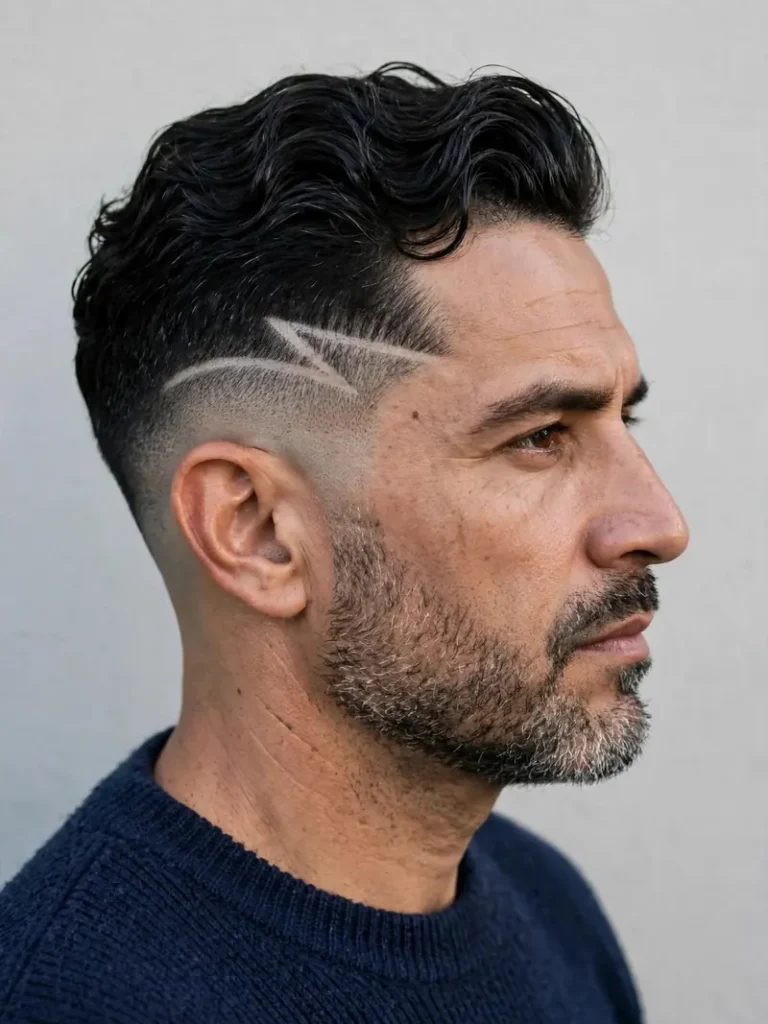
Wavy top sweeps back in loose waves, about three inches long at the front. High skin fade starts near the temples and blends to bare skin. Lightning bolt cuts through the fade in sharp angles above the ear. Hairline stays natural at the forehead, while the back tapers to a clean neckline. Angled bends catch the eye fast, which makes the bolt easy to spot in a crowd.
Start with a high skin fade, a number two guard, and a bolt above the ear. Work sea salt spray through damp hair, then push waves back with fingers. Wavy hair suits this cut, because the loose top contrasts with the sharp mark. Bolt edges soften within a week, so book a touch-up often. One mistake is drying the top flat, which hides the contrast; keep some lift at the front instead.
10. Triple Line Set
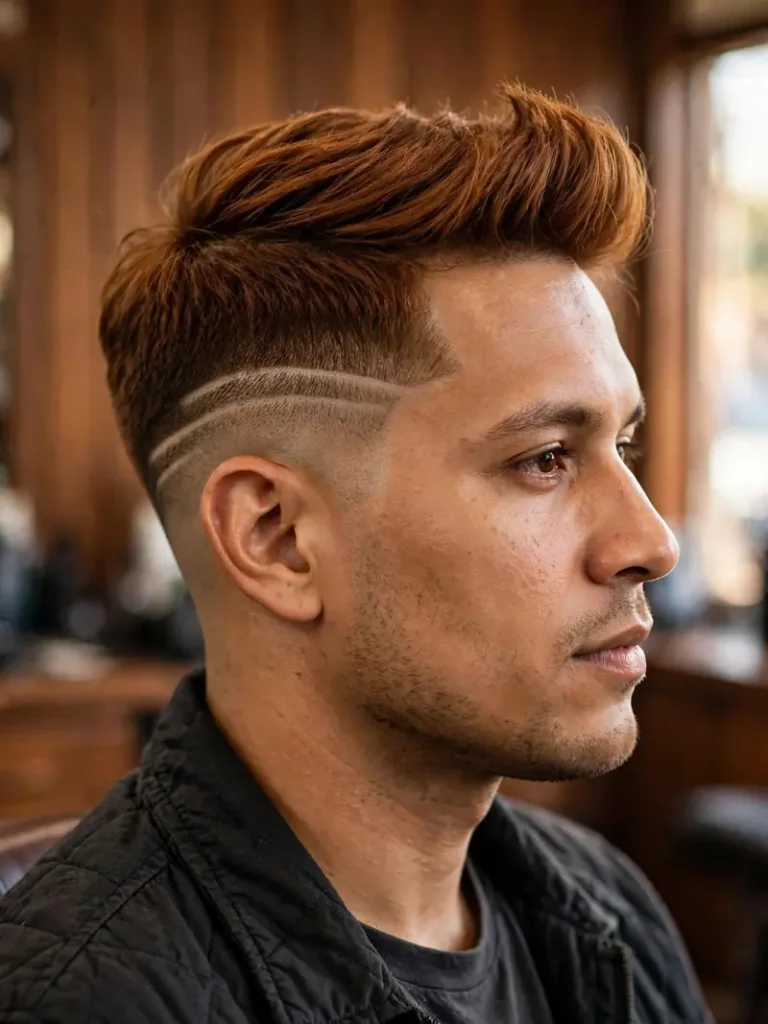
Lifted quiff rises about three inches at the front, with strands swept up and back. Mid fade starts around the temples and blends down to skin near the ears. Three thin lines run side by side through the fade, spaced evenly apart. Back keeps the same mid fade, with a tapered neckline at the collar. Three marks feel busier than one, which gives this cut more energy.
Tell the barber the top takes a number three guard, with a mid fade and three lines. Blow dry the front upward with a round brush, then set it with matte clay. Use heat protectant first, because hot air dries hair fast and can leave it rough. Straight hair lifts well for a quiff, while wavy hair needs more clay to hold shape. Lines blur as stubble grows, so plan a tidy-up each week.
11. Crescent Moon Curve

Short coily top keeps tight curls with soft volume on the crown. Drop fade curves down behind the ear and blends to skin at the back. Crescent moon sits in the fade behind the ear, with points facing up. Edges stay crisp at the forehead, with a short tapered neckline at the nape. Curved shape at the back shows only in profile, which makes it a quiet surprise.
Point to a drop fade with a number one guard and a crescent behind the ear. Press light cream into damp curls, then shape them with fingers and let them dry. Coily hair suits this cut, because the dark curls frame the pale curve. Crescent edges fill in fast, so book a touch-up every week. One slip is cutting the crescent too small, which makes it hard to see. Keep it wide enough to read at a glance.
12. Chevron Arrow Mark

Side-swept wavy top runs about three inches long, brushed to one side. Low skin fade starts just above the ears and blends to bare skin. Chevron arrow points forward through the fade above the ear. Hairline stays soft at the forehead, while the back fades into a tapered neckline. Arrow shape gives the cut direction, which sets it apart from plain lines.
Start with a low skin fade, a number two guard, and a chevron above the ear. Comb sea salt spray through damp hair, then sweep it to the side. Wavy hair holds the sweep well, because the bend adds natural lift. Chevron points soften within days, so book a trim each week. One mistake is sweeping the top over the mark, which hides the arrow. Keep the sweep clear of the fade instead.
13. Wave Line Pair
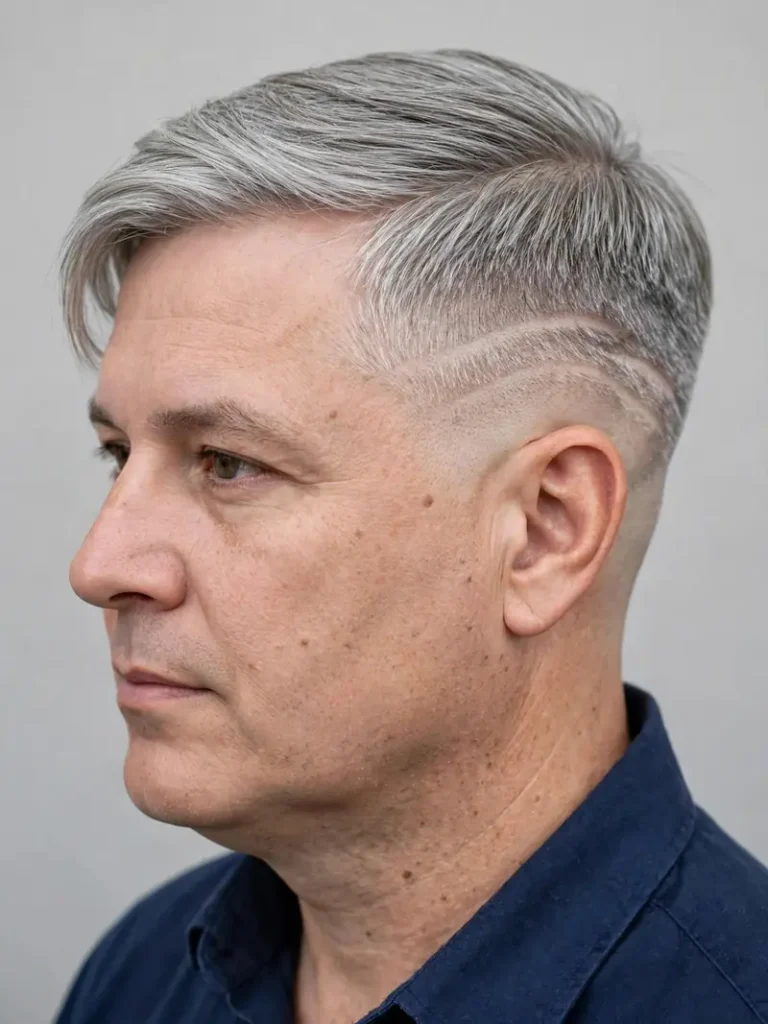
Silver top runs about two inches long, brushed to one side with soft movement. Mid taper starts around the temples and shortens in steps toward the ears. Two gentle wave lines run through the taper above the ear, curving like small hills. Hairline stays neat at the forehead, with a tapered neckline at the back. Soft waves feel calmer than sharp angles, which suits gray or silver hair well.
Tell the barber the taper is mid height, with a number three guard and two wave lines. Work light cream through damp hair, then comb it to the side. Fine hair suits this cut, because light cream adds lift without weight. Wave lines blur as hair grows, so plan a touch-up every ten days or so. One slip is pressing the top flat, which dulls the sweep. Keep a little lift at the part instead.
14. Spiral Curl Carve
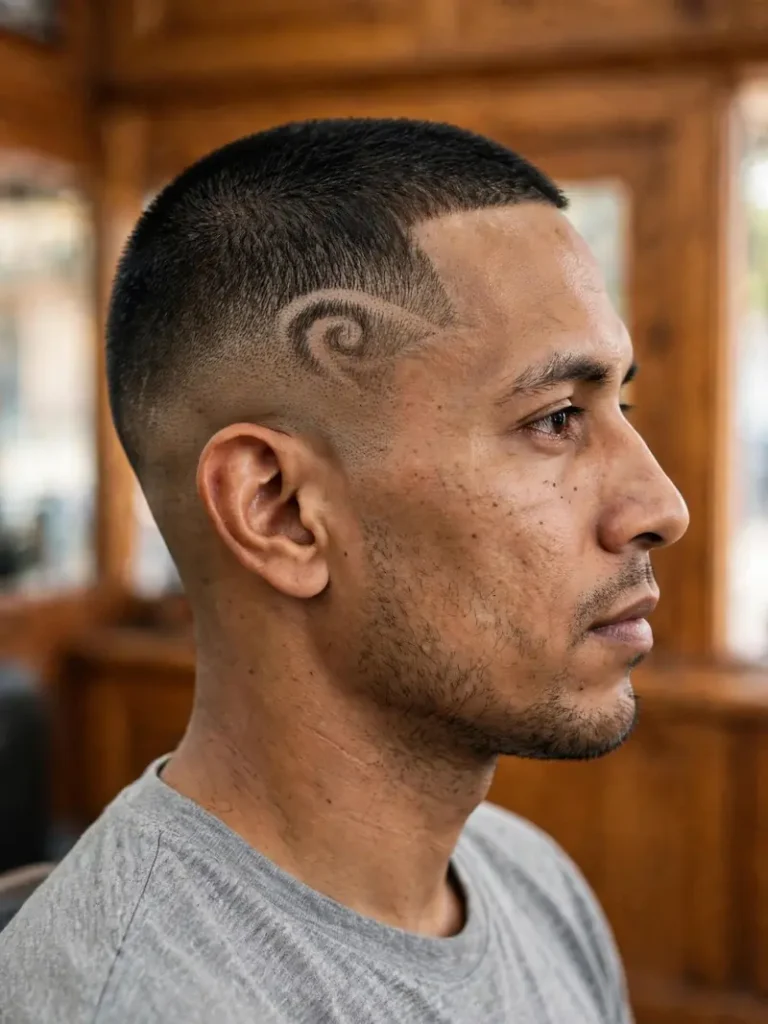
Buzz top keeps hair even all over, about a quarter inch long. High fade starts near the temples and blends to skin down the sides. Small spiral curls through the fade above the ear, winding inward to a tight centre. Hairline runs straight across the forehead, with a clean tapered neckline. Spiral draws the eye in a circle, which makes it feel different from straight marks.
Point to a number one guard on top, a high fade, and a spiral above the ear. Rub matte clay between palms, then smooth it over the buzz with fingers. Short hair suits a spiral well, because the pale mark shows clearly on the bare fade. Spirals fill in within a week, so book a quick trim often. One mistake is asking for the spiral too large, which crowds the fade. Keep it small and neat instead.
15. Razor Part Line
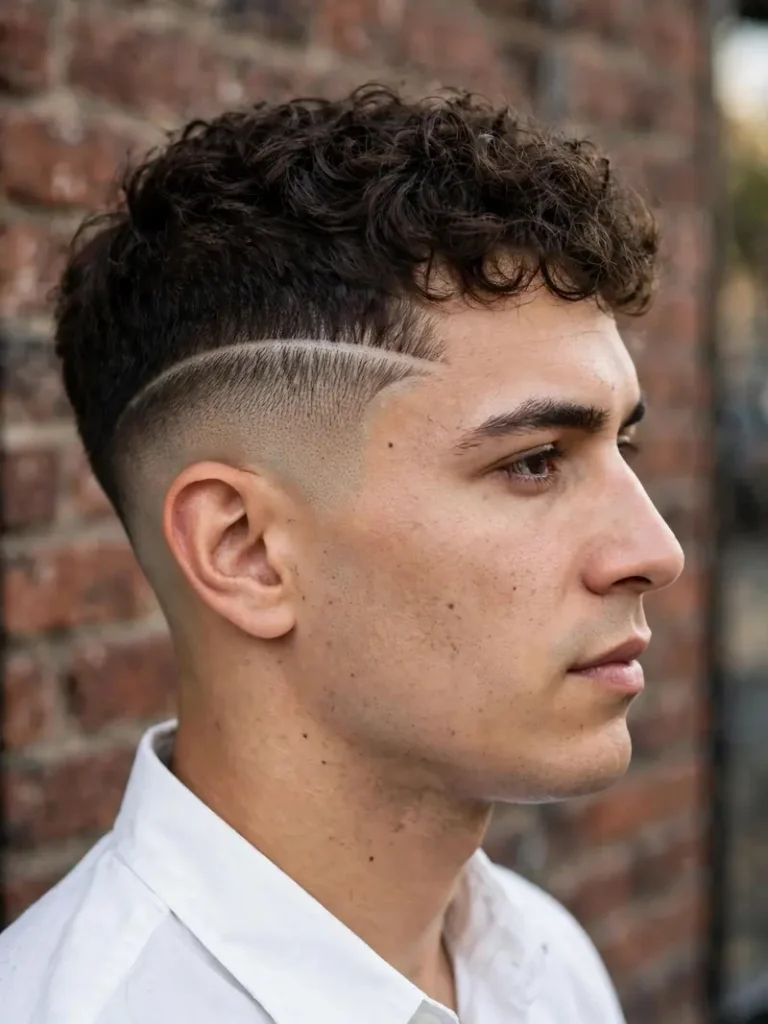
Curly fringe falls forward over the forehead in loose curls. Low fade starts just above the ears and blends to skin near the sideburns. One straight razor line cuts from the temple back through the fade, marking where top meets sides. Hairline stays soft under the fringe, while the neckline tapers to a clean edge. Single part line frames the face, which makes the whole cut look tidy.
Book a low fade with a number two guard and one razor part line. Press light cream into damp curls, then push the fringe forward with fingers. Curly hair suits this cut, because the fringe softens the sharp line. Part lines blur fast, so plan a touch-up each week. One slip is brushing the fringe back, which hides the line; keep the fringe forward instead.
16. Twin Arcs Behind Ear

Wavy top runs about two inches long, brushed back with loose movement. Burst fade arcs around the ear and blends to skin at the back. Two curved lines sweep down behind the ear and meet in a soft point. Hairline stays natural at the forehead, with a tapered neckline at the nape. Twin curves at the back show best from behind. Rear views make this cut stand out.
Book a burst fade with a number two guard and two arcs behind the ear. Work sea salt spray through damp hair, then brush it back with fingers. Wavy hair suits this cut, because the loose top balances the curved marks. Arcs soften within a week, so book a touch-up often. One mistake is asking for arcs too close together, which makes them merge. Keep a clear gap between them instead.
17. Geometric Triangle Cut
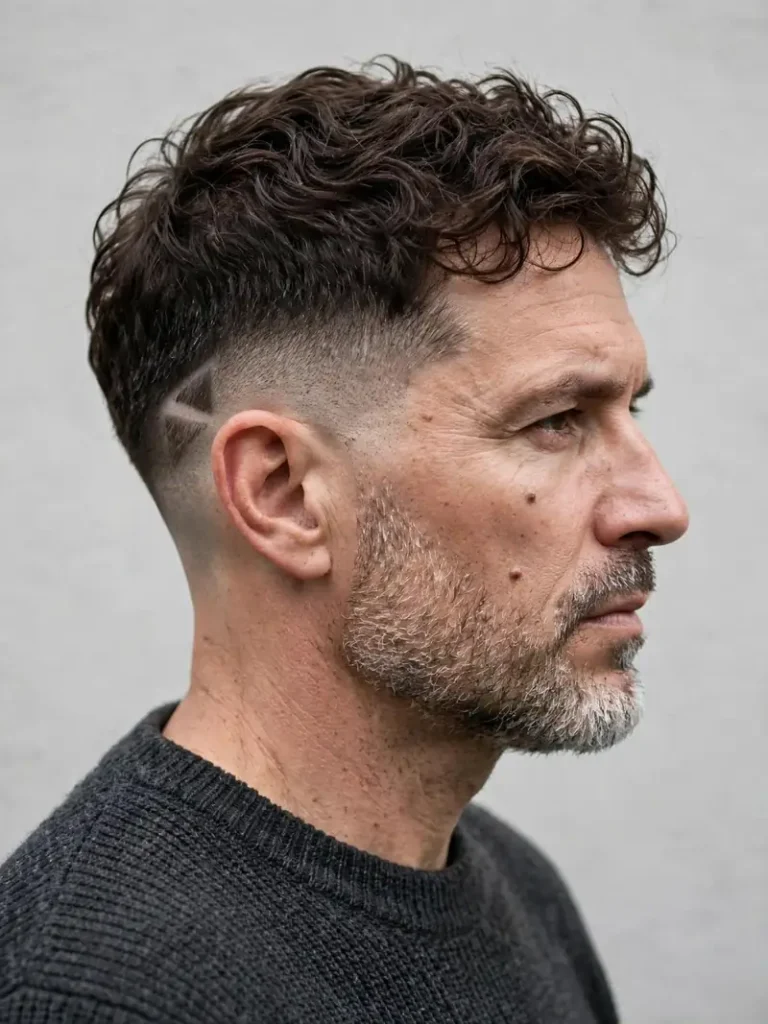
Loose curls fall in different directions on top, about two inches long. Mid skin fade starts around the temples and blends to bare skin. Small triangle sits in the fade above the ear, with three straight edges. Hairline stays natural at the forehead, while the neckline tapers to a clean point. Sharp corners catch light well, which makes the triangle easy to spot.
Order a mid skin fade with a number two guard and a triangle above the ear. Work light cream through damp curls, then let them dry without brushing. Curly hair suits this cut, because the loose top contrasts with the straight edges. Triangle corners round off as hair grows, so book a touch-up each week. One slip is placing the triangle too low, which lets stubble swallow it. Keep it in the pale part of the fade instead.
18. Feather Curve Lines
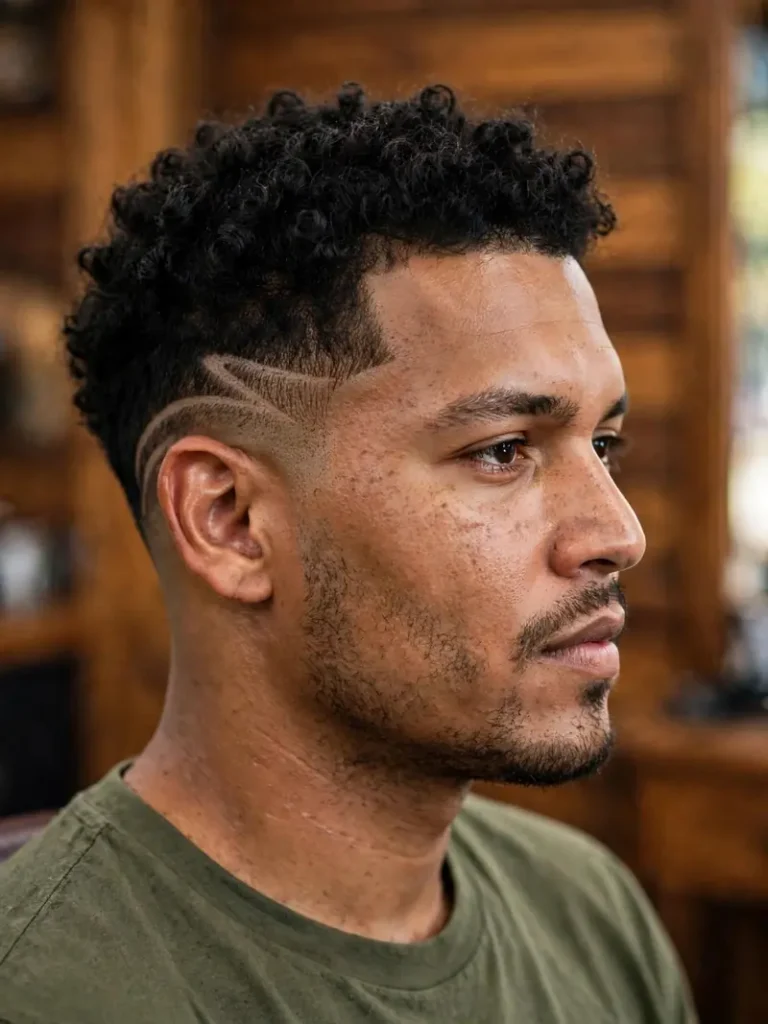
Coily top keeps soft curls close to the crown, about two inches long. Low taper starts just above the ears and keeps some length at the sideburns. Two thin feather-like curves sweep through the taper above the ear. Edges stay crisp at the forehead, with a short tapered neckline at the back. Light curves feel softer than straight shapes, which suits the gentle curls on top.
Order a low taper with a number two guard and two feather curves above the ear. Press light cream into damp curls, then shape them with fingers. Coily hair holds this cut well, because moisture keeps the curls defined. Feather lines fill in fast, so plan a touch-up every week. One mistake is brushing curls dry, which flattens them; let them air dry instead.
19. Broken Line Pattern
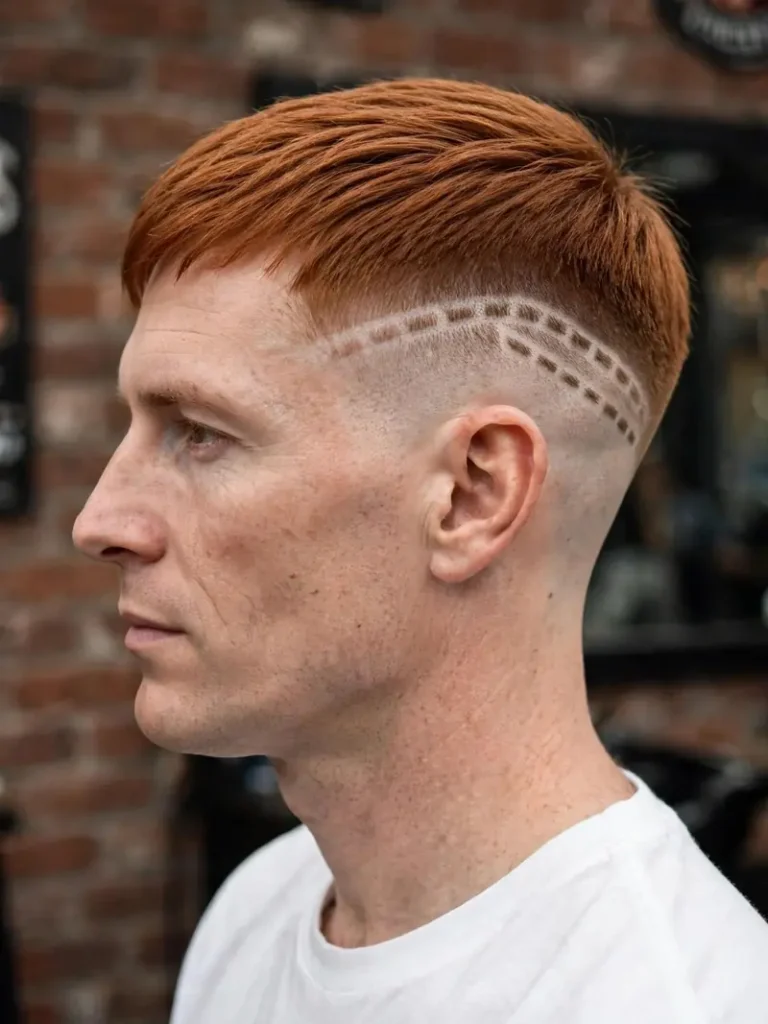
Forward-brushed top runs about two inches long, with strands combed toward the forehead. High taper starts high toward the crown and shortens fast down the sides. Broken dashed line runs through the taper in short segments above the ear. Hairline stays straight at the forehead, while the back tapers down to the collar. Dashes feel lighter than one solid line, which gives this cut a quieter look.
Choose a high taper with a number two guard and a dashed line above the ear. Push matte clay through damp hair, then comb strands forward with fingers. Straight hair shows the dashes best, because flat strands leave the taper open. Dashes blur within days, so book a trim each week. One slip is asking for dashes too long, which turns them into one line. Keep each dash short instead.
20. Circle Ring Carve
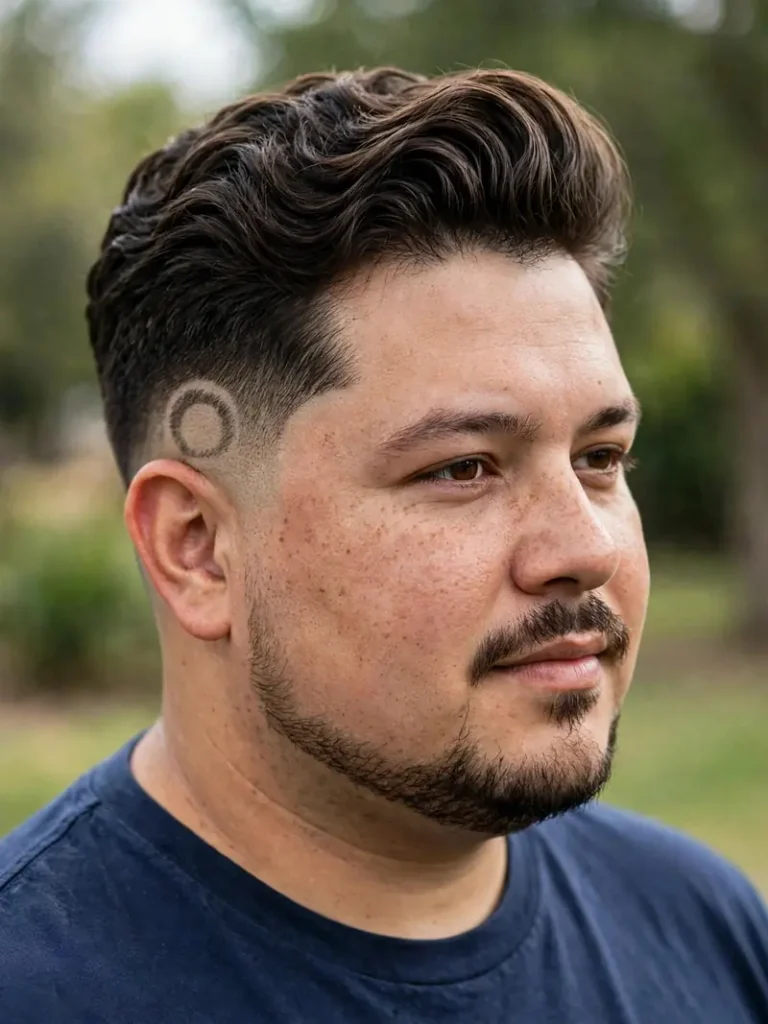
Pompadour top rises about three inches at the front, swept up and back. Mid fade starts around the temples and blends down to skin. Small circle ring sits in the fade above the ear, cut as one even loop. Hairline stays neat at the forehead, while the back fades into a tapered neckline. Closed loop holds the eye, which makes the ring stand out against the fade.
Choose a mid fade with a number three guard and a circle ring above the ear. Blow dry the front upward with a round brush, then set it with pomade. Use heat protectant first, because hot air can dry hair and leave it rough. Wavy hair lifts well for height, while straight hair needs more pomade to hold shape. Rings soften as stubble grows, so plan a tidy-up each week.
21. Sideways V Shape
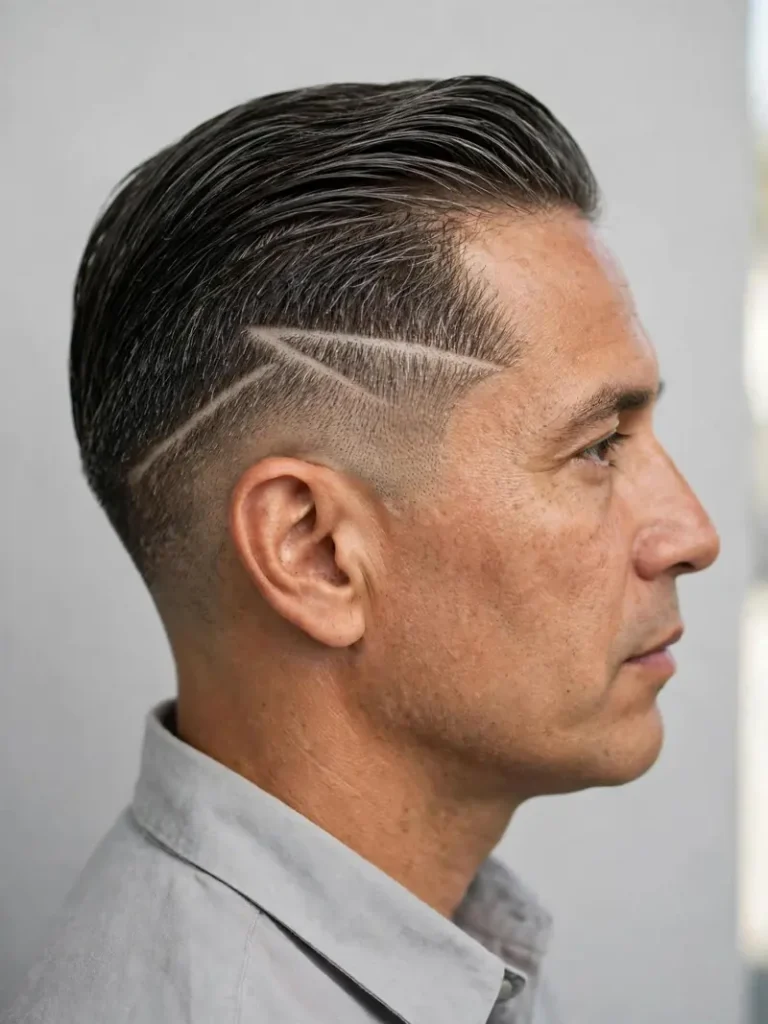
Combed-back top runs about two inches long, brushed straight back from the forehead. Low skin fade starts just above the ears and blends to bare skin. Two straight lines meet at a sharp point above the ear, forming a sideways V. Hairline stays neat at the forehead, with a tapered neckline at the back. Pointed mark feels firmer than a curve, which gives this cut a crisp edge.
Describe a low skin fade with a number two guard and a sideways V above the ear. Work light cream through damp hair, then comb it straight back. Straight hair suits this cut, because smooth strands keep the top tidy. V points dull within a week, so book a touch-up often. One mistake is cutting the V too wide, which crowds the fade; keep it narrow and neat instead.
22. Flame Curve Carve
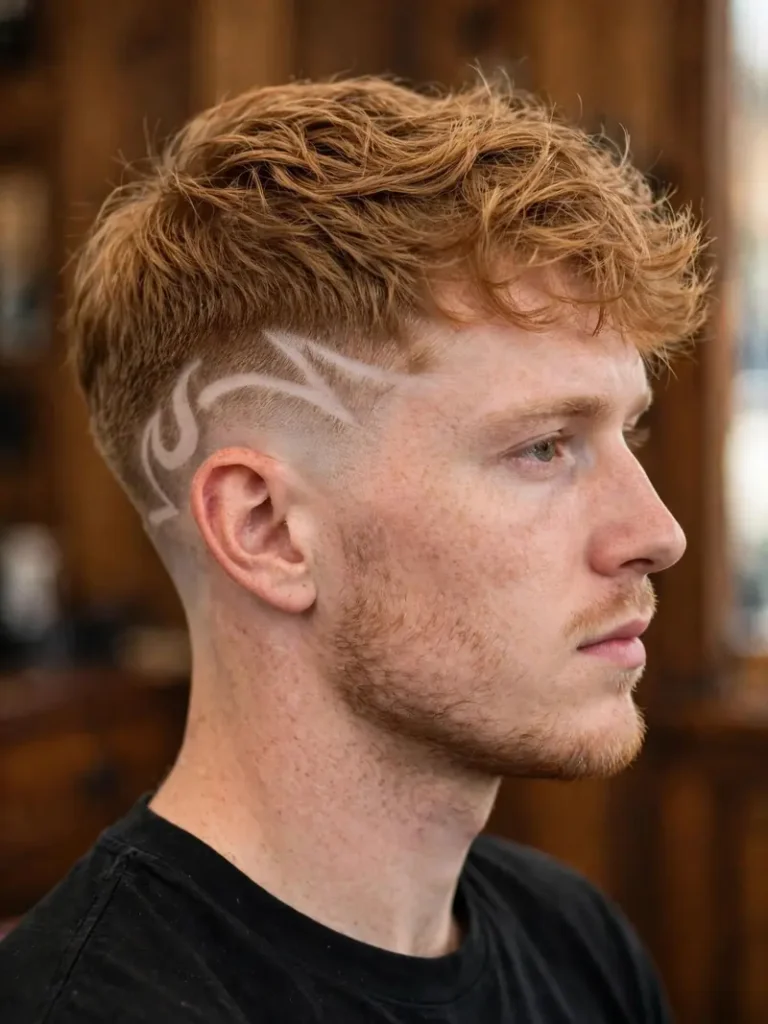
Messy wavy top runs about two inches long, with strands falling in loose pieces. High skin fade starts near the temples and blends to bare skin. Flame-like curves rise through the fade above the ear in smooth tongues. Hairline stays soft at the forehead, while the neckline tapers to a clean edge. Flowing curves echo the loose top, which makes the whole cut feel linked.
Describe a high skin fade with a number two guard and flame curves above the ear. Work sea salt spray through damp hair, then scrunch waves with fingers and let them dry. Wavy hair suits this haircut design, because loose strands match the flowing marks. Flame edges blur fast, so book a trim each week. One slip is using heavy pomade, which flattens waves; use light spray instead.
23. Leaf Shape Carve
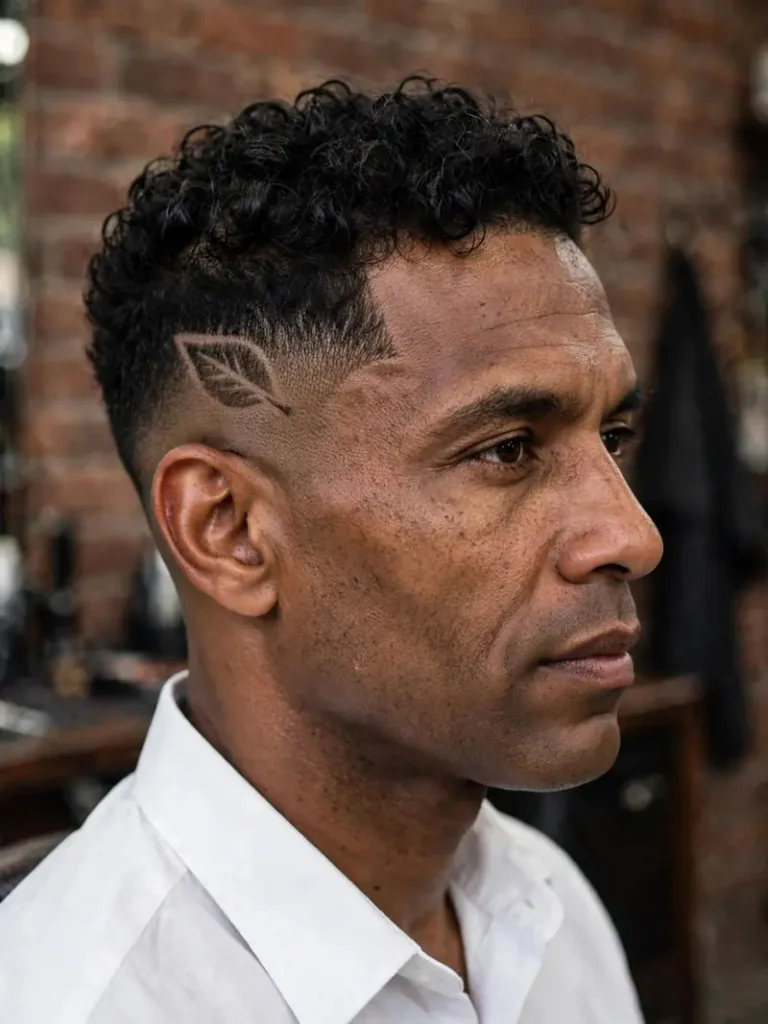
Tight curls sit close to the crown on top, about two inches long. Mid fade starts around the temples and blends down to skin near the ears. Small leaf sits in the fade above the ear, with a thin vein down its centre. Edges stay crisp at the forehead, with a short tapered neckline at the back. Leaf shape feels natural next to curls, which makes this cut feel calm.
Show the barber a mid fade with a number two guard and a leaf above the ear. Press light cream into damp curls, then shape them with fingers and let them dry. Curly hair frames the leaf well, because the dark curls contrast with the pale shape. Leaf veins fill in within a week, so plan a touch-up often. One mistake is cutting the leaf too deep, which makes it look rough; keep the lines light instead.
24. Crossed Lines Temple

Caesar top runs about two inches long, combed forward with a straight fringe. Low taper starts just above the ears and keeps some length at the sideburns. Two lines cross at the temple, forming a clear X through the taper. Hairline stays straight under the fringe, while the back tapers to a clean neckline. Crossed lines feel stronger than one line, which gives this cut a firm look.
Show the barber a low taper with a number three guard and crossed lines at the temple. Work matte clay through damp hair, then comb the fringe forward. Straight hair suits this cut, because smooth strands keep the fringe even. Crossed lines blur as stubble grows, so book a trim each week. One slip is crossing the lines too high, which lets the fringe cover them. Keep the cross low instead.
25. Long Sweeping Arc
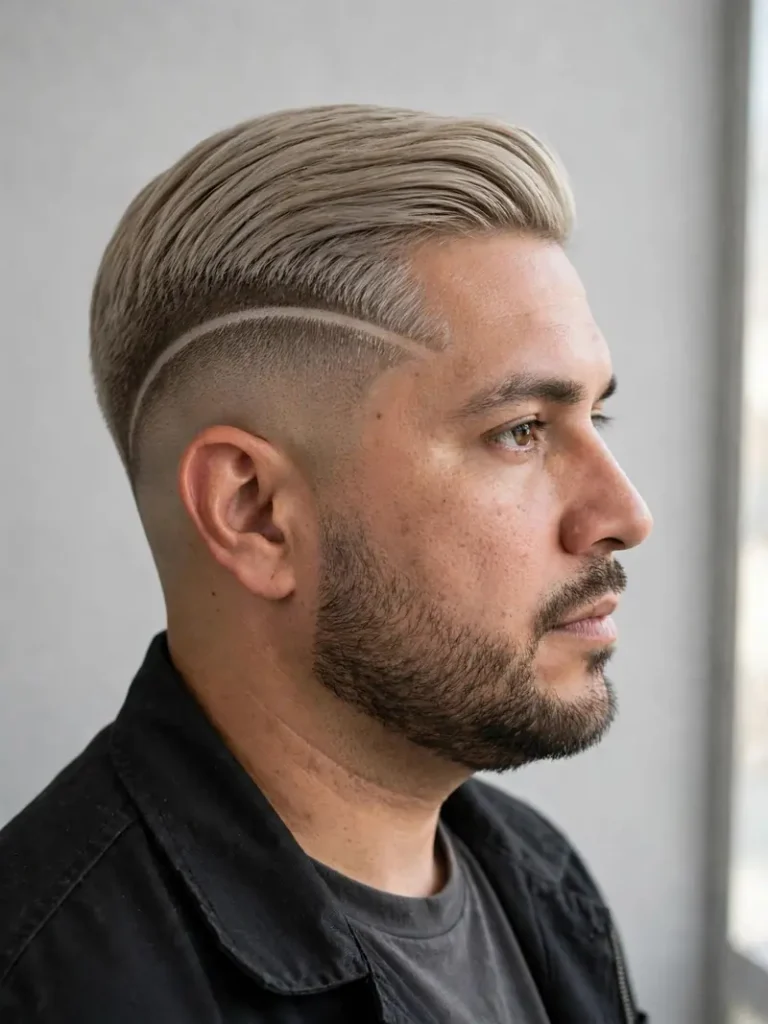
Side-parted top runs about two inches long. High fade starts near the temples and blends to skin down the sides. One long arc sweeps from the temple back through the fade in a single curve. Hairline stays neat at the forehead, while the back fades into a tapered neckline. Long arc pulls the eye across the whole side, which makes the cut feel open.
Mention a high fade, a number two guard, and one long arc from the temple. Comb light cream through damp hair, then part it to the side. Straight hair suits this cut, because smooth strands keep the part clear. Long arcs blur within a week, so book a touch-up often. One mistake is curving the arc too low, which lets it sink into skin. Keep it high in the fade instead.
26. Short Dash Marks

Textured fringe top runs about two inches long, with strands pointing forward in rough pieces. Mid skin fade starts around the temples and blends to bare skin. Three short dash marks sit in a row through the fade above the ear. Hairline stays soft under the fringe, while the neckline tapers to a clean edge. Short marks feel light and quick, which gives this cut a casual feel.
Mention a mid skin fade, a number two guard, and three dashes above the ear. Work matte clay through damp hair, then push the fringe forward with fingers. Straight hair shows the dashes best, because flat strands leave the fade open. Dashes fill in within days, so plan a trim each week. One slip is spacing the dashes too far apart, which makes them look random; keep them even instead.
27. Wing Shape Carve

Brushed-up top lifts about two inches at the front, with strands swept up. Drop fade curves down behind the ear and blends to skin at the back. Wing shape sits in the fade at the back, with layered lines like feathers. Hairline stays natural at the forehead, with a tapered neckline at the nape. Wing at the back shows only from behind, which makes it a quiet detail.
Pick a drop fade with a number three guard and a wing at the back. Work matte clay through damp hair, then brush the top up and back. Straight hair lifts well for this cut, because stiff strands hold height. Wing lines blur within a week, so book a touch-up often. One mistake is asking for the wing too large, which crowds the back; keep it compact instead.
28. Small Heart Carve
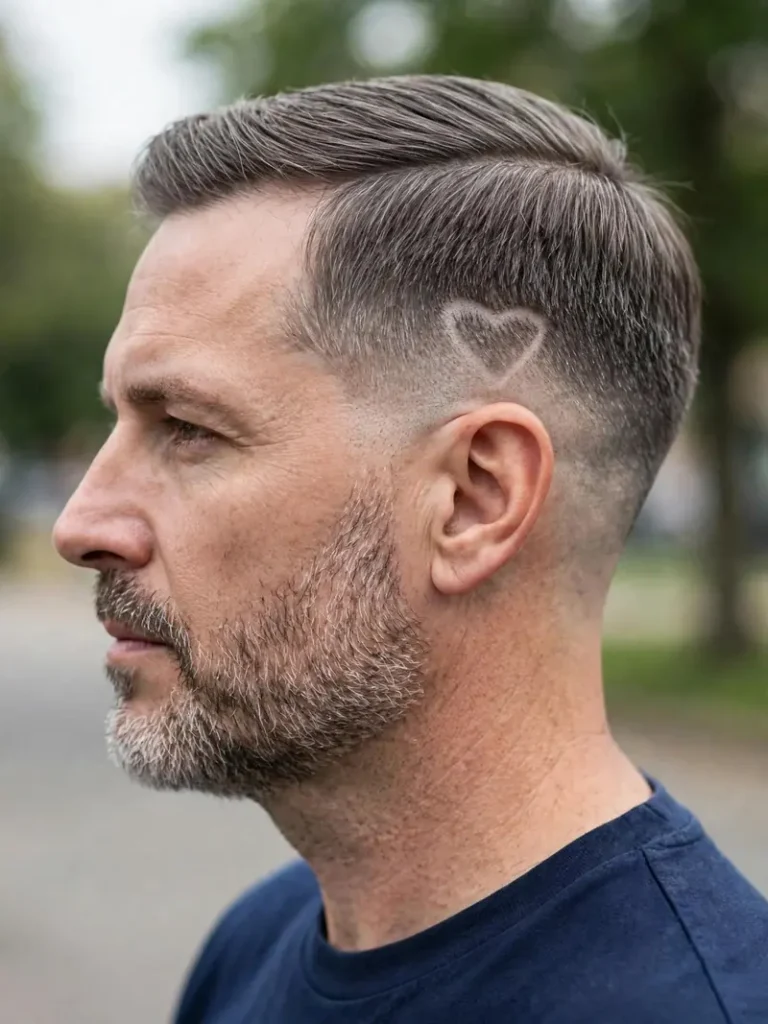
Neat side-parted top runs about two inches long, combed to one side. Low fade starts just above the ears and blends to skin near the sideburns. Small heart sits in the fade above the ear, with two round lobes. Hairline stays tidy at the forehead, while the back fades into a tapered neckline. Heart feels gentle next to a neat part, which makes this cut feel warm.
Pick a low fade with a number two guard and a small heart above the ear. Comb light cream through damp hair, then part it to the side with a comb. Straight or wavy hair suits this cut, because smooth strands keep the part clear. Heart edges soften as hair grows, so plan a touch-up each week. One slip is placing the heart too high, which lets the top cover it. Keep it low in the fade instead.
29. Starburst Lines
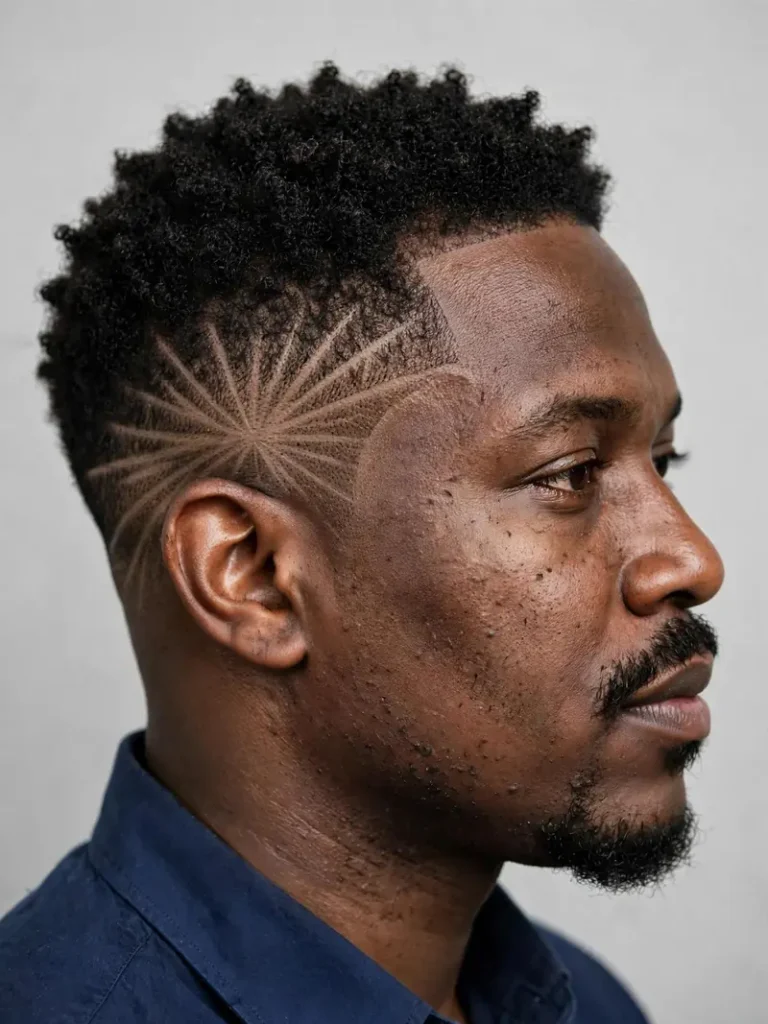
Short coily top keeps tight curls with clear definition on the crown. High skin fade starts near the temples and blends to bare skin. Thin lines radiate from one point in the fade above the ear, like rays from a star. Edges stay crisp at the forehead, with a short tapered neckline at the back. Radiating lines feel lively, which makes this cut stand out from plain stripes.
Call for a high skin fade with a number one guard and starburst lines above the ear. Press light cream into damp curls, then shape them with fingers. Coily hair suits this cut, because the dark fade gives the pale rays strong contrast. Rays fill in fast, so book a touch-up every week. One mistake is asking for too many rays, which crowds the fade; keep the count low instead.
30. Nape Diamond Pattern

Loose curls sit close to the crown on top, about two inches long. Mid fade starts around the temples and blends down to skin at the back. Diamond grid sits in the fade at the nape, with crossed lines forming small squares. Edges stay crisp at the forehead, with a clean tapered neckline at the collar. Grid at the nape shows only from behind, which makes it a hidden detail.
Call for a mid fade with a number two guard and a diamond grid at the nape. Press light cream into damp curls, then let them dry without brushing. Curly hair suits this cut, because the loose top balances the neat grid. Grid lines blur within a week, so plan a touch-up often. One slip is making the grid too wide, which lets it spread past the fade. Keep it centred at the nape instead.
Conclusion
Shaved marks ask for very little commitment. Growth softens them within days, so a bold try costs little. Haircut design earns its place on faded sides, where skin and trimmers do the work. Bring a clear sketch to the chair and name the guard and fade height. Matte clay or light cream keeps the top calm, since heavy shine pulls the eye from the line. Start with a quiet line and add more marks only when it feels natural. Best of all, every pattern grows out on its own schedule.
About Me
Hi, I am Beck, the voice behind Hairzaa. I share simple, real-life hairstyles, cuts and color ideas that busy women can actually do, because confidence starts in the morning mirror. Every style here is tested in real life first, so you can look beautiful without the fuss.