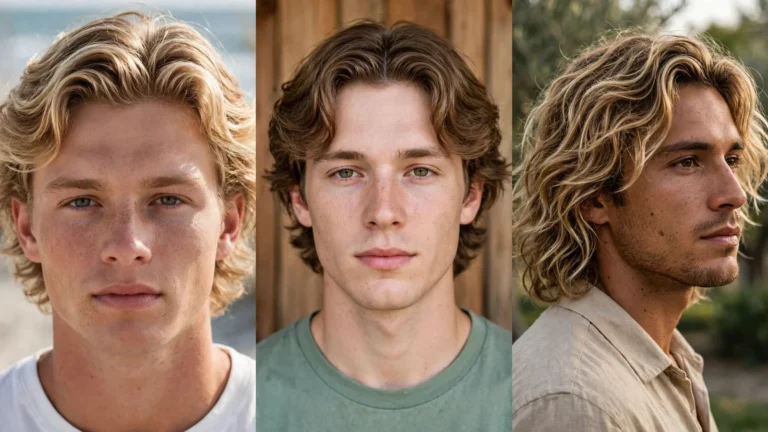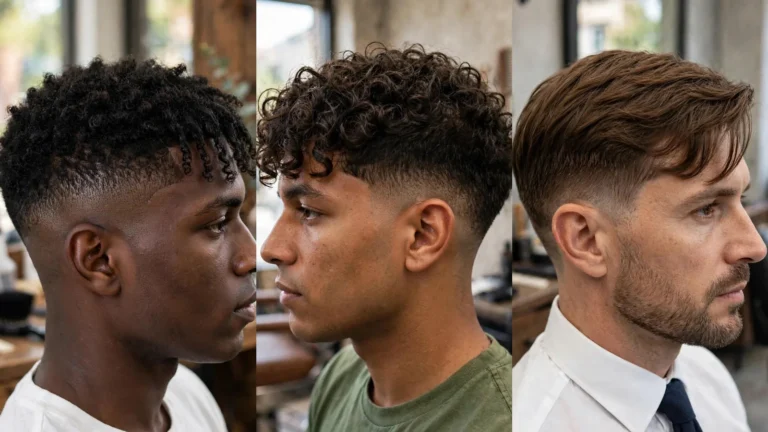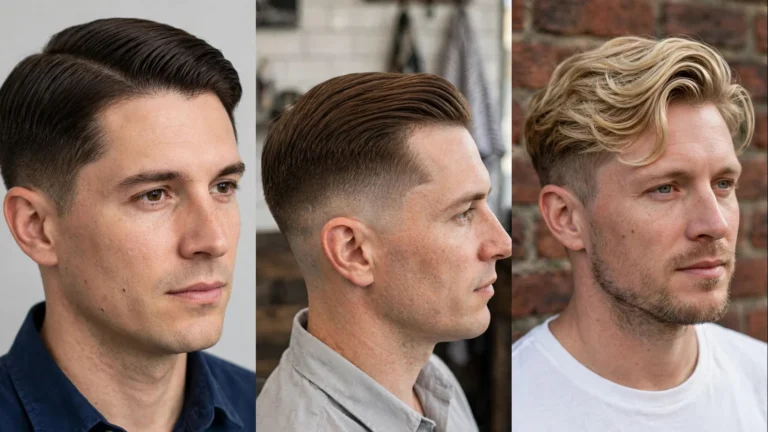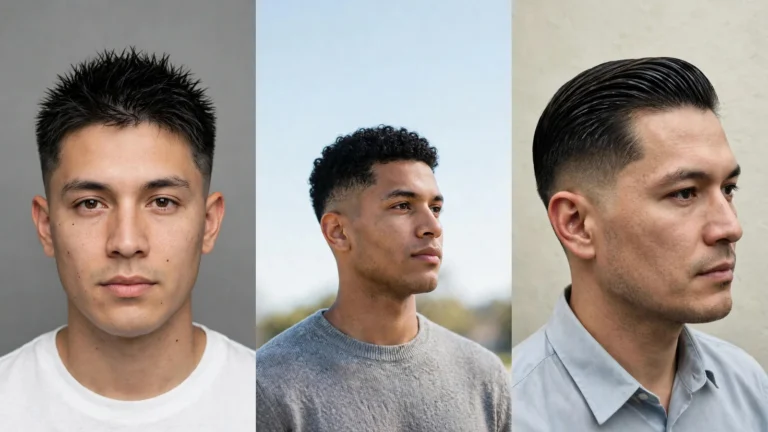
Blended sides melt into the top, but a hard edge does the opposite. Sharp disconnect lines mark where long hair stops and short sides begin. Tops run from slicked back rows to loose curls. An undercut fade drops the sides toward skin in smooth steps. Low, mid, high, drop, and burst blends each change the mood. Straight, wavy, curly, and coily hair can all carry the shape. Upkeep stays regular, with daily styling and a fresh edge every few weeks. Start with hair texture, then weigh how much morning time the style should take. Modern undercut styles reward patience and a clear request at the chair.
1. Slicked Back Low Fade Disconnect
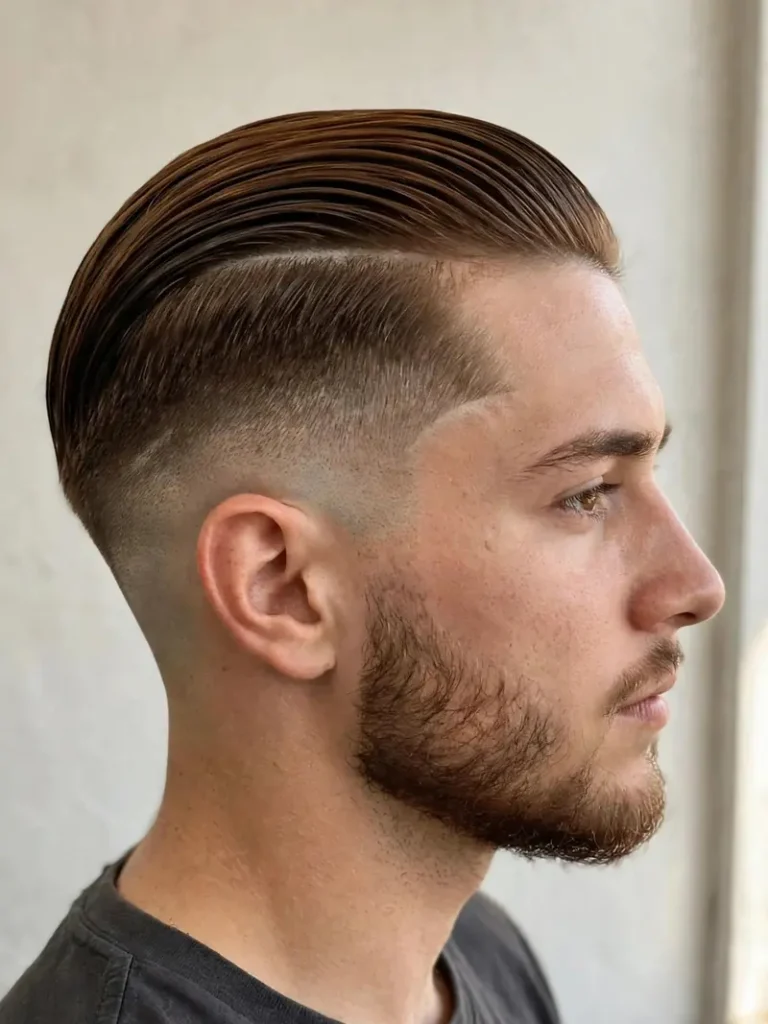
Long top combs straight back from the forehead in smooth, even rows. Sides stay short under a hard disconnect line in this undercut fade, running from temple to crown. Low fade starts just above the ears, blends down at the sideburns, and stays short across the back. Wet finish sets this version apart from dry slicked styles, since shine shows every comb line.
Ask for a low fade with a hard disconnect line. Keep the top long enough to comb back flat. Clipper work starts with a number two guard, which leaves about a quarter inch at the shortest point. Work matte clay through damp hair with a comb, then press the top back in one pass. Book a trim every three weeks, because the line softens fast once new growth fills in.
2. Side Swept High Fade Undercut
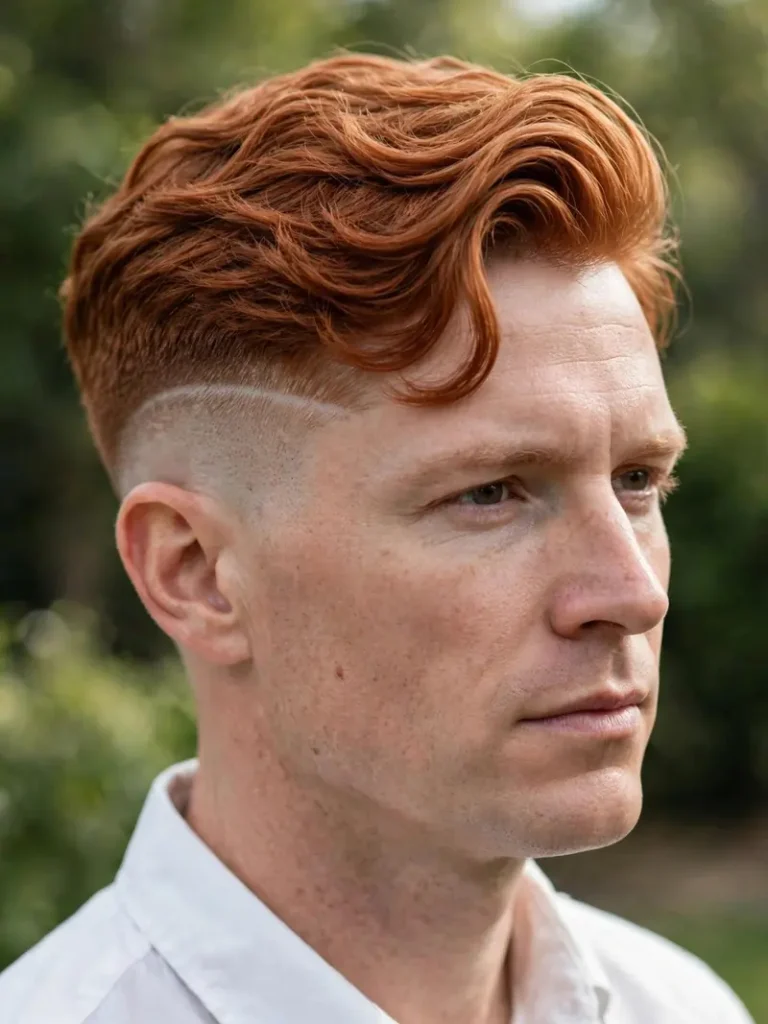
Side sweep pushes the long top across the head from a low part on the left. High fade climbs toward the crown and leaves only a short band of hair above the ears. Disconnect line sits high on the side, so the sweep drops over a clean step. Sweep length sets it apart from shorter side parts, since the ends reach past the ear.
Blow dry the top toward the side with a vent brush. Leave it to set before touching it. Rub a pea-sized amount of light cream between palms and smooth it over the sweep. Ask the barber to keep the disconnect high, with a number one guard at the shortest point. Thick hair holds the sweep well, while fine hair needs the cream worked in while damp. Trim every three weeks so the high line stays crisp.
3. Textured Top Drop Fade Undercut
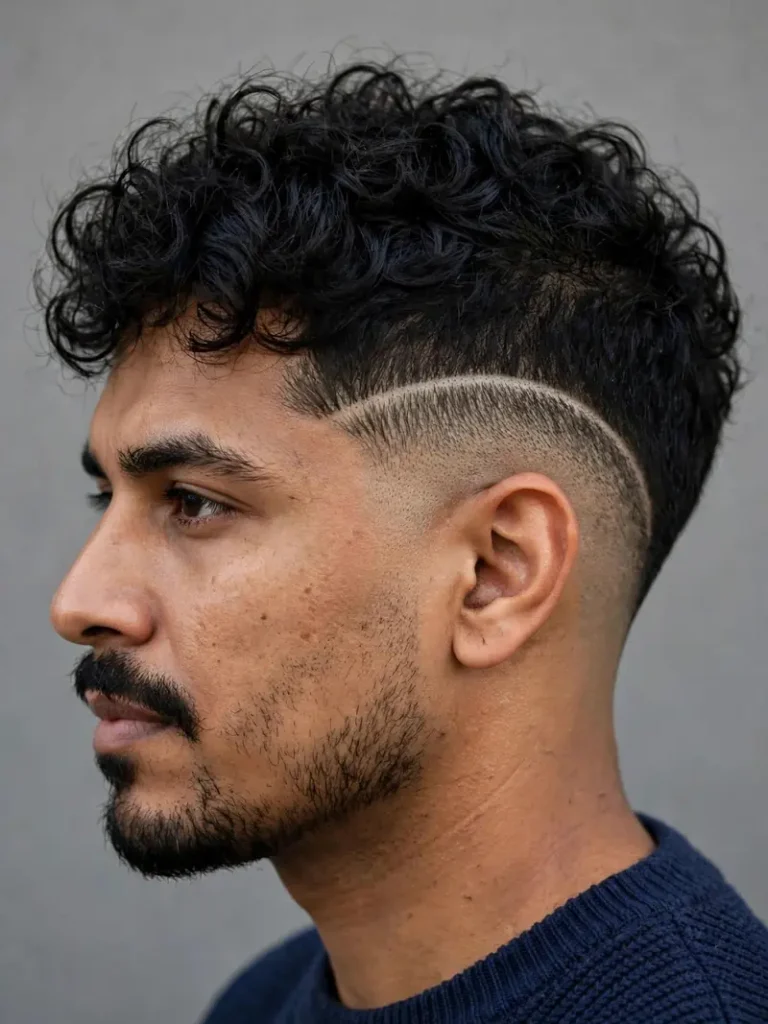
Choppy texture runs through the long top, with short layers that lift at the crown. Point cutting shapes the ends, which means small snips into the hair tips create the rough edge. Drop fade curves down behind the ear and ends lower at the nape than at the temple. Disconnect line follows the curve of the drop, so the texture sits above a clear step.
Wavy hair suits this cut best, since natural bends add texture without much work. Straight hair needs sea salt spray scrunched in with fingers to fake the same movement. Ask for a drop fade with a number two guard, plus a disconnect line at the curve. Dry the top with a diffuser on low heat. Use heat protectant first because hot air dries curls out. Trim every four weeks to keep the drop curve clean.
4. Curly Top Skin Fade Disconnect
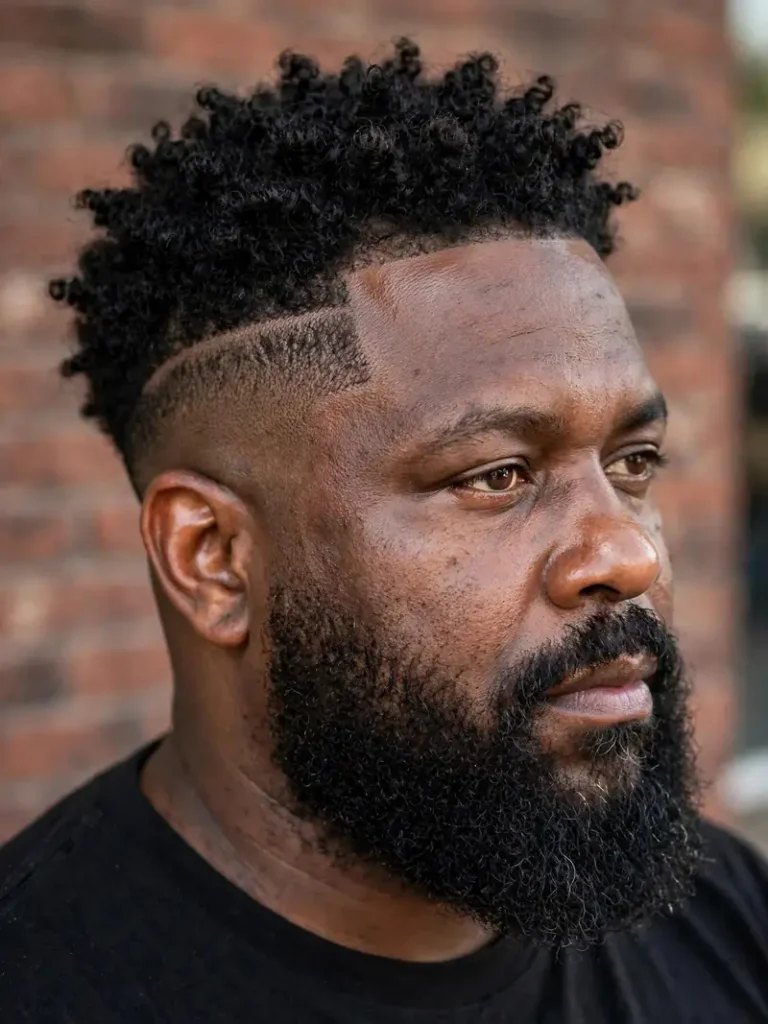
Sides blend down to bare skin, which gives the curly top a strong frame. Skin fade starts at the temple and drops to nothing just above the ear. Long curls sit on top with clear definition, and the back keeps the same short skin blend. Disconnect line runs straight across the side, so curls end in a hard edge instead of melting down.
Book a trim every two weeks, since skin blends lose their edge fast as hair grows. Ask for a zero guard at the shortest point, with the disconnect line kept straight. Scrunch light cream into damp curls with fingers, then let them dry without touching. Curly hair keeps its shape between cuts, so the top needs less work than the sides. Grow the top longer for a fuller look, or keep it short to show the skin blend more.
5. Wavy Top Mid Fade Undercut
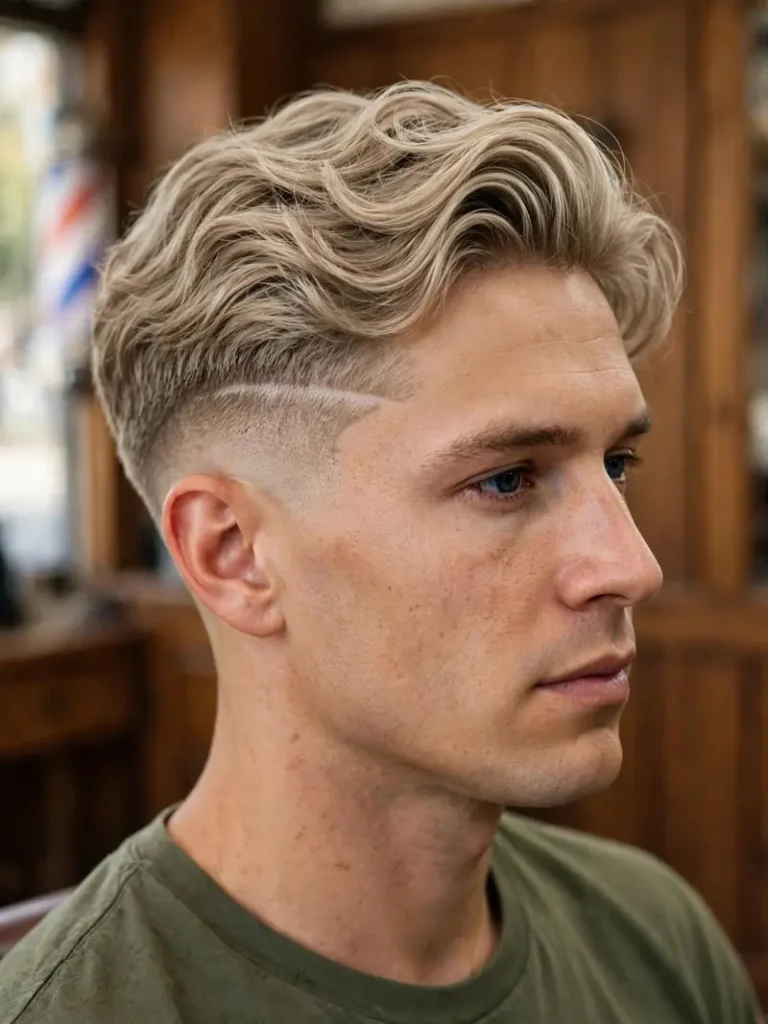
Waves on top meet very short sides, and the gap between them gives the cut its punch. Mid fade starts around the temples and blends down in even steps to the sideburns. Waves sweep back with a loose bend, while the back keeps the same mid blend height. Temple-height line marks the split, unlike low-line cuts where the split sits near the ear.
Wear the waves swept back for a neat shape, or push them forward for a softer front. Tell the barber: mid fade, number two guard, disconnect at temple height. Work sea salt spray through damp waves with fingers, then air dry for natural bend. Wavy hair holds the shape well, because each bend locks the next one in place. Trim every three weeks to keep the mid line sharp.
6. Pompadour High Skin Fade
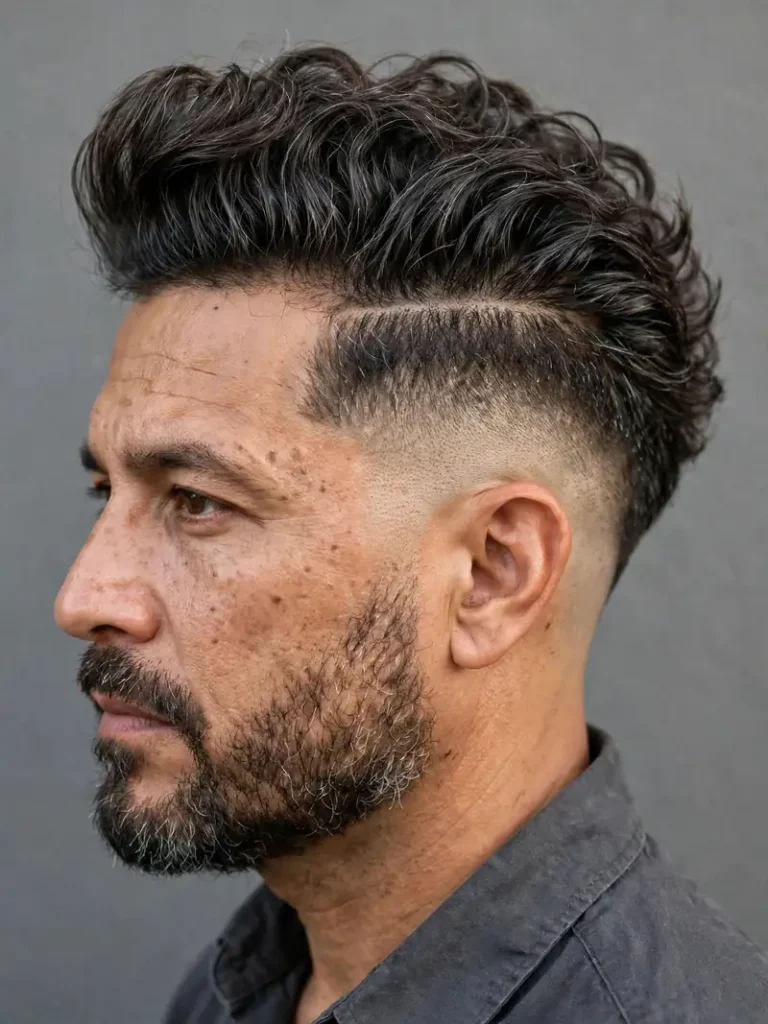
Tall pompadour sweeps up and back from the forehead, with height stacked at the front. High skin fade climbs near the crown and blends down to bare skin above the ears. Disconnect line runs high on the side, so the tall top stands clear of the short sides. Back keeps the high blend, and the neckline ends square and clean at the nape.
Dry the pompadour up and back with a round brush, then set it with pomade. Skipping the blow dry leaves the front flat, so take two minutes with the brush first. Ask for a high skin fade with a zero guard and a disconnect near the crown. Thick hair holds height best, while fine hair needs a smaller amount of pomade to avoid weight. Trim every two weeks to keep the skin blend smooth.
7. Quiff With Low Fade Sides
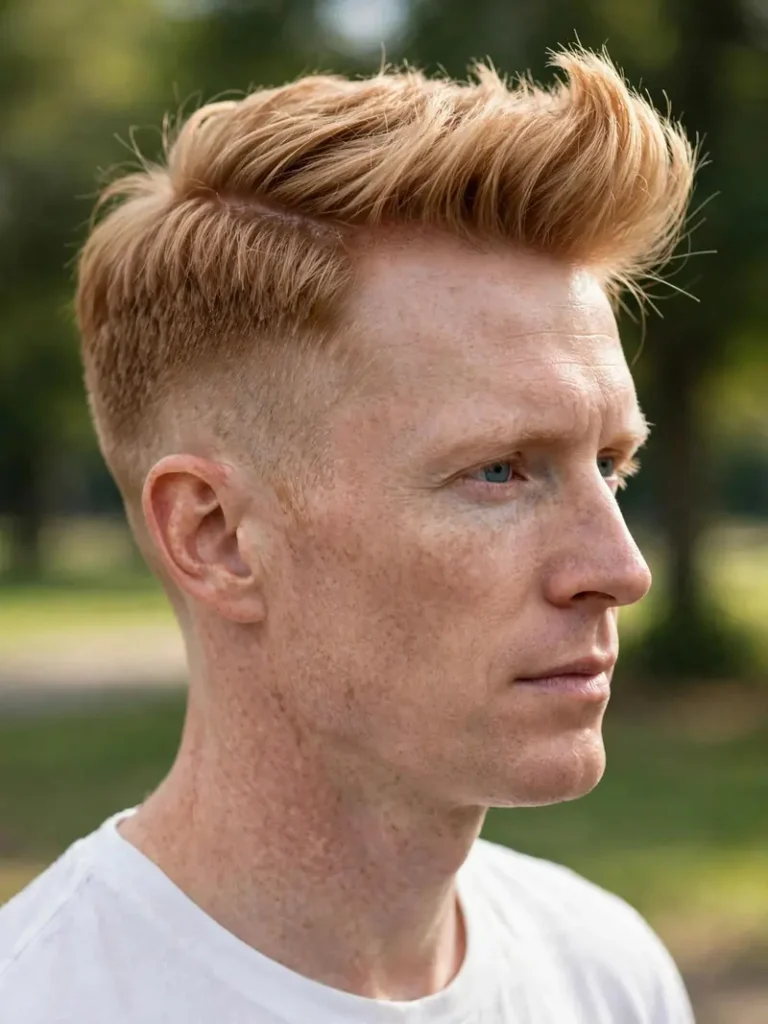
Disconnect line sits low on the side, just above the ear, and frames the lifted quiff. Quiff lifts up and forward from the forehead, with the front standing higher than the crown. Low fade starts just above the ears and keeps length at the sideburns and neckline. Short back keeps the low line neat, unlike high-fade versions that bare the sides.
Matte clay gives the quiff grip without shine, so the lift lasts through the day. Warm a small amount between palms, then push the front up with fingers. Ask for a low fade with a number three guard and a disconnect just above the ear. Fine hair lifts well with clay, because the product adds grip without weight. Trim every three weeks to keep the low line neat.
8. Forward Fringe Burst Fade
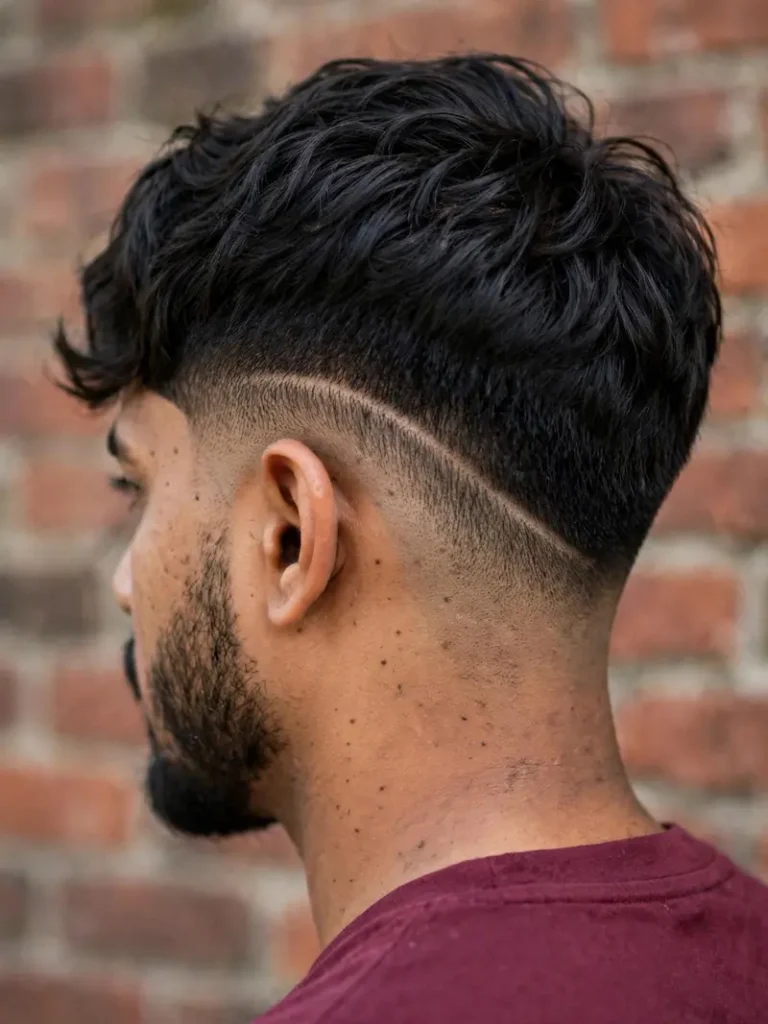
Hairline stays straight across the forehead, with the fringe cut blunt at brow level. Fringe pushes forward in textured pieces, and the back keeps a short, even length. Burst fade arcs around the ear in a half circle, leaving length behind the ear. Disconnect line runs above the burst, so the fringe sits clear of the faded sides.
Barber wording stays simple: a burst fade, a number one guard, and a straight fringe at brow level. Name the disconnect line above the burst, so the barber keeps it clean. Work light cream through damp fringe with fingers, then push the pieces forward. Straight hair lays flat in a fringe, while wavy hair needs the cream to hold the pieces down. Trim every two weeks to keep the burst arc sharp.
9. Cropped Top High Fade Disconnect

Dry finish keeps the short top matte-looking, with no shine on the surface. Crop sits short on top, with choppy ends that point forward toward the forehead. High fade climbs toward the crown and ends in a clean step under the crop. Raised line lifts the crop clear, unlike low-fade crops that keep the split near the ear.
Rub matte clay between palms and rake it through the crop with fingers. Push the ends forward while the clay is still soft, then leave it to set. Tell the barber: high fade, number one guard, short textured crop on top. Short hair dries fast, so skip the dryer and let the crop air dry. Trim every two weeks to keep the high line crisp.
10. Long Flow Low Drop Fade
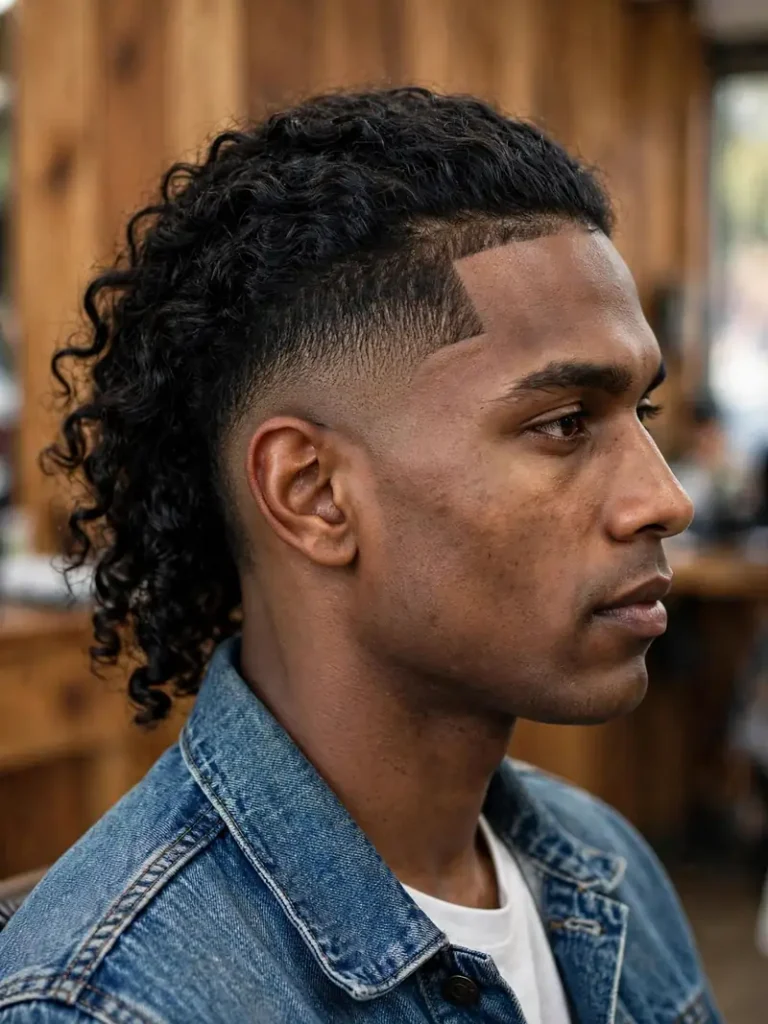
Short sides sit under a low drop fade that curves down behind the ear. Long top flows back past the ears, with loose length reaching the collar at the back. Drop line ends lower at the nape than at the temple, so the back keeps more length. Low line keeps the flow long, unlike high-line long cuts that shorten the sides.
Wavy and curly hair carry the flow best, since natural movement fills the length out. Straight hair needs sea salt spray worked in with fingers to add bend. Ask for a low drop fade with a number two guard. Keep the top long past the ears. Air dry the flow, because heat flattens the natural wave. Trim every four weeks to keep the drop line clean.
11. Side Part Skin Fade Undercut

Clean part runs from the front hairline back to the crown, splitting the long top. Top combs to one side in smooth rows, with the part side kept flat and neat. Skin fade blends down to bare skin at the temples and sideburns. Line beside the part keeps the split hard, unlike blended side parts that fade the edge away.
Trims come every two weeks, since skin fades lose their edge fast. Ask for a skin fade with a zero guard and a part combed from the left. Comb pomade through damp hair with a fine-tooth comb, then set the part line. Straight hair holds a part well, while wavy hair needs the pomade to keep the line in place. Grow the top a little longer between cuts for a deeper sweep.
12. Messy Textured Mid Fade

Tousled texture fills the long top, with pieces pointing in mixed directions. Texturizing thins the bulk, which means shears remove weight so pieces move freely. Mid fade starts around the temples and blends down to the sideburns in even steps. Clear edge ends the messy top, unlike blended messy cuts that melt the top into the sides.
Push the texture forward for a fringe shape, or sweep it back for a neater front. Ask for a mid fade with a number two guard and texture cut into the top. Work matte clay through damp hair with fingers, then twist a few pieces apart. Thick hair holds messy texture well, because the bulk keeps pieces apart. Trim every three weeks to keep the mid line neat.
13. Curly Fringe High Fade
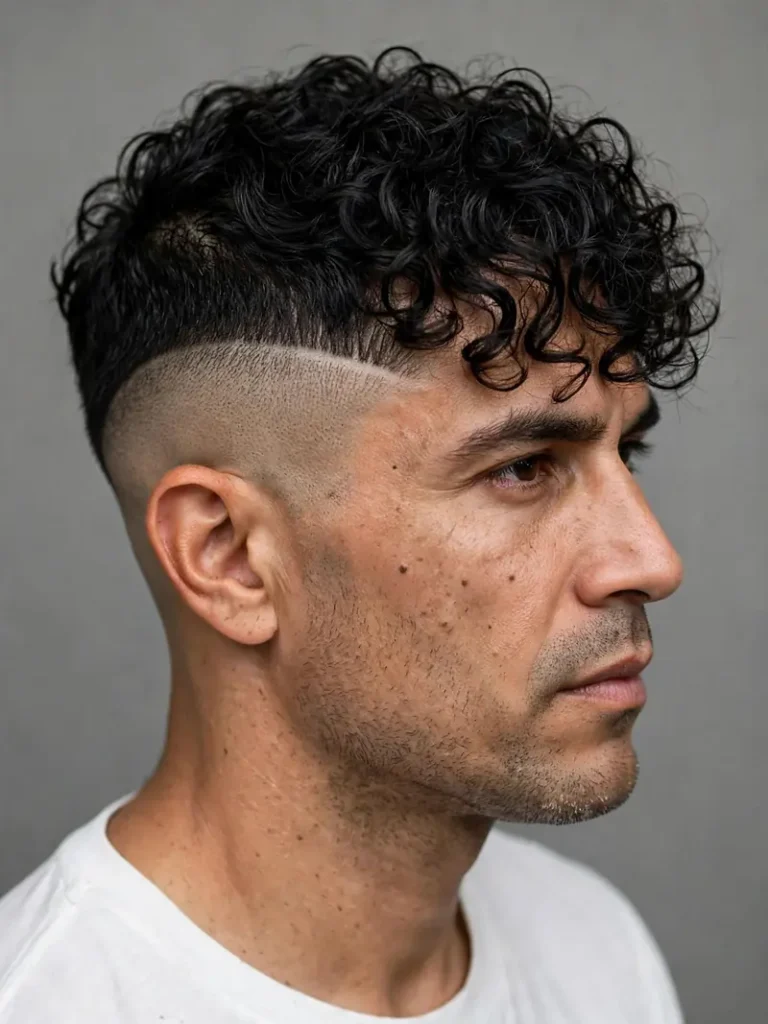
Curly fringe falls forward over the forehead, with tight curls stacked at the front. High fade climbs toward the crown and leaves the sides very short above the ears. Curls keep clear definition on top, while the back fades to the same high line. High line lifts the fringe clear of the sides, unlike low-fade curls that keep the edge low.
Scrunch light cream into damp curls with fingers, then let them dry untouched. Brushing dry curls breaks them apart, so keep the brush away once hair dries. Ask for a high fade with a number one guard and curls kept long on top. Curly hair shrinks as it dries, which means the fringe looks shorter by evening. Trim every three weeks to keep the high line clean.
14. Slicked Side Sweep Drop Fade
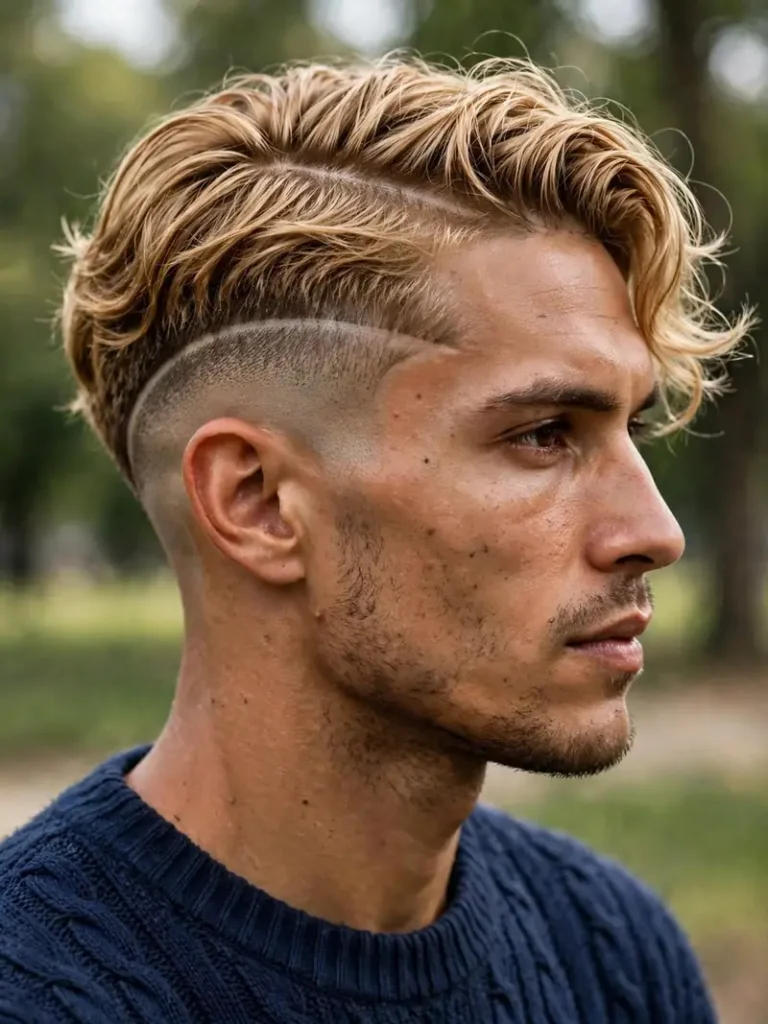
Sweep on top meets a short drop fade, and the height gap gives the cut its shape. Comb-over sweeps to one side in smooth waves, with the ends falling past the ear. Drop fade curves down behind the ear and ends lower at the nape. Curved line follows the drop, unlike straight-line fades that run level around the head.
Pomade gives the sweep shine and hold, so the waves stay smooth all day. Comb a small amount through damp hair with a wide-tooth comb, then sweep to the side. Ask for a drop fade with a number two guard and a long sweep kept past the ear. Wavy hair holds a sweep well, because each wave supports the next one. Trim every four weeks to keep the drop curve neat.
15. Short Quiff Burst Fade

Line arcs around the ear, framing the short quiff from the sides. Quiff lifts up at the front in a short, tight shape, with the peak just above the forehead. Burst fade curves around the ear in a half circle, leaving length at the nape. Short even back keeps the quiff as the focus, unlike longer versions that pull the eye forward.
Order a burst fade with a number one guard and a short quiff at the front. Name the disconnect arc around the ear, so the burst keeps its round shape. Work matte clay through damp hair with fingers, then push the front up. Straight hair lifts well in a short quiff, while thick hair needs less product to hold. Trim every two weeks to keep the burst arc round.
16. Wavy Pompadour Mid Fade
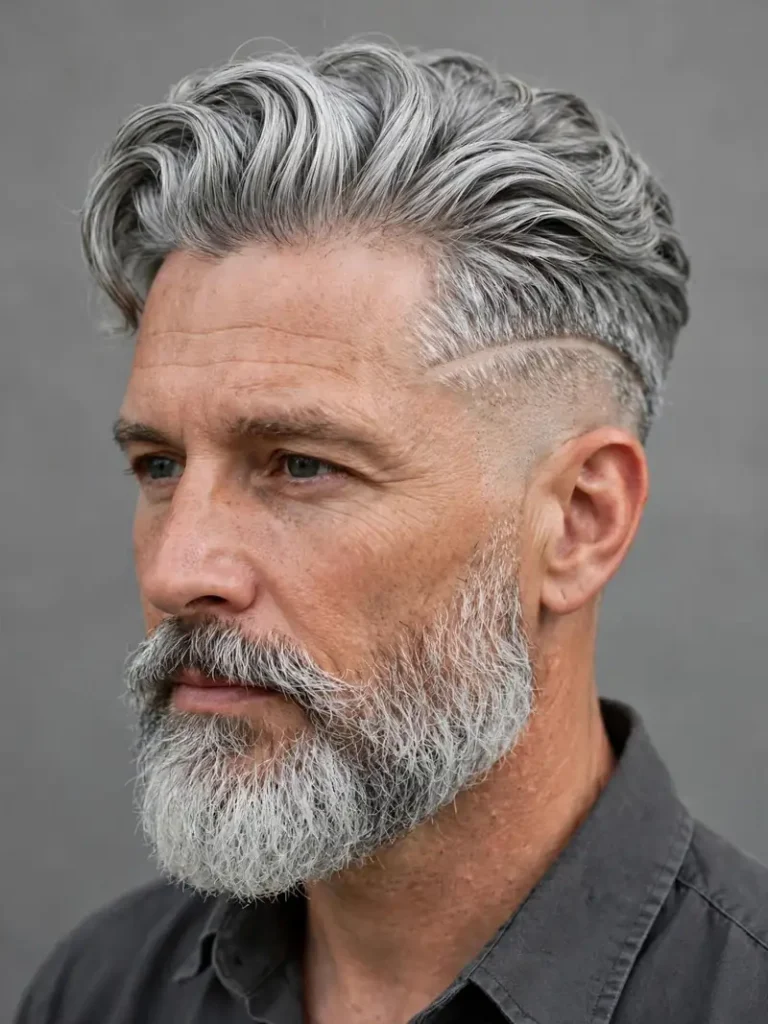
Soft matte finish keeps the wavy pompadour light-looking, with no wet shine. Pompadour sweeps up and back in loose waves, with height built at the front. Mid fade starts around the temples and blends down to the sideburns. Temple-height split keeps the waves free, unlike slicked versions that press the top flat. Back keeps the mid blend, and the neckline ends in a clean, squared edge.
Blow dry the waves up and back with a round brush, then hold the shape while it sets. Work light cream through damp waves with fingers to keep the bend soft. Ask for a mid fade, a number two guard, and the undercut fade line at temple height. Wavy hair holds the pompadour well, because each wave adds lift. Trim every three weeks to keep the mid line crisp.
17. Textured Fringe Low Skin Fade
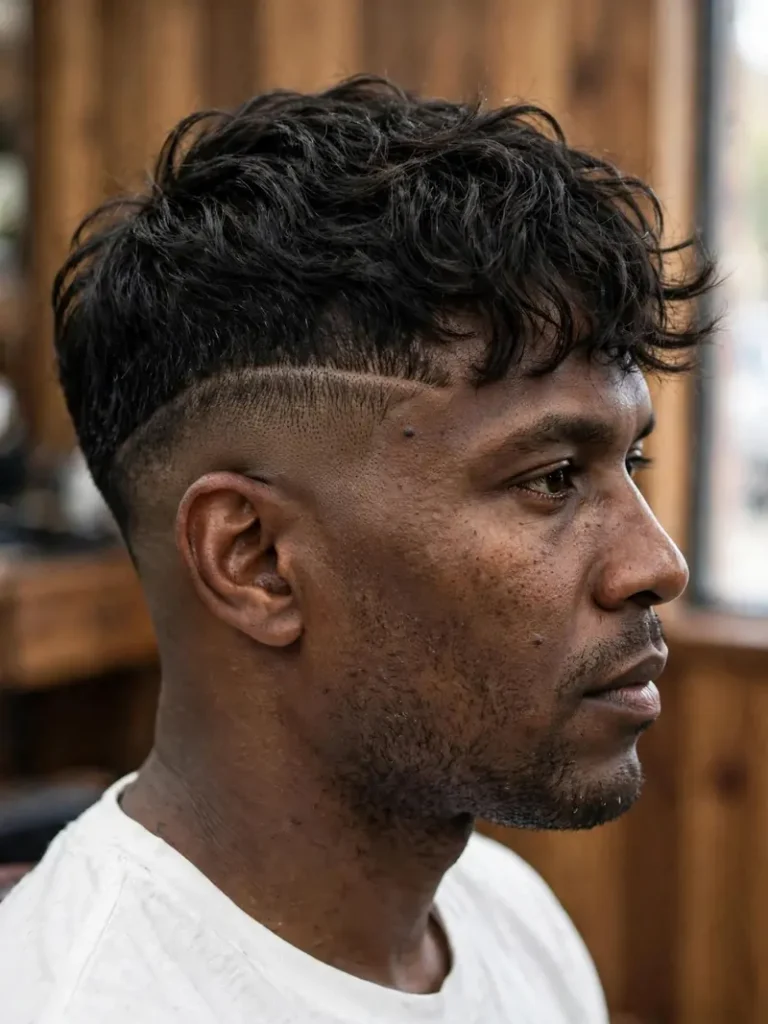
Hairline runs straight across the forehead, with the fringe ending just above the brows. Fringe falls forward in short choppy pieces, and the neckline ends square at the nape. Low skin fade blends down to bare skin just above the ears. Grounded line keeps the fringe low, unlike high-fade fringes that lift the split near the crown.
Straight hair lays neat in a fringe, while wavy hair needs light cream to hold the pieces. Ask for a low skin fade with a zero guard and a fringe cut above the brows. Work light cream through damp fringe with fingers, then push the pieces forward. Fine hair suits a short fringe, because less weight keeps the pieces up. Trim every two weeks to keep the low skin line sharp.
18. Brushed Back High Fade Undercut
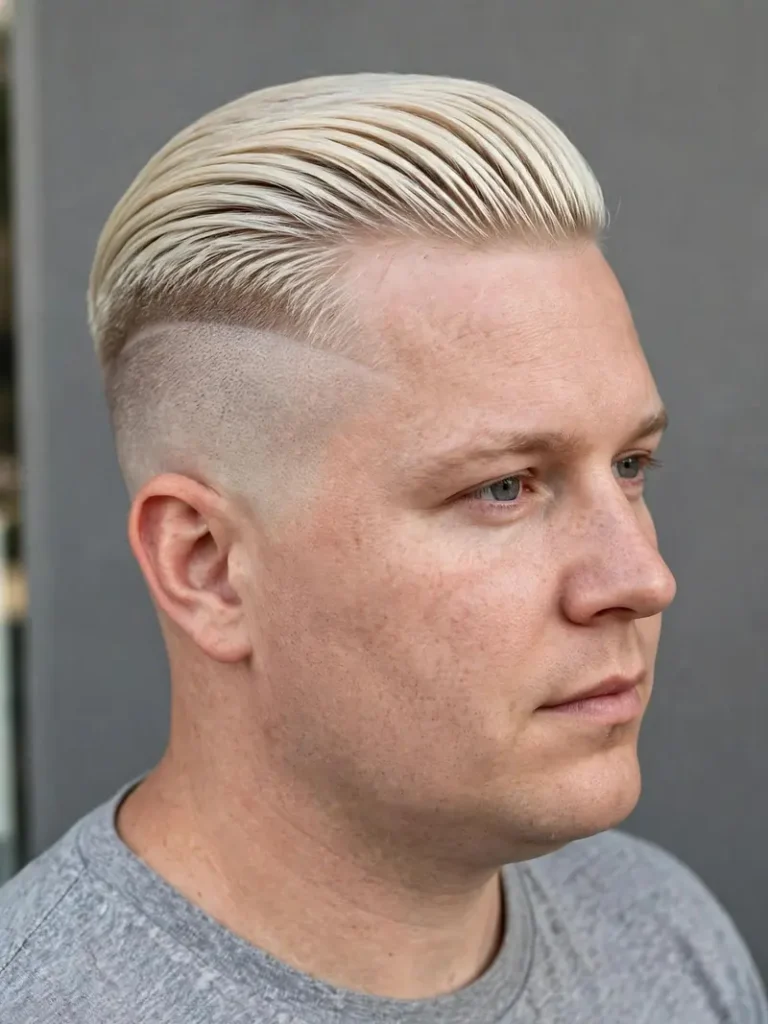
Top brushes straight back from the forehead, with smooth rows running to the crown. High fade climbs near the crown and leaves the sides very short above the ears. Disconnect line runs high on the side, so the brushed top stands clear of the fade. Dry matte finish sets this version apart from wet slicked styles.
Trims come every three weeks, since high fades lose their edge fast. Ask for a high fade with a number one guard and a long top brushed back. Blow dry the top back with a vent brush, then smooth pomade over the surface. Thick hair holds the brushed shape well, while fine hair needs the pomade to add weight. Grow the top longer for a deeper sweep, or keep it short for a neater back.
19. Coily Top Drop Fade Disconnect
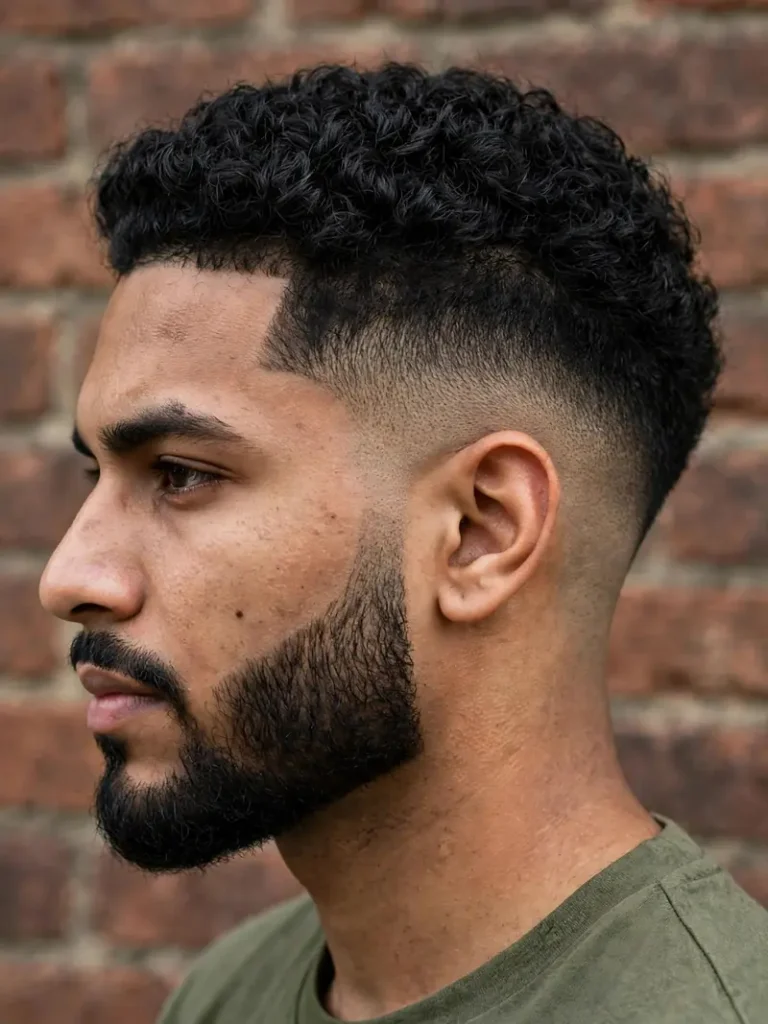
Tight coils crown the long top, with clear definition in each curl. Coils keep their spring on top, while the sides stay short under the drop line. Drop fade curves down behind the ear and ends lower at the nape than at the temple. Curved line tracks the drop, unlike straight-line coil cuts that run level around the head.
Wear the coils loose on top for full height. Press them down with light cream for a lower shape. Ask for a drop fade with a number two guard and coils kept long on top. Scrunch light cream into damp coils with fingers, then let them dry untouched. Coily hair holds definition well with moisture, so keep a leave-in cream on hand. Trim every three weeks to keep the drop line sharp.
20. Long Top Temple Fade Undercut
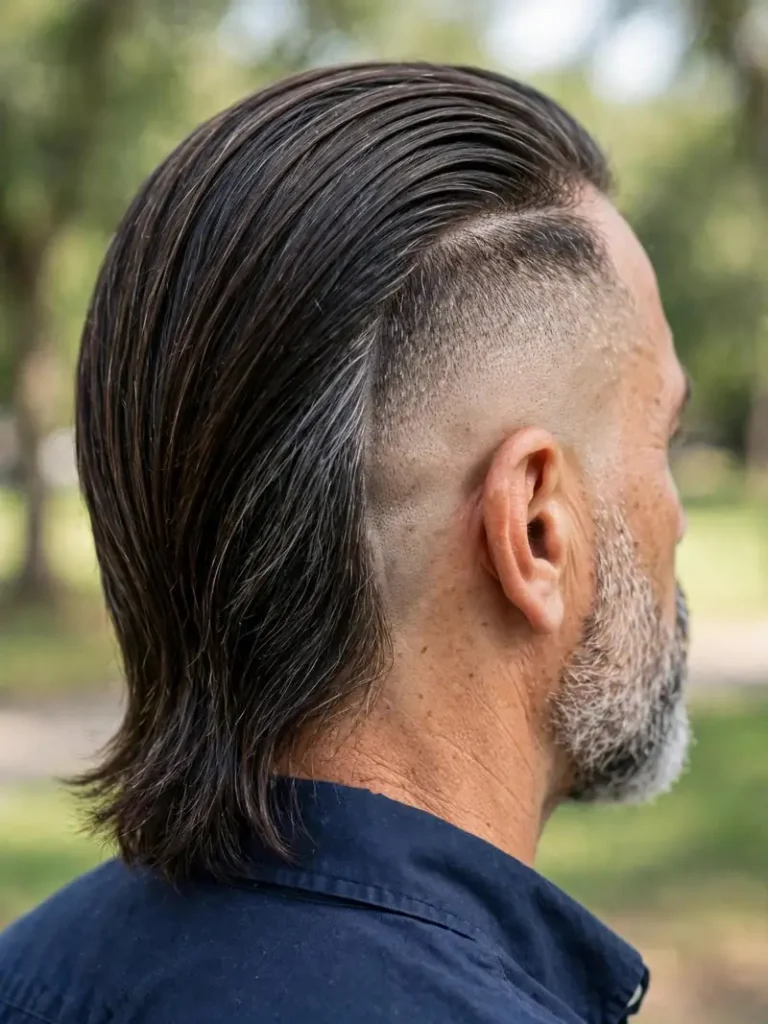
Temples carry the only fade here, with the rest kept short and even. Long top sweeps back past the ears and falls down to the collar at the back. Temple fade blends down to skin at the corners, leaving a clean hairline. Temple-only split keeps the rest short, unlike full-side fades that climb the whole side.
Comb the long top back with a wide-tooth comb, then smooth light cream over the surface. Cutting the temples too high ruins the shape, so keep the fade tight to the corners. Ask for a temple fade with a number one guard and the top kept past the ears. Straight hair sweeps back well, while wavy hair needs the cream to keep flyaways down. Trim every four weeks to keep the temple line clean.
21. Spiky Top Mid Skin Fade
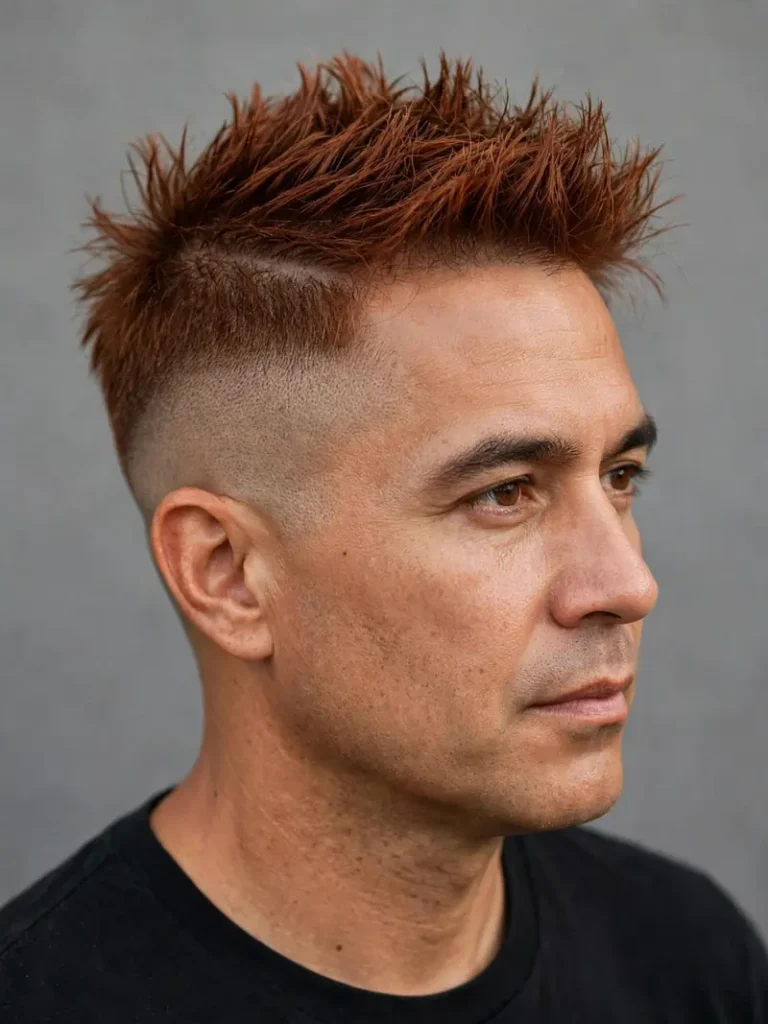
Spiky top stands tall against very short sides, and the height gap gives the cut its edge. Spikes point up in short, stiff pieces, with the front standing highest of all. Mid skin fade blends down to bare skin around the temples. Temple-height split frames the spikes, unlike low spiky styles that hide the edge near the ear.
Matte clay gives spikes grip without shine, so the points stay up all day. Warm a small amount between palms, then pinch the ends up with fingers. Ask for a mid skin fade with a zero guard and spikes kept short on top. Thick hair holds spikes well, because the bulk supports each point. Trim every two weeks to keep the skin line crisp.
22. Side Swept Fringe High Fade
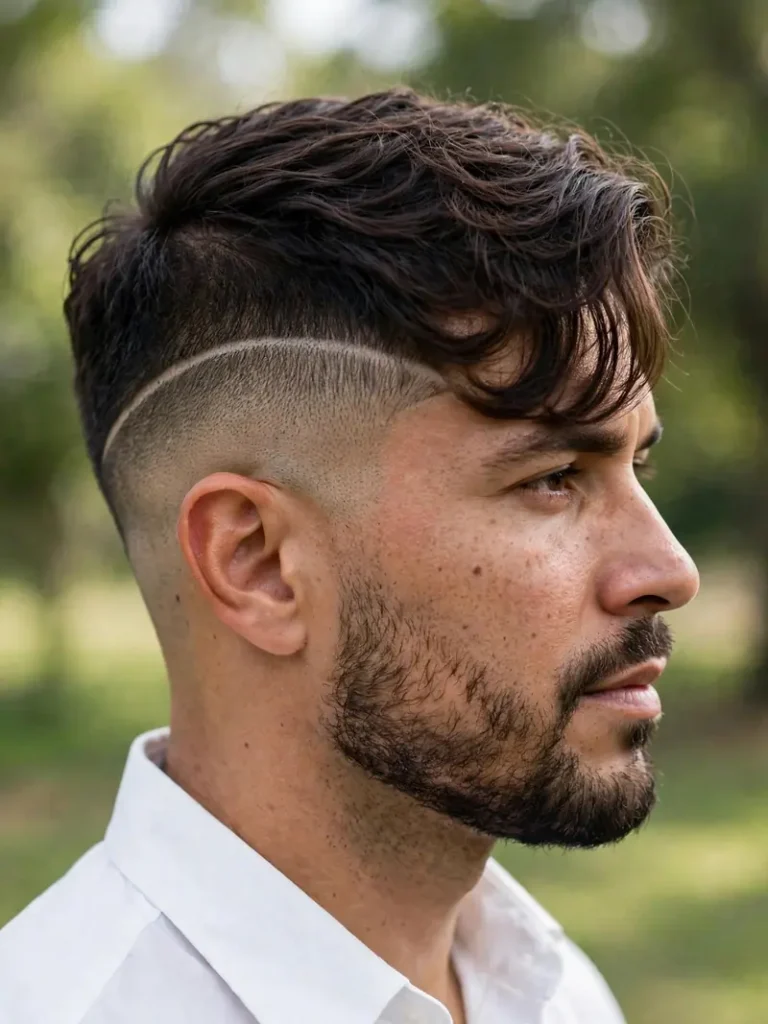
Fringe sweeps to one side across the forehead, with the ends falling past the brow. High fade climbs toward the crown and leaves the sides very short above the ears. Long fringe keeps movement on top, while the back fades to the same high line. High line keeps the fringe long, unlike low-fade sweeps that cut the edge near the ear.
Order a high fade with a number one guard and a long fringe swept to the side. Name the disconnect line high on the side, so the fringe keeps its full length. Work sea salt spray through damp fringe with fingers, then sweep it to the side. Wavy hair holds a side sweep well, while straight hair needs the spray to add bend. Trim every three weeks to keep the high fade neat.
23. Curly Top Burst Fade
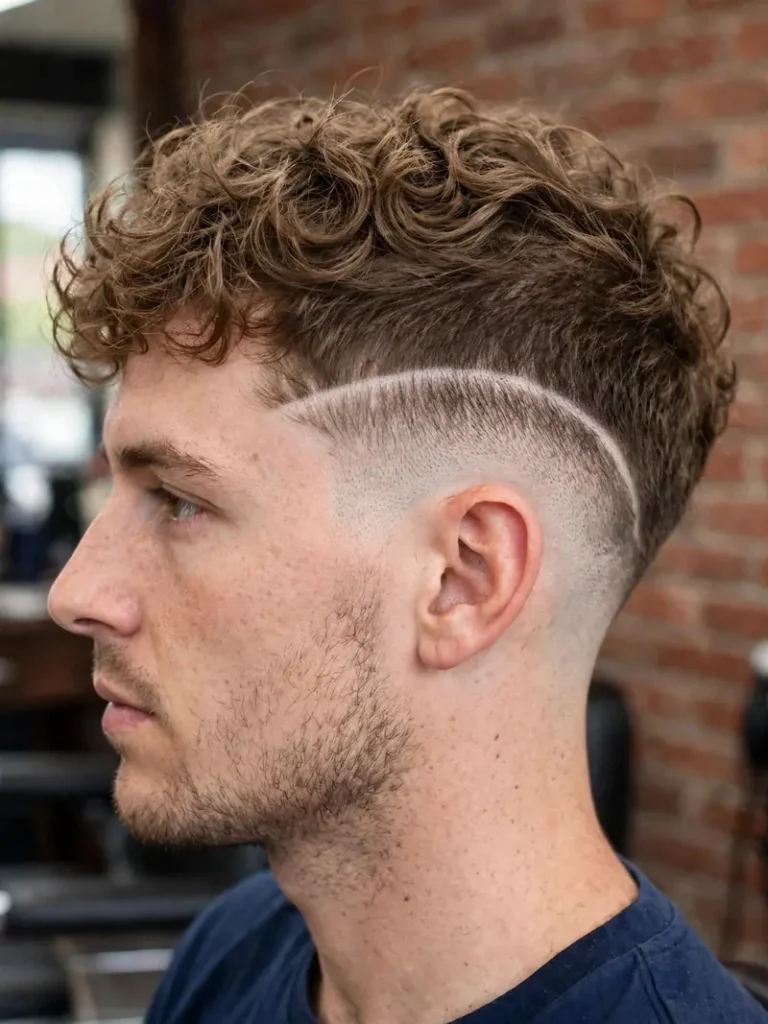
Curve arcs around the ear in a clean line, framing the curly top. Curls sit long on top with clear definition, and the front curls fall toward the forehead. Burst fade curves around the ear in a half circle, leaving length at the nape. Short even back keeps the burst as the focus, unlike full skin-fade curls that bare the whole side.
Scrunch light cream into damp curls with fingers, then let them dry untouched. Dry the curls with a diffuser on low heat, and use heat protectant first. Ask for a burst fade with a number one guard and curls kept long on top. Curly hair holds the burst shape well, because each curl frames the arc. Trim every three weeks to keep the burst curve clean.
24. Straight Fringe Low Fade Disconnect
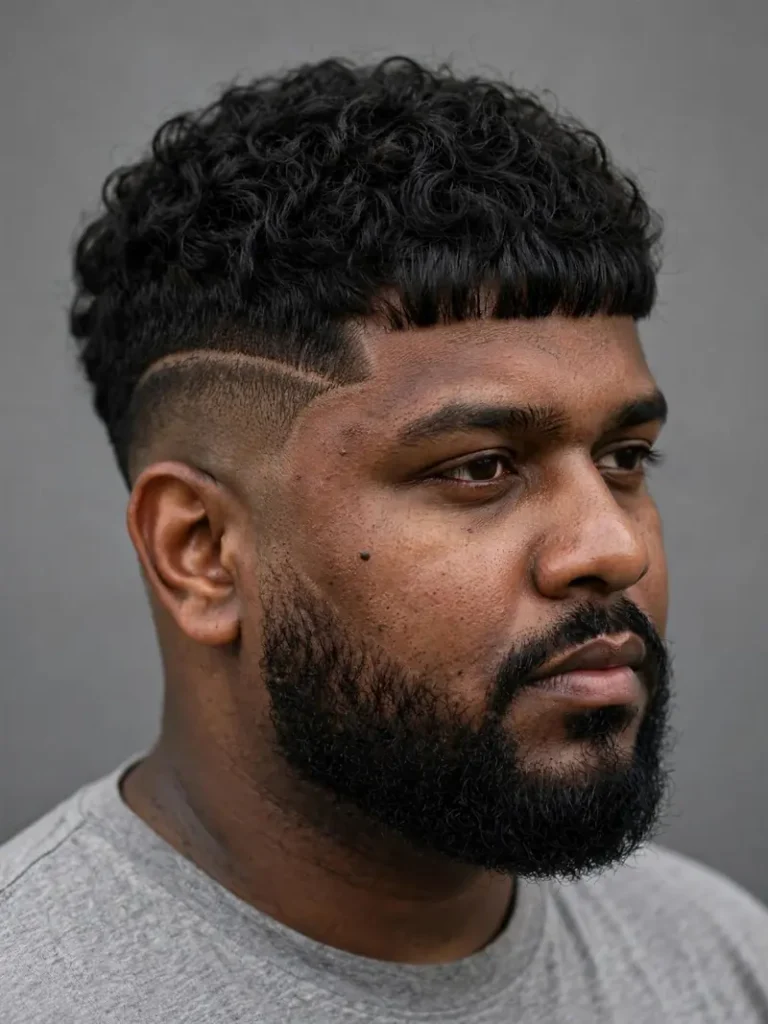
Fringe edge runs straight across the forehead at brow level, with no curve. Straight strands fall forward in a smooth sheet, and the neckline ends square at the nape. Low fade starts just above the ears and keeps length at the sideburns. Blunt split keeps the fringe edge straight, unlike high-fade fringes that shorten the front.
Straight hair suits this fringe best, since the strands fall in a clean line. Wavy hair needs light cream worked in with fingers to keep the edge straight. Ask for a low fade with a number two guard and a straight fringe at brow level. Comb the fringe forward with a fine-tooth comb while it is still damp. Trim every two weeks to keep the fringe edge blunt.
25. Voluminous Quiff Skin Fade

Quiff rises tall from the forehead in a full, rounded shape, with big volume through the front. Skin fade blends down to bare skin at the temples and sideburns. Sides stay very short, so the tall quiff stands clear of the fade. Low line lets the quiff tower, unlike high-line quiffs that shorten the front.
Schedule a trim every two weeks to keep the skin blend smooth. Ask for a skin fade with a zero guard and a tall quiff kept long on top. Blow dry the quiff up with a round brush, then set it with matte clay. Thick hair holds volume best, while fine hair needs the clay worked in while damp. Grow the quiff longer for more height, or keep it short for a neater front.
26. Wavy Top High Drop Fade

Natural finish keeps the waves soft-looking, with light shine and no wet look. Wavy top sweeps back in loose, open bends, with the ends falling past the ears. High drop fade starts near the crown and curves down behind the ear. Curved line tracks the drop, unlike straight high fades that run level around the head.
Sweep the waves back for a neat shape, or let them fall forward for a softer front. Ask for a high drop fade with a number one guard and waves kept long on top. Work sea salt spray through damp waves with fingers, then air dry. Wavy hair holds the drop shape well, because each bend follows the curve. Trim every three weeks to keep the drop curve sharp.
27. Textured Crop Burst Fade

Choppy texture fills the short crop, with piecey ends pointing forward. Crop sits close to the head, with the front edge cut straight across the forehead. Burst fade curves in a half circle around the ear, with the shortest point at the temple. Line above the burst keeps the crop distinct, unlike plain faded crops that blend the edge away.
Work a small amount of matte clay through the crop with fingers. Piling on too much clay weighs the crop down, so start with less than needed. Ask for a burst fade with a number one guard and a short textured crop. Fine hair suits a short crop, because less weight keeps the pieces up. Trim every two weeks to keep the burst curve neat.
28. Slicked Back Mid Skin Fade
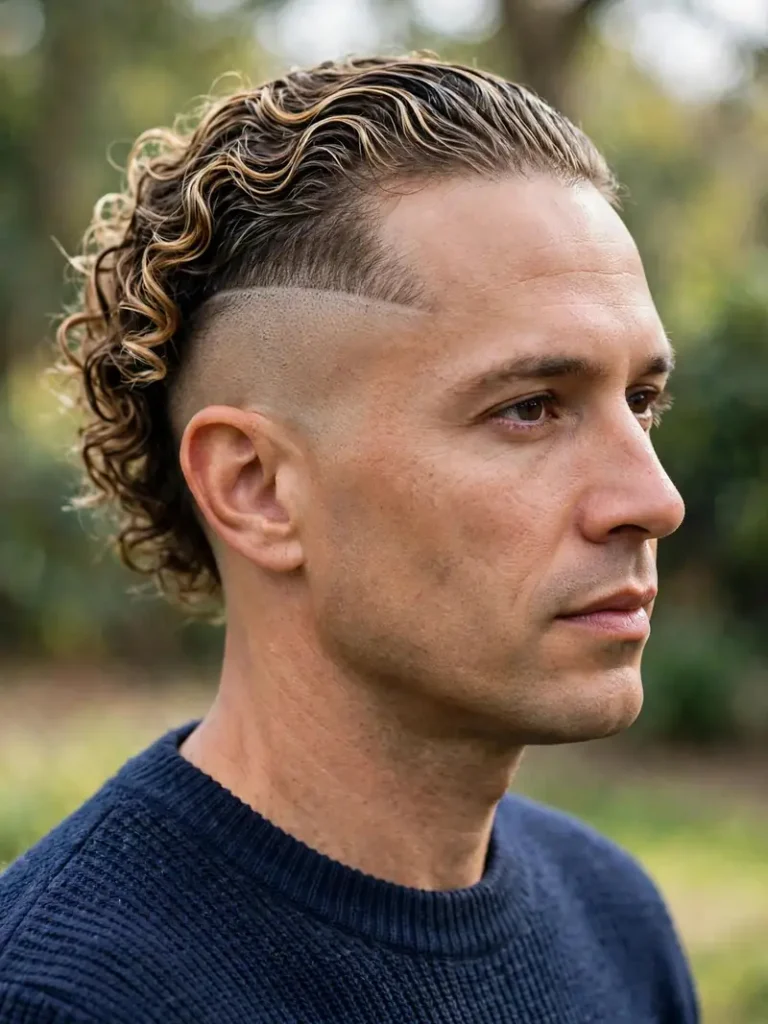
Slicked top meets bare skin at the sides, and the hard gap gives the cut its shape. Top combs straight back in smooth rows, with curls pressed flat at the crown. Mid skin fade blends down to bare skin around the temples. Temple-height split frames the slicked top, unlike low-line versions that hide the edge near the ear.
Pomade gives the slicked top shine and hold, so the rows stay smooth all day. Comb a small amount through damp hair with a fine-tooth comb, then press back. Ask for a mid skin fade with a zero guard and a long top slicked back. Curly hair slicks back well with pomade, because the product weighs the curls down. Trim every two weeks to keep the mid skin line neat.
29. Long Side Sweep Skin Fade
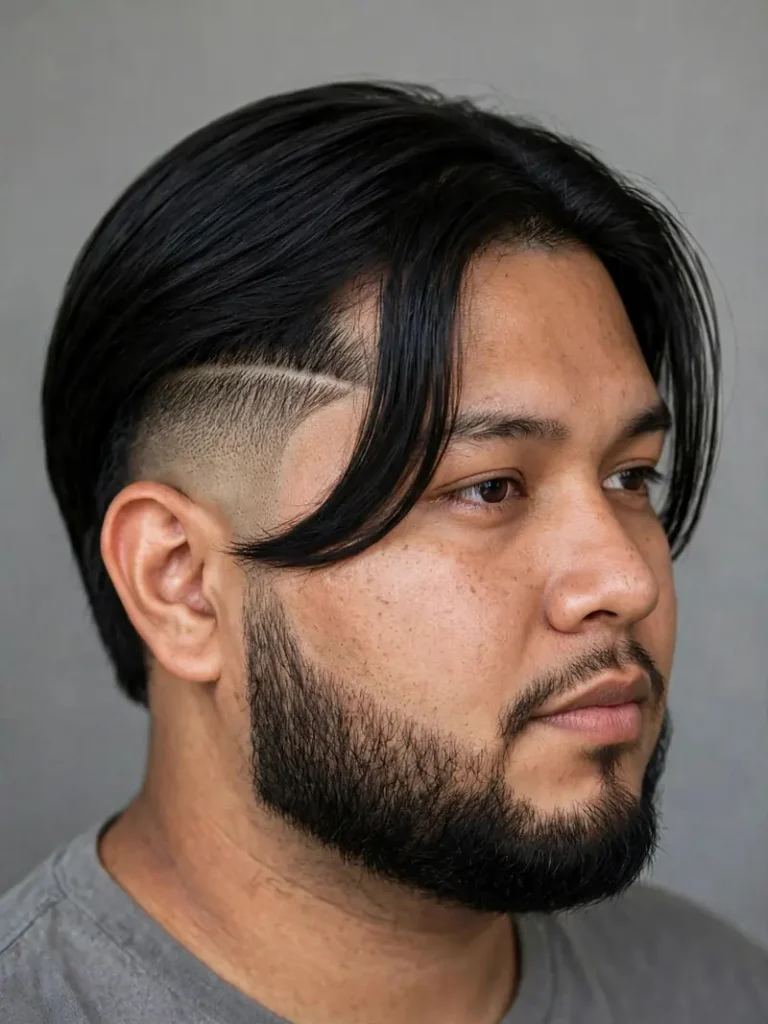
Skin blend runs down to bare skin, leaving the long sweep as the whole focus. Long top sweeps to one side past the ear, with the ends falling toward the jaw. Back keeps the skin blend low, and the neckline ends in a clean, squared edge. Low line lets the sweep fall long, unlike high-line sweeps that cut the length short.
Request a skin fade with a zero guard and a long sweep kept past the ear. Name the disconnect line low on the side, so the sweep keeps its full length. Comb pomade through damp hair with a wide-tooth comb, then sweep to the side. Straight hair sweeps well in long lengths, while wavy hair needs the pomade to hold the ends. Trim every two weeks to keep the low line sharp.
30. Short Textured Low Fade Undercut
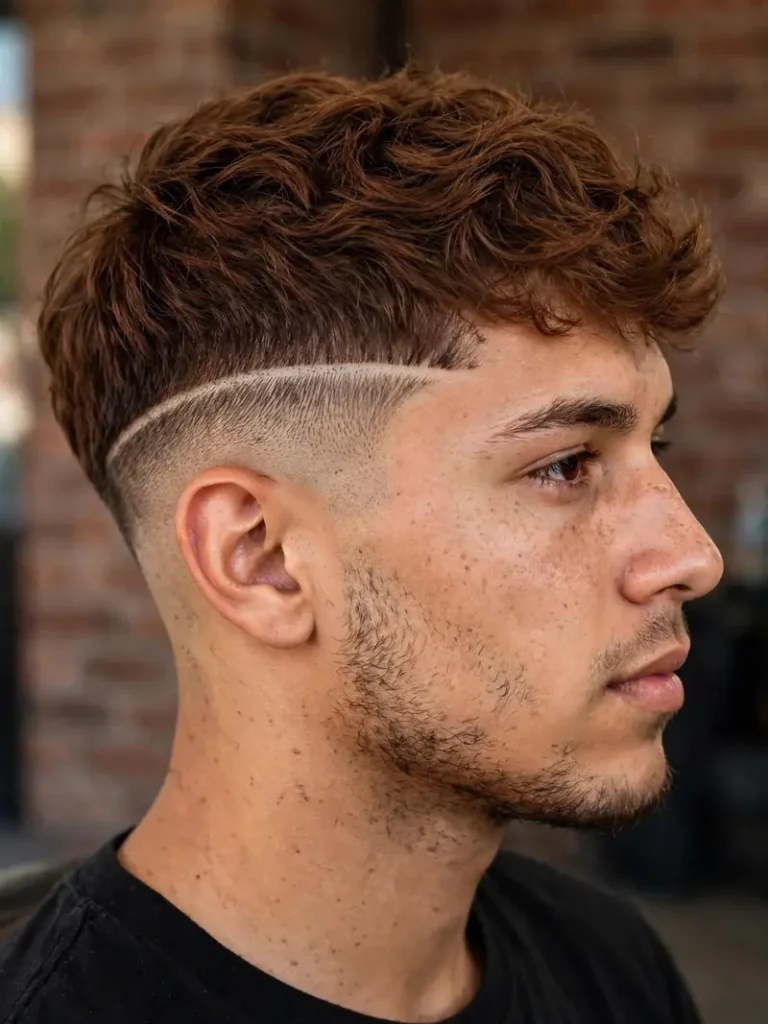
Low line runs on the side, just above the ear, in a clean, hard step. Short top carries a choppy texture, with piecey ends pointing forward and up. Low fade starts just above the ears and keeps length at the sideburns and neckline. Short even back keeps the texture as the focus, unlike longer styles that hide the line.
Work matte clay through damp hair with fingers, then twist the ends apart. Rake the clay through with fingers, then pinch a few ends up for lift. Ask for a low fade with a number two guard and a short textured top. Wavy hair adds natural texture here, so less clay does the job. Trim every three weeks to keep the low line clean.
Conclusion
Contrast sells the style, so the edge needs care. Skin blends need frequent trims, while drop blends wait longer. An undercut fade looks sharpest when the barber hears the guard number and line height out loud. Wavy and curly tops forgive messy mornings, while slicked styles show every comb line. Keep matte clay or light cream nearby and work it through damp hair first. Once the disconnect grows soft, the top loses its frame. Book the trim early, and the cut keeps its crisp step.
About Me
Hi, I am Beck, the voice behind Hairzaa. I share simple, real-life hairstyles, cuts and color ideas that busy women can actually do, because confidence starts in the morning mirror. Every style here is tested in real life first, so you can look beautiful without the fuss.