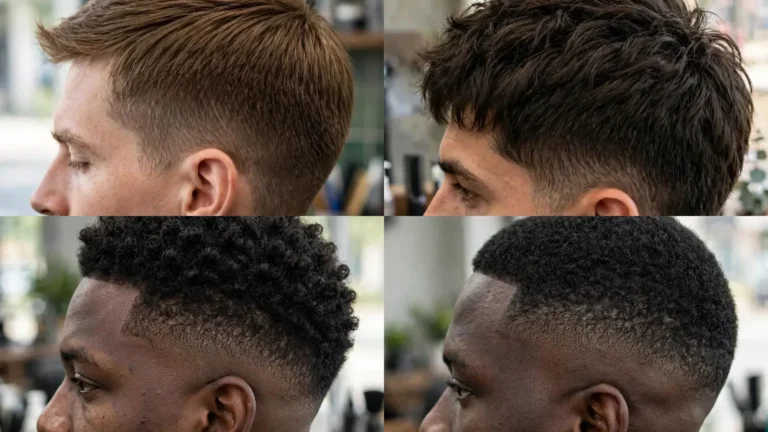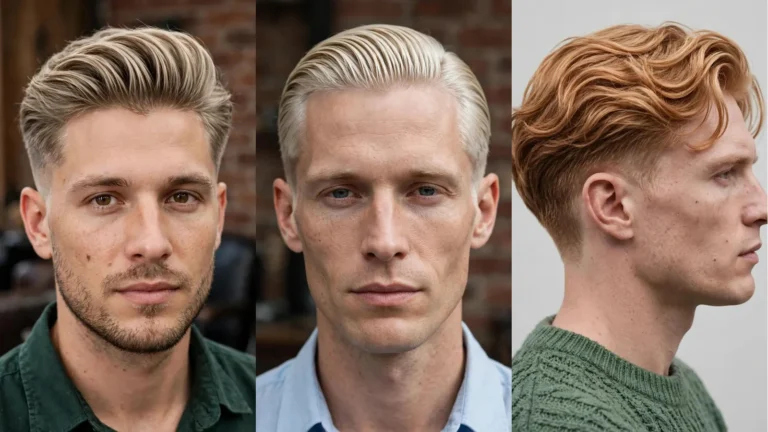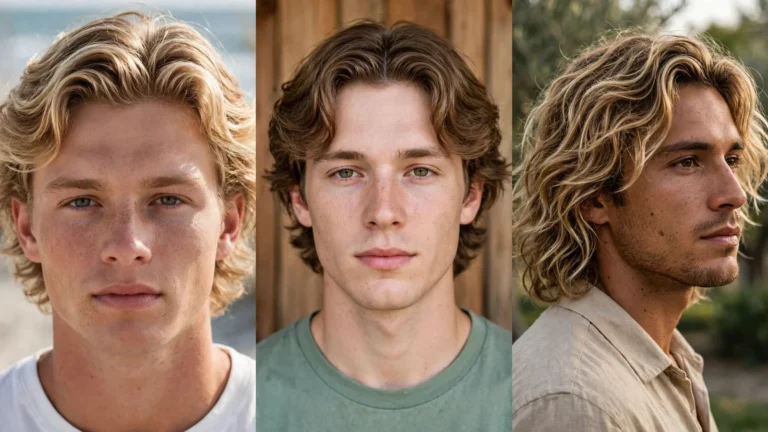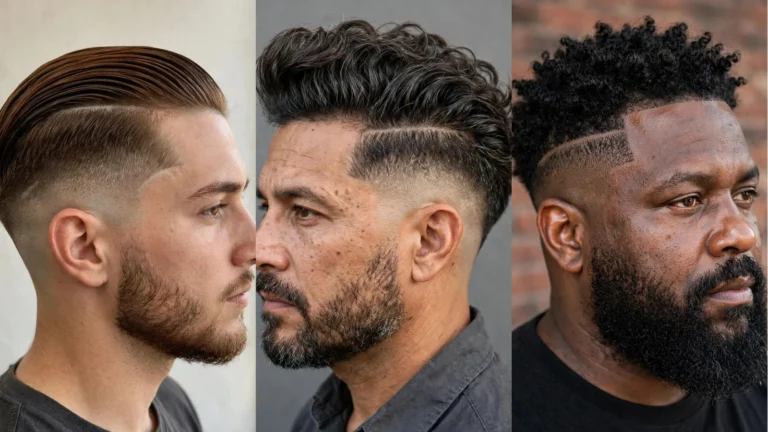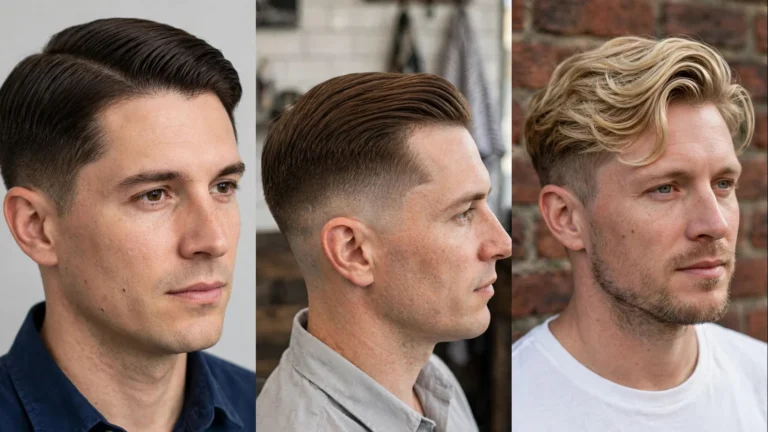
Sides grow wide long before tops grow long, and the shape goes soft fast. Edges blur, partings fade, and plain short hair starts to look untidy. The Ivy League haircut pairs a short side-parted top with tapered sides, a neat back, and a clean neckline. Straight, wavy, curly, and coily hair all hold the shape, though curls like light cream for definition. Versions run from a short crop with a hard part to a wavy sweep with a gentle low taper. Pick parting side, hair texture, and fade height first, because each one changes the daily routine. Then decide how much monthly upkeep feels right.
1. Short Ivy Side Part

Top length stays near one inch, combed flat left from a clean side part. Sides taper down close to the ears, and back blends into a short edge. Tapers shorten hair step by step, so sides stay neat without a hard edge. Hairline stays natural, with no hard line cut into the front. Short length sets this version apart from longer side-parted cuts, since the part shows without bulk.
Ask for one inch on top, a left side part, and a number two guard on sides. Guards clip onto clippers and set how much length stays. Work matte clay through damp hair with fingers, then comb the part into place. Book a trim every three weeks so the taper keeps its shape as hair grows. One common slip is combing the part too far back, which hides the side sweep. Keep the part near the temple line instead.
2. Longer Top Side Part
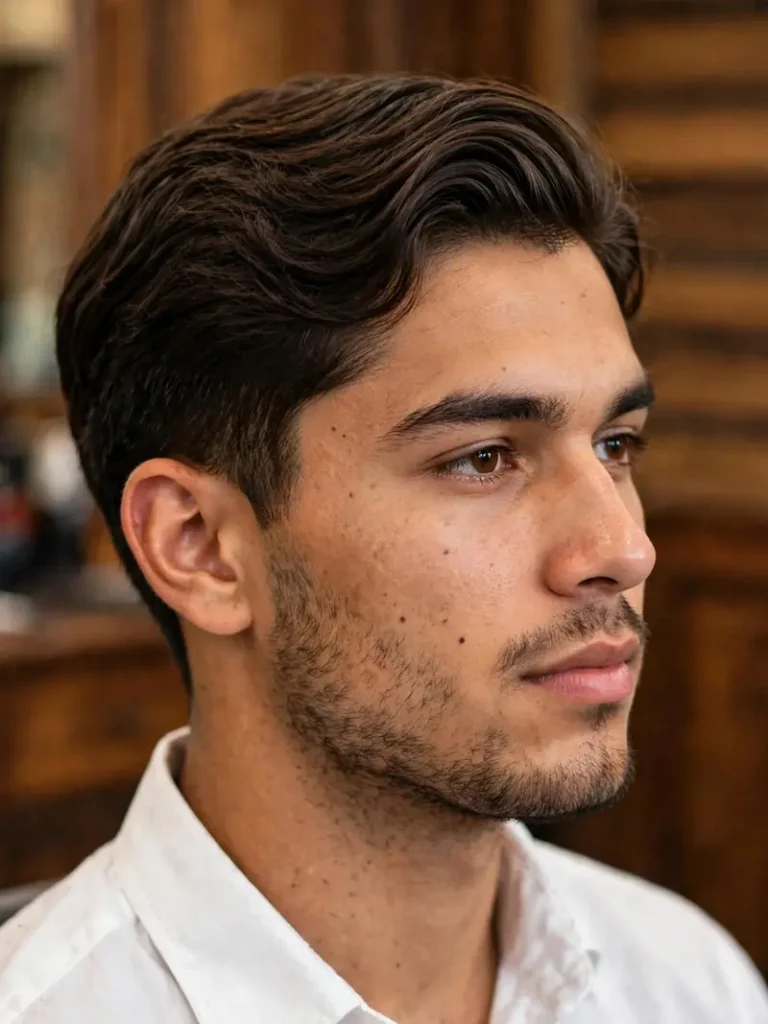
Sides stay short and tapered, which frames a top near two inches long. Top hair sweeps right from a soft side part, with waves falling in one direction. Back shortens toward the neck and keeps the shape tidy. Longer length sets this version apart from a short crop, since waves need room to bend and fall.
Comb damp hair to the right with a wide-tooth comb, then let waves settle before adding product. Work light cream through the top with fingers, which keeps waves soft without weight. Ask for two inches on top and a number three guard on sides at the chair. Trim every four weeks so length never covers the ears. One slip is brushing waves flat while wet, which pulls out the bend. Let hair dry halfway first instead.
3. Sharp Razor Part Ivy
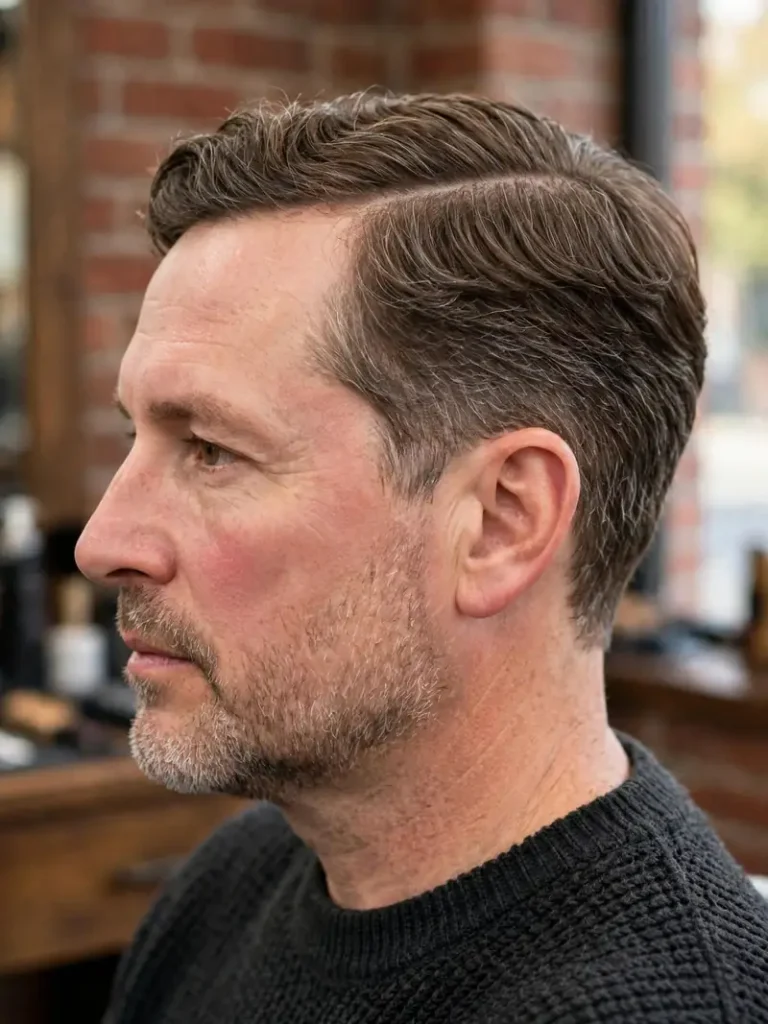
Parting runs as a clean shaved line on the left, cut with a razor for a sharp edge. Top stays near one inch, combed flat to the right from that line. Sides taper close above the ears, while back blends down to the neck. Razor line sets this version apart from a natural part, since the edge stays visible all day.
Wavy hair suits this line best, since bends catch light beside the edge. Ask for a razor part on the left, one inch on top, and a number two guard. Press matte clay through damp hair with fingers, then comb right from the line. Straight hair can hold this shape too, with more clay for grip. Skip a deep line if scalp shows, because a soft line still reads clean. Trim every three weeks to keep the line crisp.
4. Soft Side Sweep Taper

Curls sit near one and a half inches on top, swept to one side from a soft part. Sides taper down close to the ears, while back blends into a short edge. Edges stay clean and square at the forehead, which frames the curl pattern. Soft sweep sets this version apart from a tight crop, since curls keep their shape and height.
Book a trim every three weeks so curls never grow over the ears. Ask for one and a half inches of curl on top and a number two guard on sides. Work light cream through damp curls with fingers, then sweep them to one side. Soft brushing after drying lifts each curl without pulling it apart. One slip is drying curls with high heat, which dries out the ends. Use low heat with protectant instead.
5. Wavy Ivy Top Taper

Hairline stays natural at the forehead, with no hard line cut into the front. Top waves run near one and a half inches, swept left from a side part. Sides taper close to the ears, while back blends down to a short neck edge. Natural hairline sets this version apart from a sharp-edged front, since growth blends in without a hard step.
Try a deeper part on the left for more lift at the front. Ask for one and a half inches on top and a number three guard on sides. Comb damp hair left with a wide-tooth comb, then press sea salt spray through the waves. Spray adds grip without weight, which helps waves hold their bend. One slip is combing waves straight back, which hides the side part. Keep the comb moving left instead.
6. Curly Ivy Side Part

Finish stays matte and dry, with no shine on the short coily top. Top sits near one inch, parted on the left with a clear line through the coils. Sides fade, which blends length down to skin, near the ears, while back blends into a short edge. Matte finish sets this version apart from a shiny combed top, since coils keep their own texture.
Avoid heavy pomade on coils, because weight flattens the curl pattern fast. Ask for one inch of coil on top, a left part, and a skin fade on sides. Work light cream through damp coils with fingers, then shape the part with a comb. Moisture keeps coils defined, so cream goes on while hair still feels damp. One slip is brushing coils dry, which pulls them into frizz. Use fingers to separate curls instead.
7. Textured Ivy Top Fade

Unlike a smooth combed top, this one carries light texture cut into the ends. Top sits near one and a half inches, side-parted with strands falling in soft pieces. Sides fade low, starting just above the ears, while back blends into a short edge. Texture sets this version apart from a flat top, since each strand moves on its own.
Clay gives this top grip without shine, so strands stay apart through the day. Ask for one and a half inches on top, texture cut in, and a low fade. Work a small amount of matte clay through dry hair with fingers. Dry hair takes clay better than wet hair, because water thins the hold. One slip is loading too much clay, which clumps strands together. Start with less and add more if needed.
8. Smooth Combed Ivy Top

Length stays near one inch on top, combed smooth to one side with no lift. Sides taper close to the ears, while back blends down to a short neck edge. Parting sits soft, with hair lying flat in one direction. Smooth top sets this version apart from a textured crop, since every strand lies in the same line.
Tell the barber one inch on top, smooth to the side, and a number three guard on sides. Comb damp hair to one side with a fine-tooth comb, then press light pomade through the top. Pomade adds light shine and holds strands flat, which suits a smooth finish. Gray hair shows this shape well, since the part reads clear against silver strands. One slip is using too much pomade, which leaves hair looking wet. Use a small amount first instead.
9. Ivy Cut With Light Fade

Back stays short and blends up into the curly top without a hard step. Top curls sit near one and a half inches, parted on the left. Sides fade lightly, starting just above the ears, while hairline stays clean at the forehead. Light fade sets this version apart from a skin fade, since sides keep some length near the ears.
Style this cut on damp hair, when curls still hold their shape. Work light cream through curls with fingers, then sweep them left from the part. Ask for one and a half inches of curl on top and a light fade above the ears. Cream adds moisture, which keeps curls defined through the day. One slip is combing curls straight, which pulls out the wave. Use fingers to guide curls instead.
10. Brushed Up Ivy Front

Direction shifts at the front, where coils lift up instead of lying flat. Top sits near one inch, parted on the left with the front brushed up. Sides fade down to skin near the ears, while back blends into a short edge. Lifted front sets this version apart from a flat side part, since front height changes the shape.
Coily hair holds this lift well, since tight curls stack with height. Ask for one inch of coil on top, a left part, and a skin fade on sides. Work light cream through damp coils with fingers, then push the front up. Cream adds moisture, which keeps coils defined while they dry. One slip is pressing the front flat with a comb, which flattens the lift. Keep fingers under the front edge instead.
11. Slight Fringe Ivy Part

Waves fall near one and a half inches on top, with a short fringe dropping toward the forehead. Parting sits on the left, soft and easy to move. Sides taper close to the ears, while back blends down to a short edge. Short fringe sets this version apart from a swept-back top, since hair covers part of the forehead.
Trim every three weeks so the fringe never drops past the brows. Ask for one and a half inches on top, a slight fringe, and a number three guard. Comb damp hair left with fingers, then let the fringe fall forward. Fingers keep waves loose, which suits the soft fringe. One slip is cutting the fringe too short, which lifts it off the forehead. Leave length at the front instead.
12. Swept Front Ivy Taper

Neckline tapers clean at the back, with length fading out above the collar. Top sits near one and a half inches, swept to the right from a side part. Sides taper close to the ears, while hairline stays natural at the forehead. Swept front sets this version apart from a straight comb-over, since hair moves across in one line.
Swap the sweep to the left when the natural part falls that way. Ask for one and a half inches on top and a number two guard on sides. Comb damp hair right with a fine-tooth comb, then press light pomade through the front. Pomade adds light shine, which helps the sweep hold through the day. One slip is sweeping hair too far forward, which covers the part. Start at the part line and comb outward instead.
13. Low Taper Ivy Cut

Shine stays low on this cut, with hair combed flat and matte. Top sits near one inch, parted on the left with a clean line. Sides taper low, starting just above the ears, while back keeps length at the sideburns. Low taper sets this version apart from a fade, since sides keep more length near the ears.
Skip a number one guard on sides, because a low taper needs length to blend. Ask for one inch on top, a left part, and a low taper on sides. Work matte clay through damp hair with fingers, then comb left from the part. Clay adds grip without shine, which suits the matte finish. One slip is fading the sides too high, which turns the taper into a mid fade. Keep the blend low instead.
14. Mid Fade Ivy Top

Top waves sit near one and a half inches, parted on the left with a soft sweep. Sides fade at mid height, starting around the temples, while back blends into a short edge. Hairline stays clean at the forehead, with a neat corner near the temples. Mid fade sets this version apart from a low fade, since the blend rises higher on the sides.
Cream suits wavy hair here, since it adds moisture without weight. Ask for one and a half inches on top and a mid fade at the temples. Work light cream through damp waves with fingers, then sweep them left. Fingers shape waves better than a comb, because a comb pulls them flat. One slip is using heavy pomade, which weighs waves down. Use cream on damp hair instead.
15. High Taper Ivy Style

Sides rise high here, with the taper climbing toward the crown. Top sits near one inch, combed to the left from a side part. Back blends up into the top without a hard step. High taper sets this version apart from a low taper, since short sides meet the top higher. Gray strands catch light on top, which shows the part clearly.
Request a high taper on sides, one inch on top, and a left side part. Comb damp hair left with a fine-tooth comb, then press light pomade through the top. Pomade adds light shine, which shows the part line well. Gray hair needs no extra product, since the Ivy League haircut shape does the work. One slip is asking for a skin fade by mistake, which cuts sides too short. Say taper, not fade, at the chair.
16. Ivy Part With Gray Blend
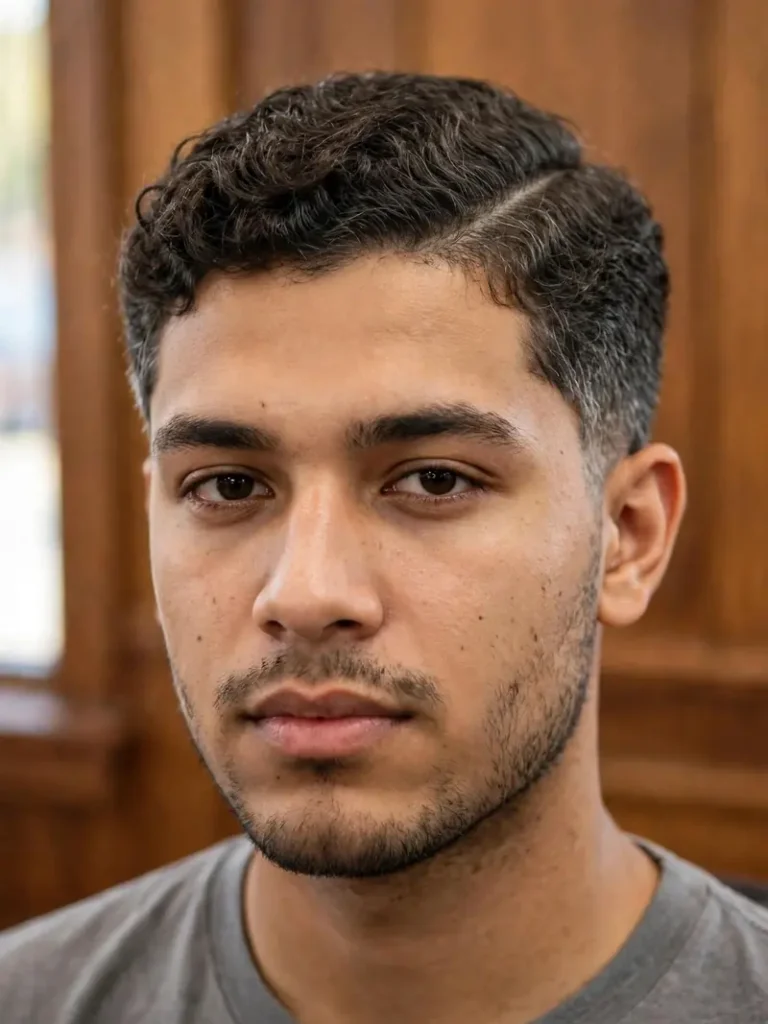
Part runs on the left, with gray blending soft at the temples. Top curls sit near one and a half inches, swept to one side. Sides taper close to the ears, while back blends into a short edge. Gray blend sets this version apart from a plain dark cut, since temple silver softens the shape.
Damp hair takes cream well, so start styling right after a shower. Work light cream through damp curls with fingers, then sweep them left from the part. Ask for one and a half inches of curl on top and a taper on sides. Gray at the temples needs no dye, since the blend looks natural. One slip is combing curls dry, which pulls them into frizz. Use fingers on damp hair instead.
17. Side Parted Ivy Crop
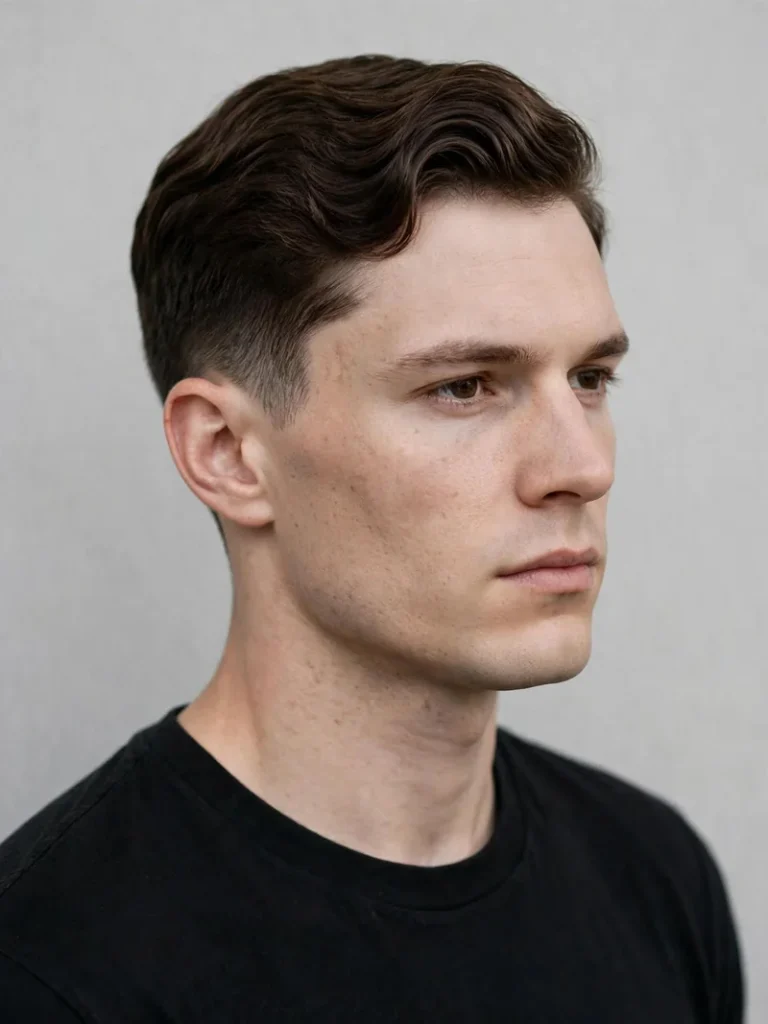
Texture runs light through this crop, with strands cut to fall in soft pieces. Top sits near one inch, parted on the left and swept to one side. Sides taper close to the ears, while back blends into a short edge. Light texture sets this version apart from a flat crop, since strands move apart with each comb stroke.
Dense hair suits this crop, since short length keeps weight down. Ask for one inch on top, a left part, and a number three guard on sides. Comb damp hair left with a wide-tooth comb, then press matte clay through the top. Clay adds grip, which holds strands apart through the day. One slip is leaving the top too long, which lets dense hair puff out. Keep length near one inch instead.
18. Ivy Top With Natural Shine
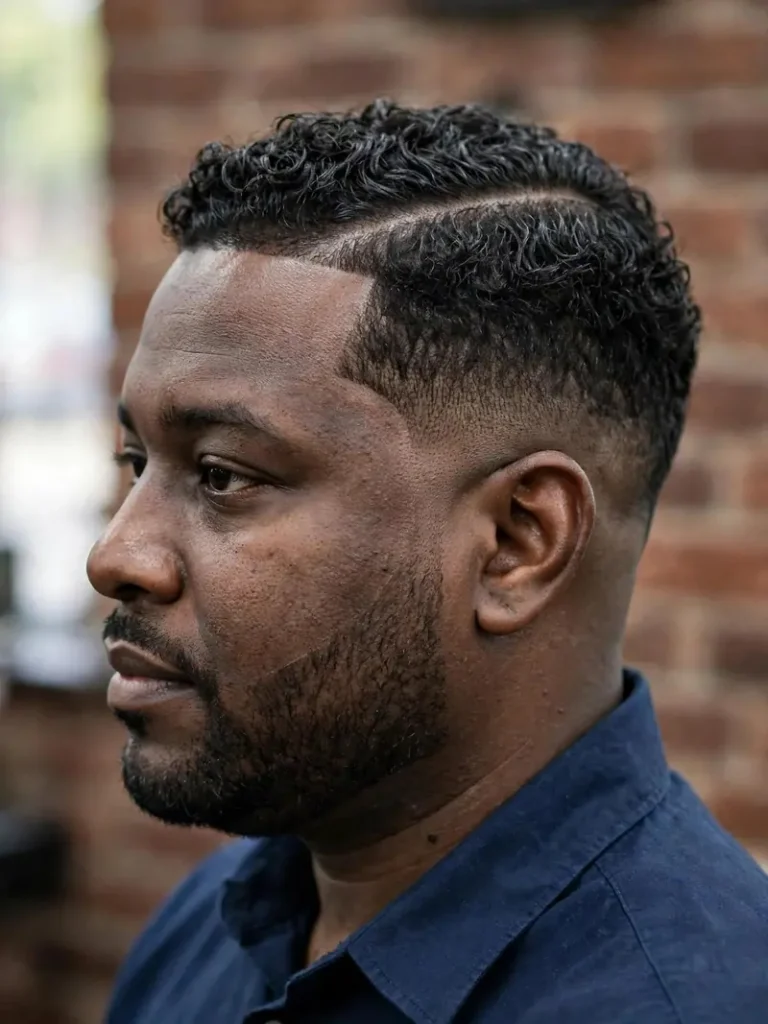
Edges stay clean and square at the forehead, with a neat line near the temples. Top curls sit near one and a half inches, parted on the left with a light shine. Sides fade down close to the ears, while back blends into a short edge. Natural shine sets this version apart from a matte crop, since light catches each curl.
Every three weeks, book a trim so the fade never grows out past the ears. Ask for one and a half inches of curl on top and a fade on sides. Work light cream through damp curls with fingers, then sweep them left. Cream adds moisture and light shine, which keeps curls defined. One slip is adding pomade for shine, which weighs curls down. Use cream alone for shine instead.
19. Matte Finish Ivy Part

Matte finish gives this top a dry look, with no shine at all. Top sits near one and a half inches, parted on the left and combed flat. Sides taper close to the ears, while back blends into a short edge. Dry finish sets this version apart from a shiny combed top, since blond hair shows no glare.
Switch to a deeper left part when the top starts falling flat. Ask for one and a half inches on top and a number three guard on sides. Work matte clay through dry hair with fingers, then comb left from the part. Dry hair holds clay well, because water thins the grip. One slip is using pomade here, which adds shine the matte finish lacks. Keep clay as the only product instead.
20. Ivy Cut With Tapered Neck

Neck tapers clean at the back, with no hard line above the collar. Top waves sit near one inch, parted on the left and swept to one side. Sides taper close to the ears, while hairline stays natural at the forehead. Tapered neck sets this version apart from a blocked neckline, since growth blends in without a step.
Watch the neckline between visits, since a tapered neck shows growth fast. Ask for one inch on top, a left part, and a tapered neck at the back. Comb damp waves left with a wide-tooth comb, then press light cream through the top. Cream adds moisture, which keeps waves soft through the day. One slip is shaving the neckline square at home, which breaks the taper. Leave neckline work to the barber instead.
21. Short Ivy With Defined Part

Against a soft natural part, this one shows a hard line from front to crown. Top sits near one inch, combed flat to the right from that line. Sides taper close to the ears, while back blends into a short edge. Defined part sets this version apart from a soft part, since the line stays visible from every angle.
Pomade suits this part, since light shine makes the line stand out. Ask for one inch on top, a defined left part, and a number two guard. Comb damp hair right with a fine-tooth comb, then press light pomade through the top. Fine teeth trace the part line clean, which keeps the edge sharp. One slip is combing over the line, which hides the part. Start at the line and comb outward instead.
22. Ivy Top For Thick Hair

Thick waves fill this top, with length near two inches from part to front. Top sweeps right from a soft side part, with waves lying in one direction. Sides taper close to the ears, while back blends into a short edge. Thick top sets this version apart from a short crop, since weight holds waves down in place.
Say two inches on top for thick waves, a right part, and a number three guard. Comb damp hair right with a wide-tooth comb, then press light cream through the top. Cream adds moisture without weight, which suits thick waves. One slip is thinning the top too much, which leaves waves flat and patchy. Ask the barber to thin only the bulk underneath instead.
23. Fine Hair Ivy Part

Fine hair lies flat here, so light texture lifts the top without weight. Top sits near one inch, parted on the left with strands falling in soft pieces. Sides taper close to the ears, while back blends into a short edge. Light texture sets this version apart from a flat combed top, since each strand shows its own line.
Blow-dry the top forward on low heat, then sweep it left once dry. Ask for one inch on top with light texture and a number three guard on sides. Work matte clay through dry hair with fingers, then comb left from the part. Clay adds grip, which lifts fine strands without weight. One slip is using heavy pomade, which flattens fine hair fast. Use heat protectant before the dryer, because hot air dries fine hair fast.
24. Ivy Side Part Low Fade

Fade starts low here, just above the ears, and blends down to skin. Top waves sit near one and a half inches, parted on the left. Sides shorten step by step toward the ears, while back blends into a short edge. Low fade sets this version apart from a mid fade, since the blend stays close to the ears.
Thin hair can wear this fade, since short sides add shape without bulk. Ask for one and a half inches on top and a low fade above the ears. Work matte clay through damp waves with fingers, then sweep them left. Clay adds grip and lift, which helps thin strands stand apart. One slip is fading too high, which leaves thin hair with no frame. Keep the fade low instead.
25. Ivy Cut With Drop Taper
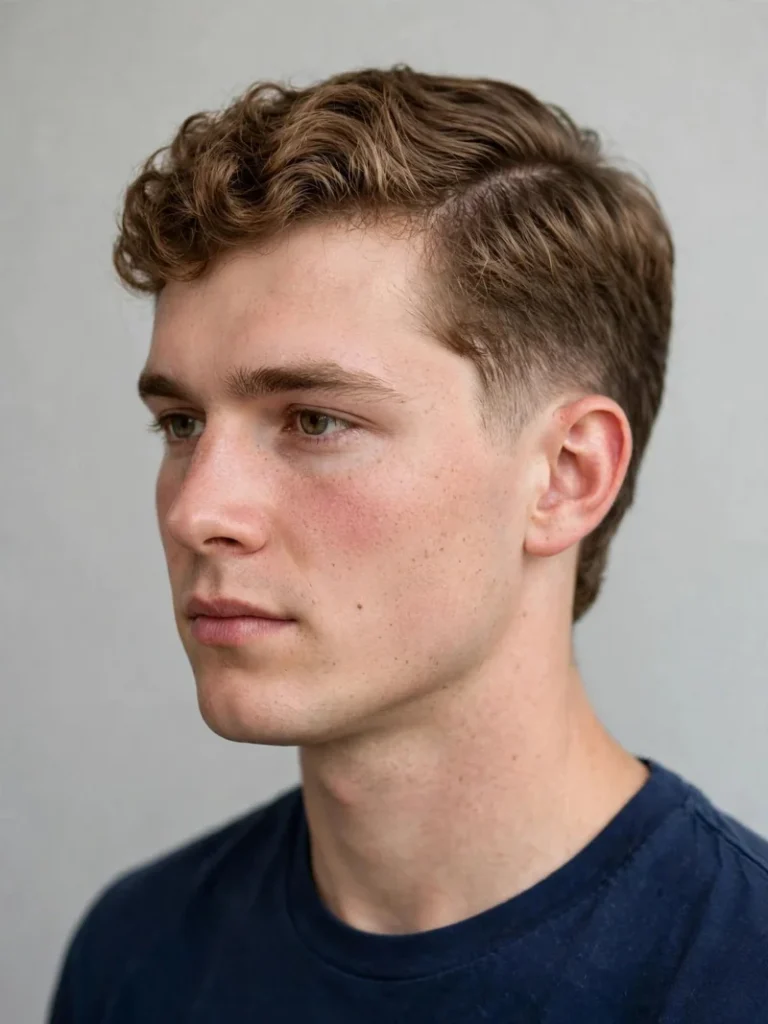
Curve drops behind the ear here, with the taper dipping down at the back. Top curls sit near one and a half inches, parted on the left. Sides taper close to the ears, while back follows the curve down to the neck. Drop taper sets this version apart from a straight taper, since the line dips behind the ear.
Schedule a trim every three weeks so the drop line never blurs. Ask for one and a half inches of curl on top and a drop taper on sides. Work light cream through damp curls with fingers, then sweep them left. Cream adds moisture, which keeps curls defined as they grow. One slip is letting the back grow past the collar, which hides the drop. Book the trim before the line fades.
26. Temple Taper Ivy Part
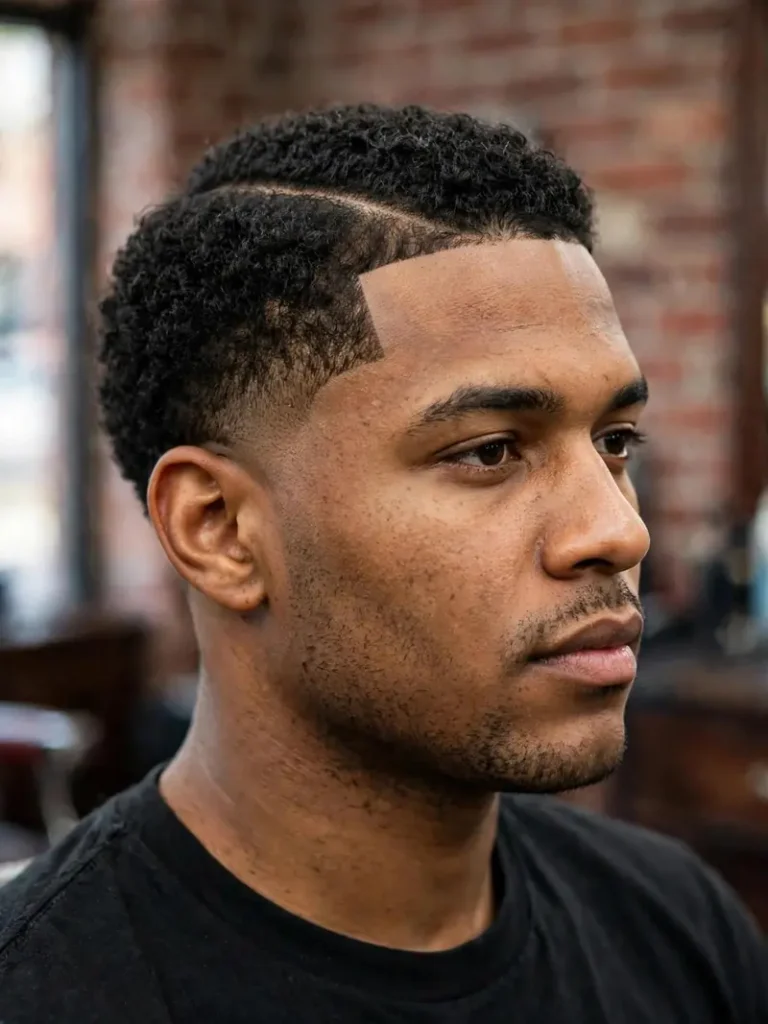
Temples taper tight here, with the blend focused near the front hairline. Top coils sit near one inch, parted on the left with a clear line. Sides fade down close to the ears, while back blends into a short edge. Temple taper sets this version apart from a full fade, since only the temples blend down short.
Keep the temples tight and the top short for the cleanest version of this cut. Ask for one inch of coil on top, a left part, and a temple taper on sides. Work light cream through damp coils with fingers, then shape the part with a comb. Cream adds moisture, which keeps coils defined through the day. One slip is tapering the whole side, which turns this into a full fade. Ask for temples only instead.
27. Ivy Top Swept Back

Sweep runs back from a side part here, with hair pushed up and over. Top sits near one and a half inches, combed back to the right. Sides taper close to the ears, while back blends into a short edge. Swept-back top sets this version apart from a side-swept top, since hair moves back instead of across.
Never push the top straight back, because the Ivy League haircut sweep starts at the side part. Ask for one and a half inches on top and a number three guard on sides. Comb damp hair back and right with a wide-tooth comb, then press light pomade through the top. Pomade adds light hold, which keeps the sweep in place. One slip is drying hair flat first, which flattens the lift. Comb while hair still feels damp instead.
28. Ivy Part With Textured Front
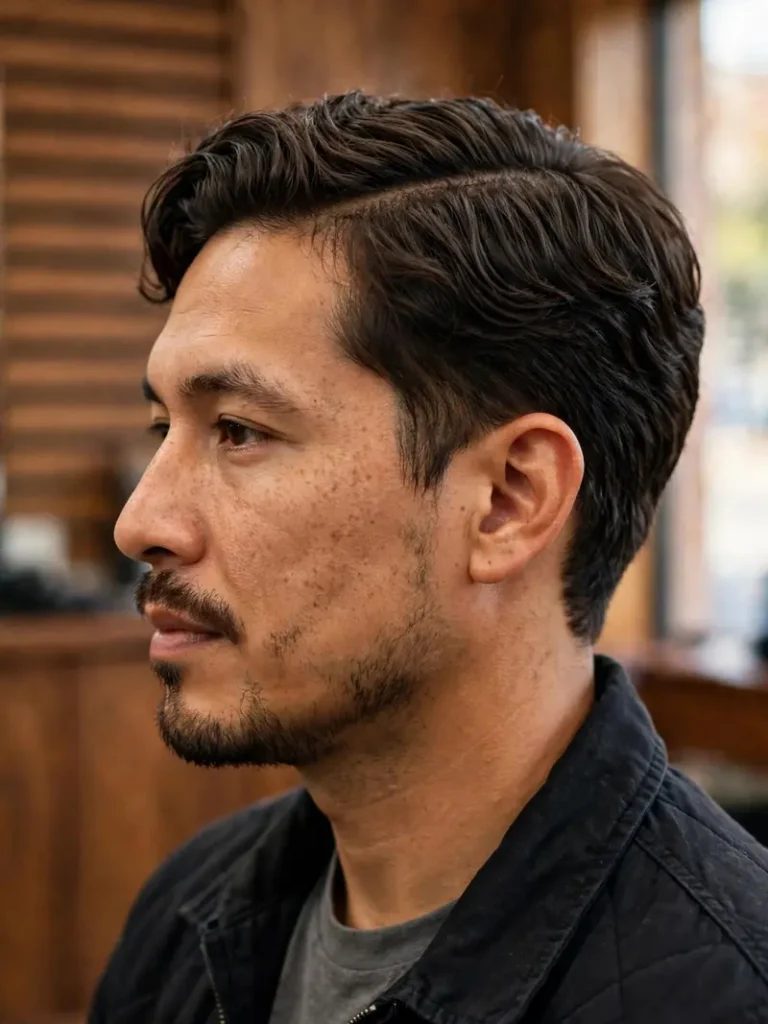
Front carries the texture here, with strands cut to fall in soft pieces. Top sits near one and a half inches, parted on the left. Sides taper close to the ears, while back blends into a short edge. Textured front sets this version apart from a smooth front, since strands move apart at the hairline.
Sea salt spray lifts the front without weight, so strands stay apart. Ask for one and a half inches on top, texture at the front, and a number three guard. Spray damp hair at the front, then shape strands with fingers. Fingers keep texture loose, which suits the soft front. One slip is spraying too close, which soaks one spot. Hold the bottle far back instead.
29. Neat Ivy Office Part

Workdays suit this version, with a short top that stays put from morning to night. Top sits near one inch, parted on the left and combed flat. Sides taper close to the ears, while back blends into a short edge. Short length sets this version apart from a longer office cut, since the part needs no fixing.
Mention office wear at the chair, so the barber keeps the part tidy and low. Ask for one inch on top, a left part, and a number two guard on sides. Comb damp hair left with a fine-tooth comb, then press light cream through the top. Cream adds light hold without shine, which suits workdays. One slip is adding too much product, which leaves hair looking wet. Use a small amount first instead.
30. Ivy Cut With Skin Taper

Skin shows near the ears here, where the taper blends down to bare skin. Top sits near one inch, parted on the left and combed flat. Sides shorten step by step toward the ears, while back blends into a short edge. Skin taper sets this version apart from a low taper, since sides lose all length near the ears.
Work light pomade through damp hair with fingers, then comb left from the part. Ask for one inch on top, a left part, and a skin taper on sides. Pomade adds light shine, which shows the part line well. Skin taper grows out fast, so book a trim every two weeks. One slip is waiting four weeks, which leaves a soft shadow at the ears. Book early to keep the skin blend clean.
Conclusion
Neat length on top, a clear part, and tapered sides keep this cut tidy between visits. Ask for top length in inches and a side guard number so visits repeat the same shape. Matte clay holds the part in place, so an Ivy League haircut stays neat through long days. Book a trim every three to four weeks because hair grows near half an inch a month. Rinse product out each night so buildup never dulls the finish. Pick one version, note its top length and fade height, then ask for those at the next visit.
About Me
Hi, I am Beck, the voice behind Hairzaa. I share simple, real-life hairstyles, cuts and color ideas that busy women can actually do, because confidence starts in the morning mirror. Every style here is tested in real life first, so you can look beautiful without the fuss.