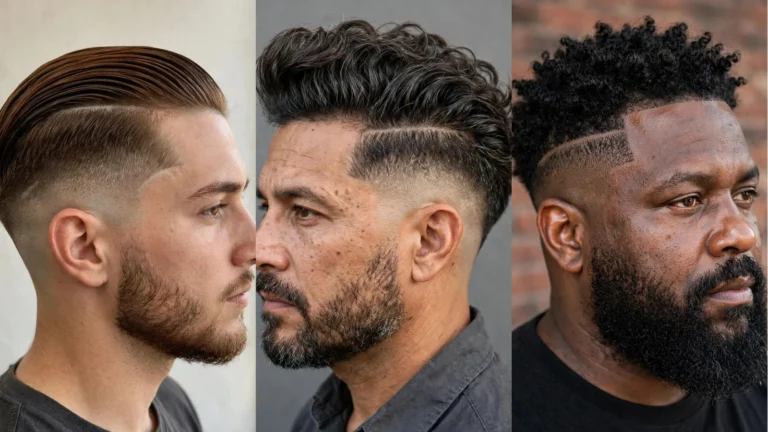
Cuts go wrong when the top and sides do not match in length or finish. Short haircuts for men usually pair a compact top with tapered or faded sides and a clean neckline. Straight, wavy, curly, and coily hair all work here. Each type needs a different top length and product amount.
Range runs from a close buzz to a textured crop. Flat tops, quiffs, and slicked back styles sit in between. Fades need a trim every two to three weeks, while tapers stretch a week longer. Choose by hair texture first, then by how much time mornings allow.
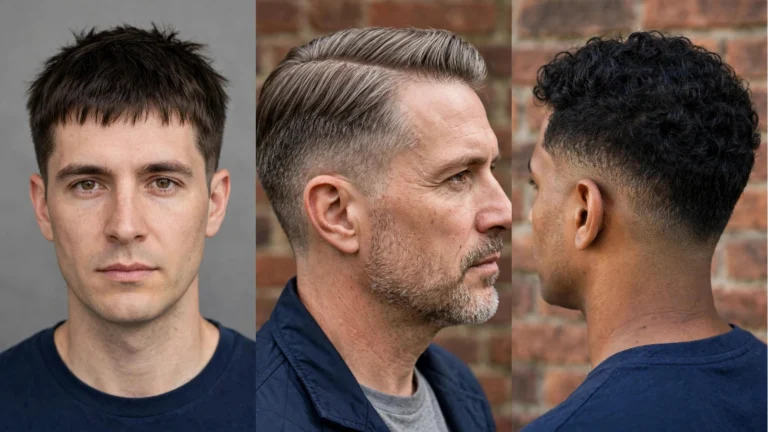
1. French Crop Skin Fade
Top hair sits about an inch long in uneven layers. Tips separate instead of lying flat together. Fringe points forward and stops just above the brow. Sides blend down to bare skin from the temples. Back follows the same fade to a tapered neckline. Plain crops use a taper, so the bare skin here gives sharper contrast.
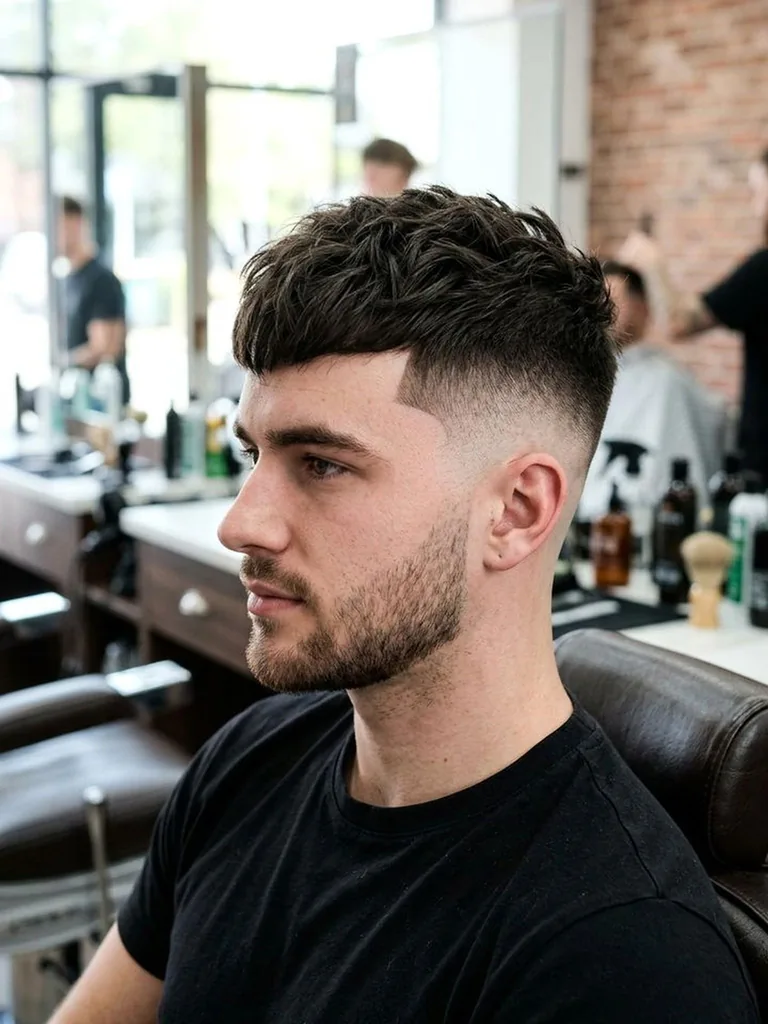
Ask the barber for about an inch on top and a skin fade at the temples. Point cutting breaks up the ends, so ask for that on the fringe. Rub a pea-size amount of matte clay between palms. Push the fringe forward from the back with fingers. Thick hair holds this shape well, because short length keeps weight down. Trim every two to three weeks, or the fade softens and the fringe covers the brow.
2. Short Buzz Crew Cut
Sides are clipped shorter than the top and fade gently above the ears. Top hair measures about a quarter inch in one even length. Back stays the same short length to a natural neckline. Front hairline stays straight and clean across the forehead. Longer crew cuts need styling, while this buzz length shows the head shape clearly.

Use a number two guard on top and a number one guard on the sides. Ask for a light blend above the ears, so no ridge shows. No product is needed, because the hair is too short to move. Fine hair suits this cut well, since even length adds a sense of density. Trim every two weeks to keep the sides tight. Without trims, the shape grows into a longer, softer crop.
3. Ivy League Side Part
Front hair sweeps across the forehead and stops above the brow. Top hair sits about two inches long from a clear left part. Sides are tapered short and stay neat around the ears. Back is tapered the same way to a natural neckline. Standard side parts use a shorter top, so this longer top gives a softer front edge.

Comb a small amount of light cream through damp hair first. Use a fine-tooth comb to press the top to the side. Tell the barber to leave about two inches on top. Ask for scissors over a comb on the sides. Straight hair holds this shape best. Wavy hair needs a touch more cream, or the front lifts during the day. Trim every three to four weeks to keep the part clear.
4. Swept Up Quiff Cut
Crown hair rises higher than the back, which gives the top its height. Top hair reaches about three inches at the front. Front hair is swept up and back from the forehead. Sides are faded short from the temples down. Back follows the same fade to a tapered neckline. Flat quiffs point forward, while this swept direction keeps the front open.
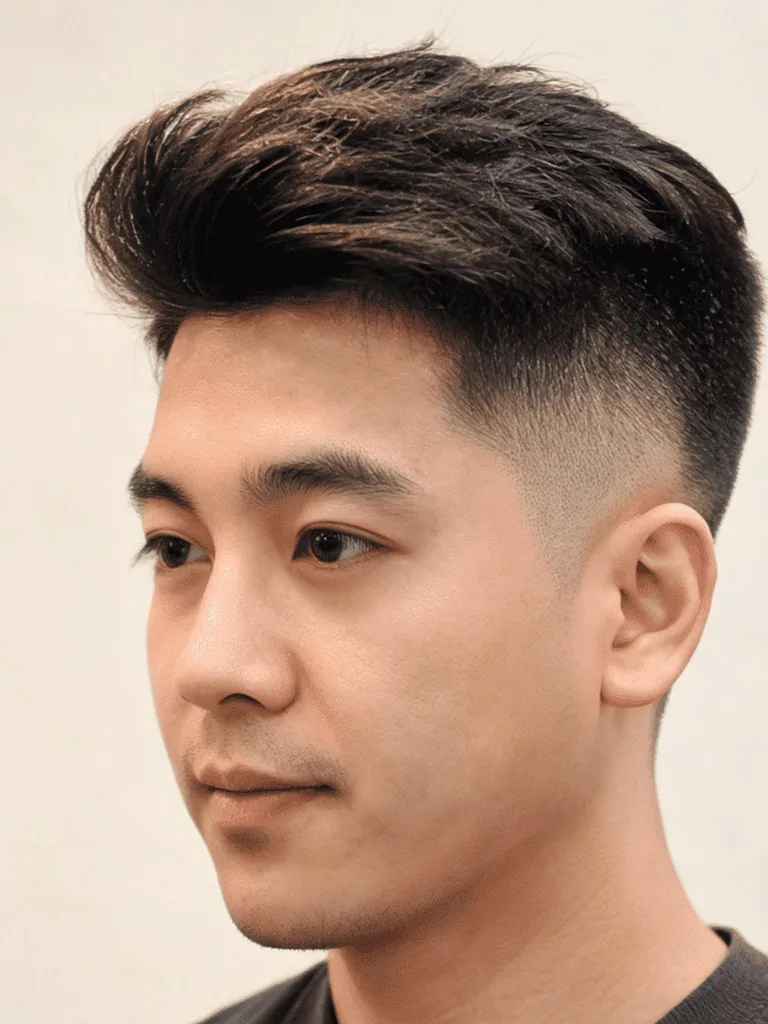
Blow dry the front upward with a round brush. Press a small amount of matte clay through the roots after drying. Tell the barber to leave about three inches at the front. Ask for a fade from the temples and scissors on top. Thick hair holds the height well, because weight supports the lift. Trim the sides every two to three weeks, or the top starts to look heavy.
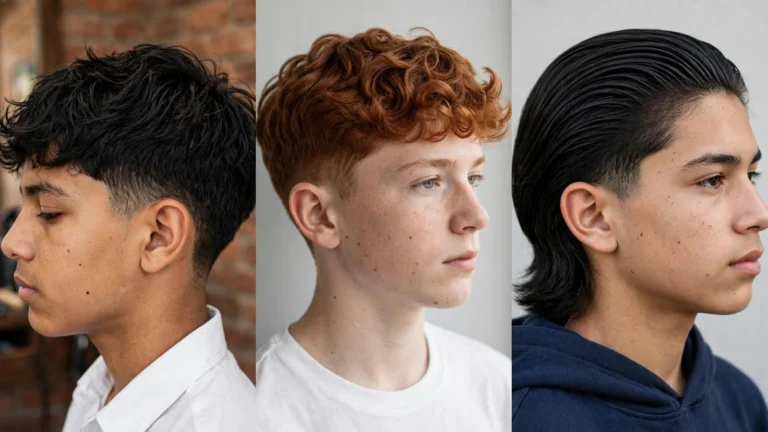
5. Caesar With Textured Fringe
Fringe is choppy, not straight, and stops just above the brow. Top hair sits about an inch and a half long and brushes forward. Sides fade to skin from around the temples. Back matches the sides to a clean, tapered neckline. Plain Caesars use a straight fringe, so this textured edge adds movement across the top.

Point cutting breaks up the fringe, so ask the barber for that. Leave about an inch and a half on top. Ask for a mid skin fade on the sides. Rub a pea-size amount of matte clay between palms. Push the hair forward in small sections with fingers. Straight hair suits this cut well, since the fringe lies flat. Trim every three weeks, because the fringe grows past the brow fast.
6. Buzzed High And Tight
Length is even across the top at about a quarter inch. Top hair sits flat against the head with no fringe. Sides are clipped to skin from high on the head. Back follows the same high clipper cut to a squared neckline. Front hairline is straight and short. Standard buzz cuts keep the sides lower, so this high cut exposes much more scalp.
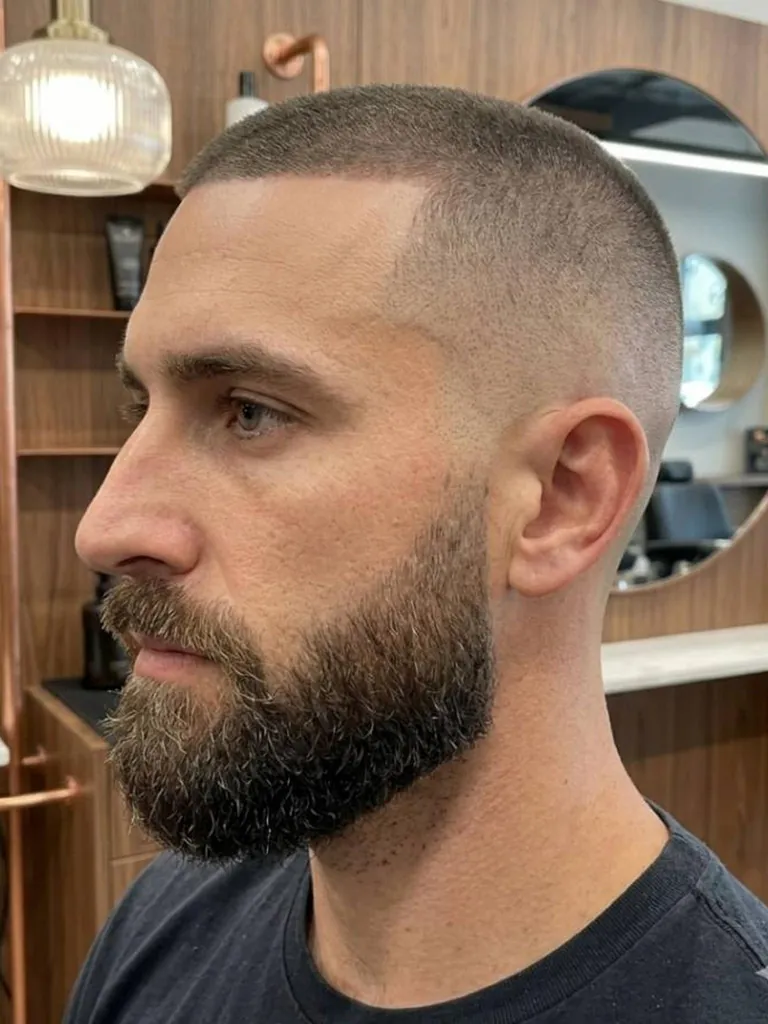
Clip the sides with no guard and the top with a number two guard. Ask for the blend to start high, near the crown. No styling product is needed, because the length is too short to move. Coarse hair suits this cut well, since short length stops it standing up in clumps. Trim every ten days to two weeks. Without trims, the sides lose their bare finish.
7. Mid Skin Fade Crop
Blend starts at the middle of the head, around the temples. Top hair sits about an inch and a half long in short layers. Layers point forward with a broken, textured edge. Back follows the same mid fade to a tapered neckline. Front hair stops above the brow. Low fade crops show less skin, so this higher blend makes the top look longer.

Rub a pea-size amount of matte clay through damp hair. Push it forward with fingers to shape the front. Tell the barber to leave about an inch and a half on top. Ask for the skin fade to start at the temples. Fine hair holds this shape well, because short layers add lift at the roots. Trim every two to three weeks, or the fade softens and the contrast fades.
8. Low Taper Forward Cut
Texture is soft and even, with no hard edge at the front. Top hair reaches about two inches and brushes forward. Sides are tapered short just above the ears. Back is tapered the same gradual way to a natural neckline. Sideburns keep some length, unlike a fade. Fades show skin, so this low taper grows out more gently.
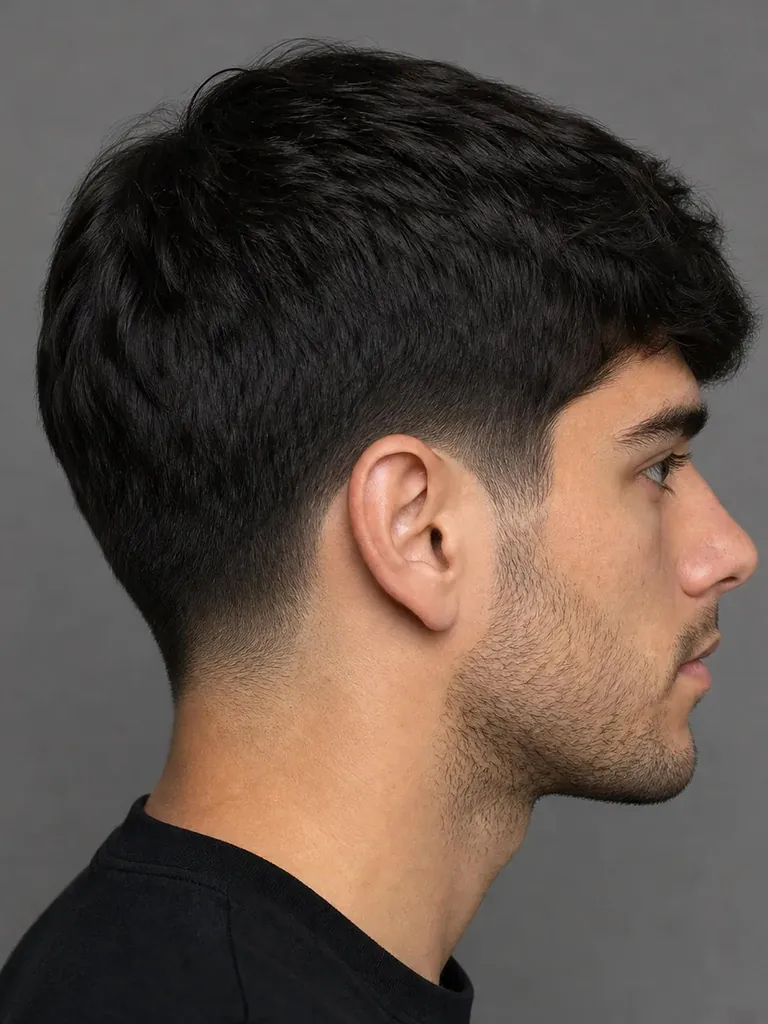
Brush the top forward with a vent brush after washing. Rub a small amount of light cream through damp hair first. Tell the barber to leave about two inches on top. Ask for a low taper just above the ears. Straight hair suits this cut well, since the forward direction lies flat. Trim every three to four weeks, because tapers keep their shape longer than skin fades.
9. Choppy Spiky Top
Front spikes point up and forward, with gaps between the tips. Top hair sits about two inches long in short, choppy layers. Sides are tapered short and stay close to the head. Back follows the same taper to a natural neckline. Smooth spiky cuts use even ends, so these choppy layers give each spike a separate shape.
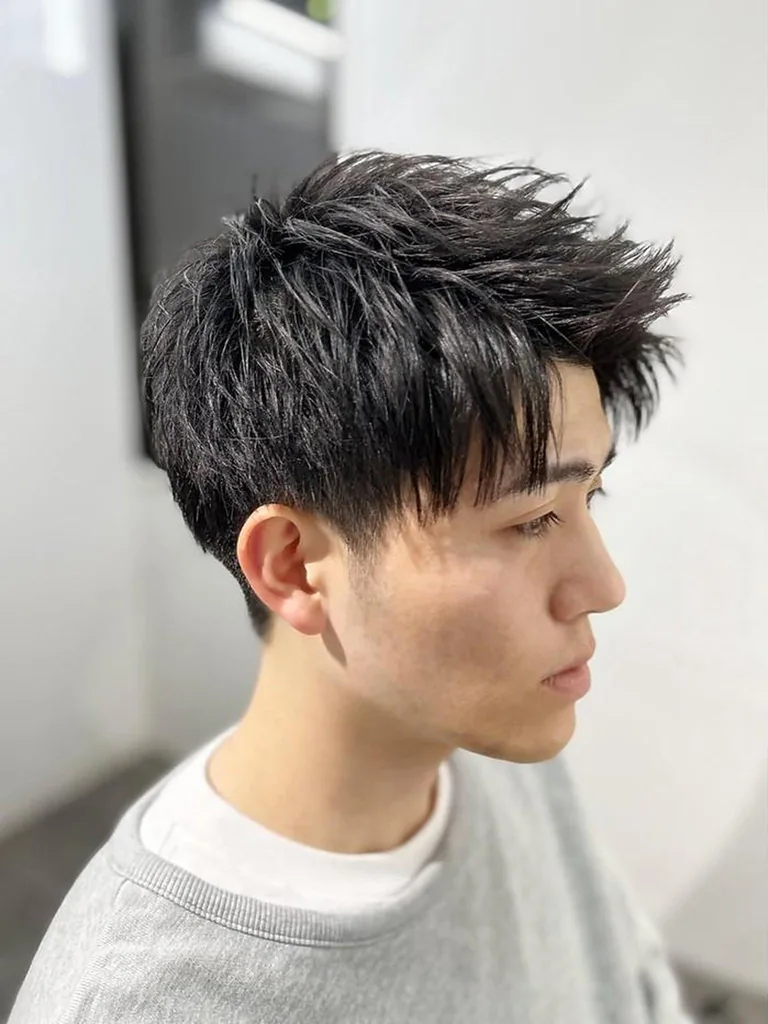
Mist the hair lightly, then work matte clay through dry hair. Pinch small sections upward with fingertips to form spikes. Tell the barber to leave about two inches on top. Ask for point cutting on the ends for separation. Straight hair holds spikes best. Wavy hair needs a stronger hold, or the tips fall during the day. Trim every three weeks, or the spikes grow too long to stand up.
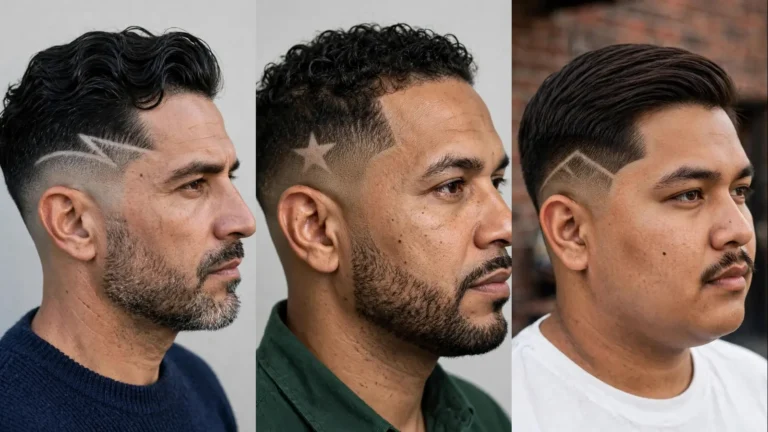
10. Hard Part Side Fade
Hairline on the left is a thin, straight groove cut with clippers. Top hair reaches about two inches and combs to the side. Sides fade to skin from the temples down. Back follows the same fade to a tapered neckline. Natural side parts fade as hair moves, while this shaved line keeps the part visible all day.
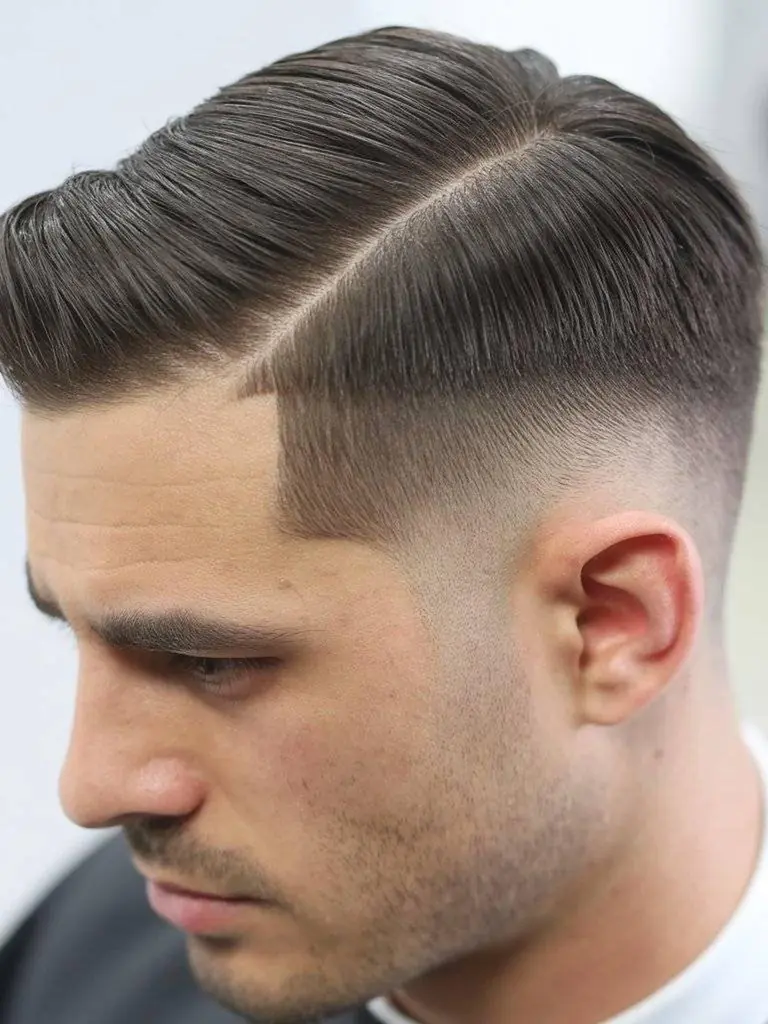
Press a small amount of pomade through damp hair. Comb the top to the side away from the part. Tell the barber to shave a thin part line on the left. Ask for about two inches left on top. Straight hair suits this style well, because the part line stays sharp. Short haircuts for men with a hard part need a trim every two weeks. Shaved lines grow out fast, so the part starts to blur.
11. Textured Crop With Beard
Back follows the same fade to a tapered neckline. Top hair sits about an inch and a half long in uneven layers. Layers point forward and down, with a choppy fringe. Fringe stops just above the brow with a broken edge. Sides fade short from the temples into a full beard. Crops on their own end at the jaw, so this beard blend keeps the whole shape connected.

Shape the beard at the cheeks, so the blend stays clean. Tell the barber to fade the sides into the beard. Leave about an inch and a half on top. Rub a pea-size amount of matte clay through the top. Push the fringe forward with fingers. Thick hair holds this crop well, because short layers keep weight down. Trim the sides every two weeks, and shape the beard at the same visit.
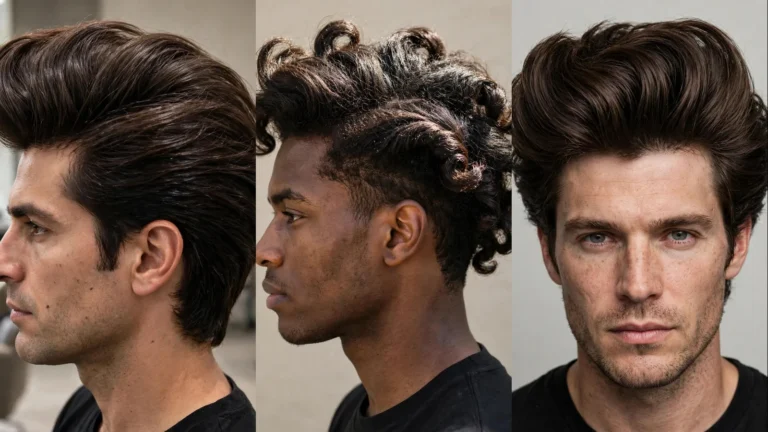
12. Swept Pompadour Fade
Top hair reaches about three inches at the front. Front hair sweeps up and to the side in a tall wave. Sides fade to skin from the temples. Back follows the same fade to a tapered neckline. Front hair rises well above the brow and curves back. Short pompadours use less front length, so this version gives more height and a deeper sweep.
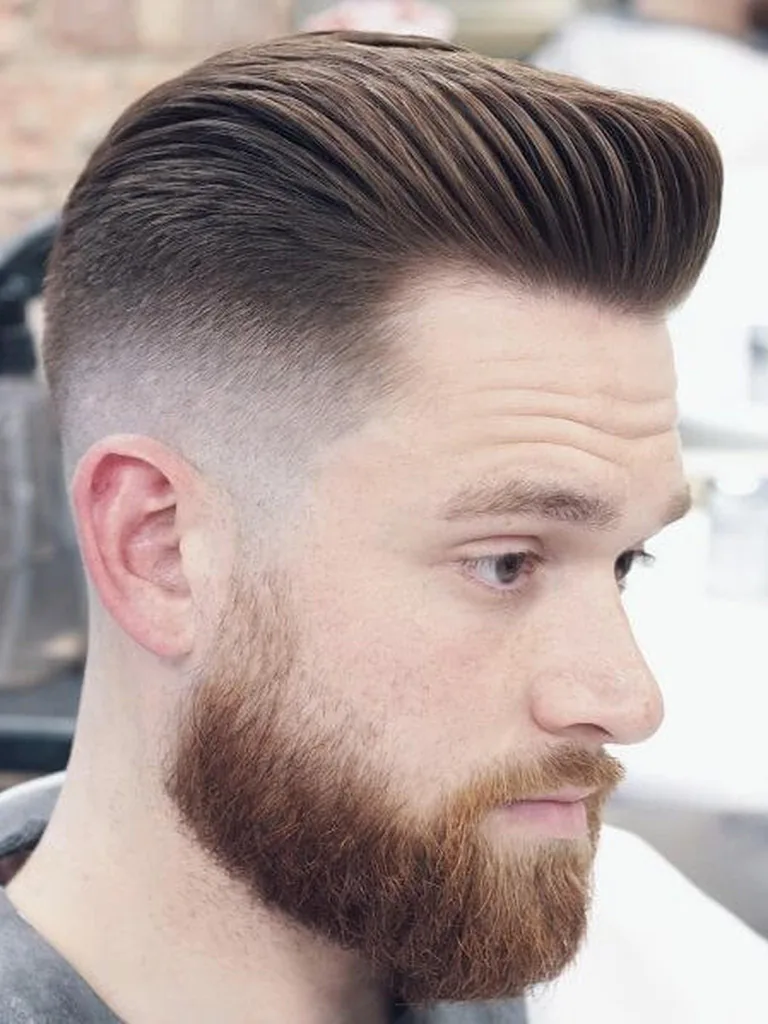
Dry the front upward with a round brush first. Smooth a small amount of pomade through the top after drying. Tell the barber to leave about three inches at the front. Ask for the sides faded to skin. Thick, straight hair holds this height best, because weight supports the sweep. Trim the sides every two weeks, or the tall front starts to outweigh the sides.
13. Coily Curls Taper Fade
Curls form tight, coily shapes about two inches long on top. Definition shows clearly across the crown. Sides are tapered short from just above the ears. Back follows the same taper to a natural neckline. Front curls sit above the brow and keep their round shape. Longer curly tops hide the taper, so this shorter top lets the curls stay the focus.

Scrunch a small amount of light cream through damp curls with fingers. Let the curls air dry for definition. Tell the barber to leave about two inches of curl on top. Ask for the curls to be cut dry, so true length shows after shrinkage. Coily hair holds this shape well, because the curl pattern gives natural volume. Trim every three to four weeks, or the taper loses its clean edge.
14. Wavy Fringe Crop
Waves fall forward in loose strands, with a soft, uneven fringe. Top hair sits about two inches long. Fringe stops just above the brow and moves in separate strands. Sides are tapered short and stay neat around the ears. Back follows the same taper to a natural neckline. Straight fringe crops look flat, while these waves give the front more movement.
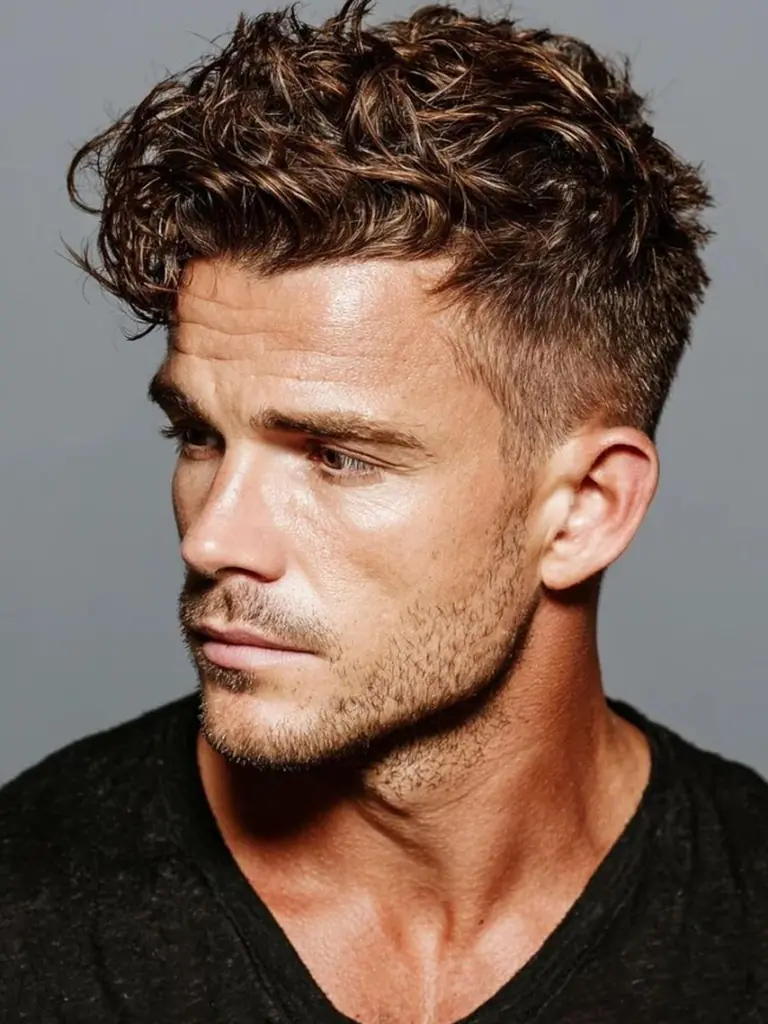
Ask the barber to leave about two inches on top. Point-cut the fringe for movement, and taper the sides low. Mist the hair with sea salt spray. Scrunch the front with fingers while it dries. Wavy hair suits this cut best, since the natural bend shapes the fringe. Trim every three to four weeks, or the fringe grows past the brow and weighs down.
15. Drop Fade Line Up
Fade curves down behind the ear, lower at the back than the front. Top hair sits about an inch long in short, even layers. Layers point forward toward the brow. Front hairline is shaped into a straight, sharp edge with clippers. Back follows the drop fade to a tapered neckline. Straight fades run level, so this drop curve follows the head shape better.
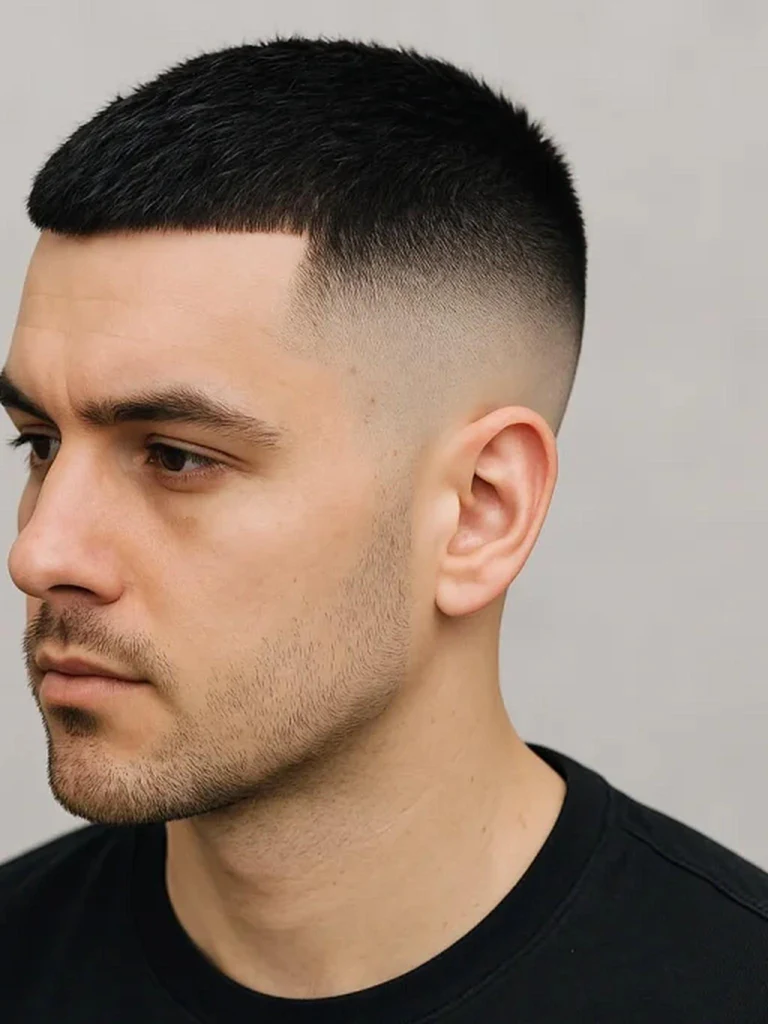
Rub a pea-size amount of matte clay through the top. Push it forward with fingers to shape the front. Tell the barber to start a drop fade behind the ear. Ask for a straight line-up at the front. Straight hair suits this cut well, because the line-up shows clearly. Trim every two weeks, since the line-up grows out fast and the curve loses shape.
16. Burst Fade Spiky Top
Spikes stand up across the crown in short, separate points. Top hair reaches about two inches. Sides fade in a curve around the ear, which is called a burst fade. Back is tapered short to a natural neckline. Front spikes point up and forward, with gaps between the tips. Regular fades run straight, so this burst curve keeps length around the ear.

Work a small amount of matte clay through dry hair. Pinch sections upward with fingertips to form spikes. Tell the barber to leave about two inches on top. Ask for a burst fade around each ear. Straight hair holds spikes best. Thick hair needs thinning at the crown, or the top puffs up. Trim every two to three weeks, or the burst curve fills in and disappears.
17. Temple Fade Slick Back
Smooth top hair sits flat with no part and no fringe. Top hair reaches about three inches and combs straight back. Sides are faded only at the temples, which is called a temple fade. Back is tapered short to a natural neckline. Rest of the sides stays longer than a full fade. Full slick backs fade the whole side, so this version keeps a softer shape around the ears.

Comb a small amount of pomade through damp hair. Brush it straight back with a fine-tooth comb. Tell the barber to leave about three inches on top. Ask for the fade only at the temples. Straight hair holds this shape best, because the back direction lies flat. Trim the temples every two to three weeks, or the sides start to look wide.
18. Short Faux Hawk
Strip runs down the center of the head in a narrow band. Top hair is about two inches long in the strip. Strip is spiked upward, with front spikes taller than back ones. Sides are faded short from the temples. Back follows the same fade to a tapered neckline. Full mohawks shave the sides, while this faux hawk keeps faded sides that blend in.

Pinch the center strip up with fingertips after applying clay. Work a pea-size amount of matte clay through dry hair first. Tell the barber to leave about two inches down the center. Ask for the sides faded from the temples. Straight hair holds the strip best. Fine hair needs a blow dryer to lift the front. Trim every two to three weeks, or the sides grow out and the strip loses shape.
19. Blonde Textured Fringe
Blonde strands fall forward in uneven lengths with a choppy fringe. Top hair sits about two inches long. Fringe stops just above the brow and shows gaps between strands. Sides fade short from the temples. Back follows the same fade to a tapered neckline. Dark fringes hide the texture, while lighter color shows each strand clearly.

Separate the front strands with fingers after applying clay. Rub a small amount of matte clay through dry hair first. Tell the barber to leave about two inches on top. Ask for a mid fade on the sides. Fine hair suits this cut well, because short layers add lift. Bleach can weaken hair, so a professional consultation is wise before lightening the top. Trim every three weeks, or the strands start to clump together.
20. Classic Slicked Back Fade
Rows of hair comb straight back in smooth, even lines. Top hair reaches about three inches from the forehead. Sides fade to skin from the temples down. Back follows the same fade to a tapered neckline. Front hair sits flat, with a slight lift at the hairline. Tapered slick backs keep side length, so this skin fade gives a sharper contrast.

Brush the top straight back with a fine-tooth comb. Comb a small amount of pomade through damp hair first. Tell the barber to leave about three inches on top. Ask for the sides faded to skin. Thick, straight hair holds this shape best, because weight keeps the top flat. Trim the sides every two weeks, or the fade softens and the top looks wide.
21. Level Flat Top
Level crown stands about an inch and a half high and flat. Top hair is cut level from front to back. Sides are faded short from the temples. Back follows the same fade to a tapered neckline. Front edge is straight and square, with no fringe. Rounded tops curve at the crown, so this flat cut shows the straight front edge clearly.
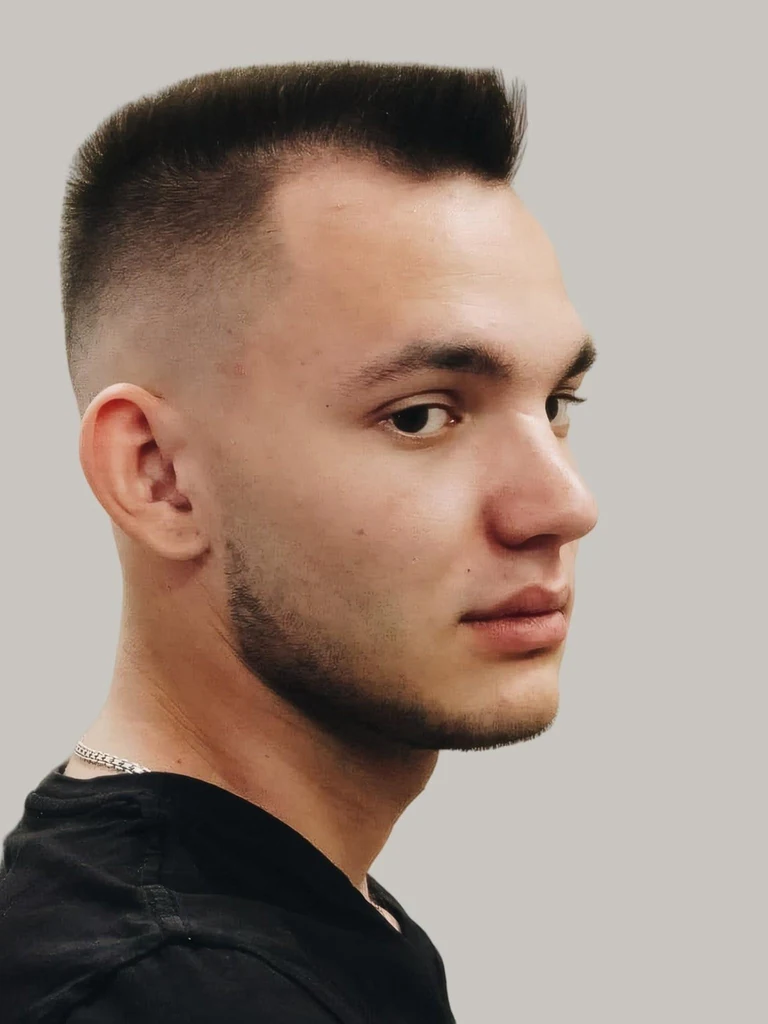
Press the top upward with a flat brush after applying clay. Rub a small amount of matte clay through the top first. Tell the barber to leave about an inch and a half on top. Ask for a mid fade on the sides. Coarse, straight hair holds the flat shape best, because strands stand up on their own. Trim every two weeks, since the flat top loses its level edge fast.
22. Layered Side Sweep
Layers fall in separate strands, with the longest at the front. Top hair reaches about three inches and sweeps to the side. Sides are tapered short and stay neat around the ears. Back is tapered the same way to a natural neckline. One-length sweeps lie flat in one sheet, so these layers give the top more movement.

Sweep the top to the side with a vent brush after washing. Work a small amount of light cream through damp hair first. Tell the barber to leave about three inches on top. Ask for soft layers cut with scissors. Short haircuts for men with layered tops suit straight hair well, because layers fall cleanly without curling. Trim every three to four weeks, or the front layers cover the eyes.
23. Rounded Afro Taper
Dome forms a soft, even shape about two inches high. Coily hair is shaped into a rounded afro on top. Sides are tapered short from just above the ears. Back follows the same taper to a natural neckline. Front edge is rounded and sits above the brow. Longer afros hide the taper, so this compact dome keeps the sides close.

Shape the dome with clippers over a comb, keeping it even. Tell the barber to leave about two inches on top. Ask for a low taper on the sides. Work a small amount of light cream through damp hair with fingers. Let it air dry for definition. Coily hair holds this shape well, because the curl pattern gives natural volume. Trim every three to four weeks, or the dome starts to look wide.
24. Coily Top Skin Fade
Coils form tight, defined curls about an inch and a half long. Definition shows clearly across the crown. Sides blend down to bare skin from the temples. Back follows the same skin fade to a tapered neckline. Front curls sit above the brow and keep their round shape. Coily tops with a taper keep side hair, so this skin fade makes the curls look taller.
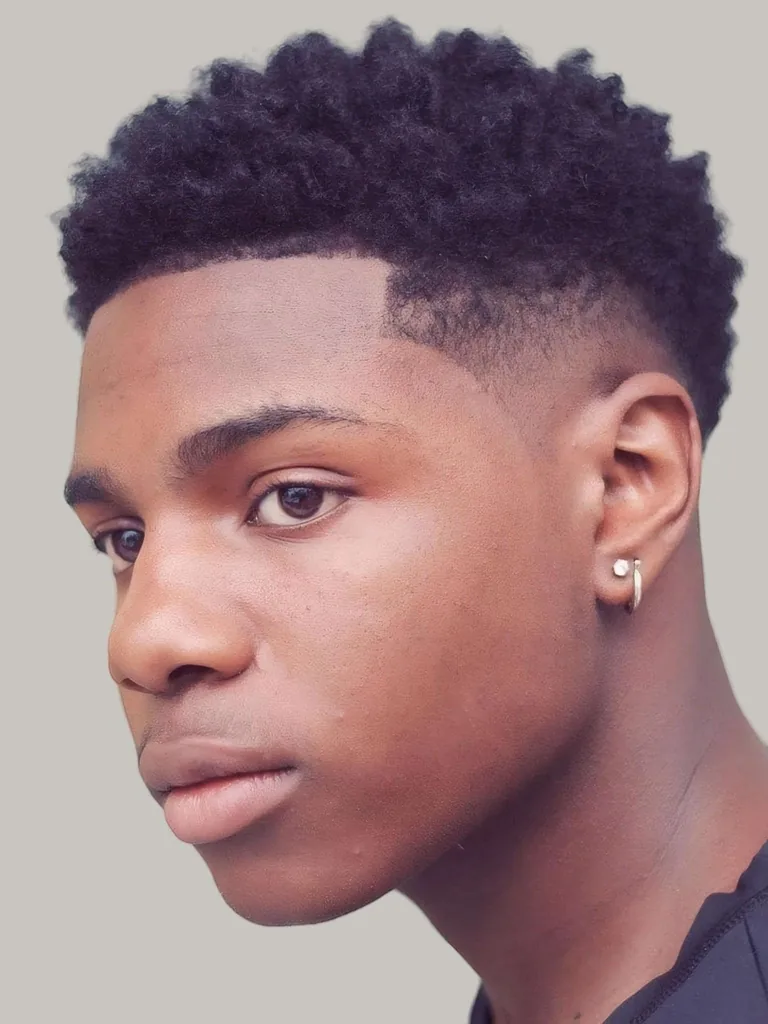
Air dry the curls after applying light cream with fingers. Work a small amount of light cream through damp curls first. Tell the barber to leave about an inch and a half of curl on top. Ask for the curls to be cut dry, so true length shows after shrinkage. Coily hair suits this cut well, because the fade keeps sides neat while curls keep volume. Trim every two to three weeks, or the fade softens.
25. Forward Brushed Crop
Forward brush keeps the top smooth with an even fringe edge. Top hair sits about an inch and a half long. Sides fade short from the temples. Back follows the same fade to a tapered neckline. Front hair stops just above the brow. Textured crops use choppy ends, so this forward brush gives a smoother finish.

Push the top forward with a vent brush after washing. Rub a pea-size amount of matte clay through damp hair first. Tell the barber to leave about an inch and a half on top. Ask for the sides faded from the temples. Straight hair suits this cut well, since the forward direction lies flat. Trim every two to three weeks, or the fringe grows past the brow and blocks the eyes.
26. Disconnected Undercut Crop
Step between top and sides is sharp, with no blend. Top hair reaches about two inches in short, choppy layers. Layers point up and forward from the forehead. Sides are clipped very short, which is called a disconnected undercut. Back follows the same short clipper cut to a tapered neckline. Blended crops fade the join, so this disconnect keeps a clear line.

Pinch the top up and forward with fingertips after applying clay. Work a pea-size amount of matte clay through dry hair first. Tell the barber to leave about two inches on top. Ask for the sides clipped short with no blend. Thick hair holds this shape well, because weight supports the lift. Trim the sides every two weeks, since the sharp step softens fast once sides grow out.
27. Blowout Taper Volume
Volume rises high above the brow and curves forward. Top hair reaches about three inches and is blown out. Front curls sit tall in a rounded shape. Sides are tapered short just above the ears. Back is tapered the same gradual way to a natural neckline. Flat blowouts keep the top low, so this taper lets the tall top stay the focus.
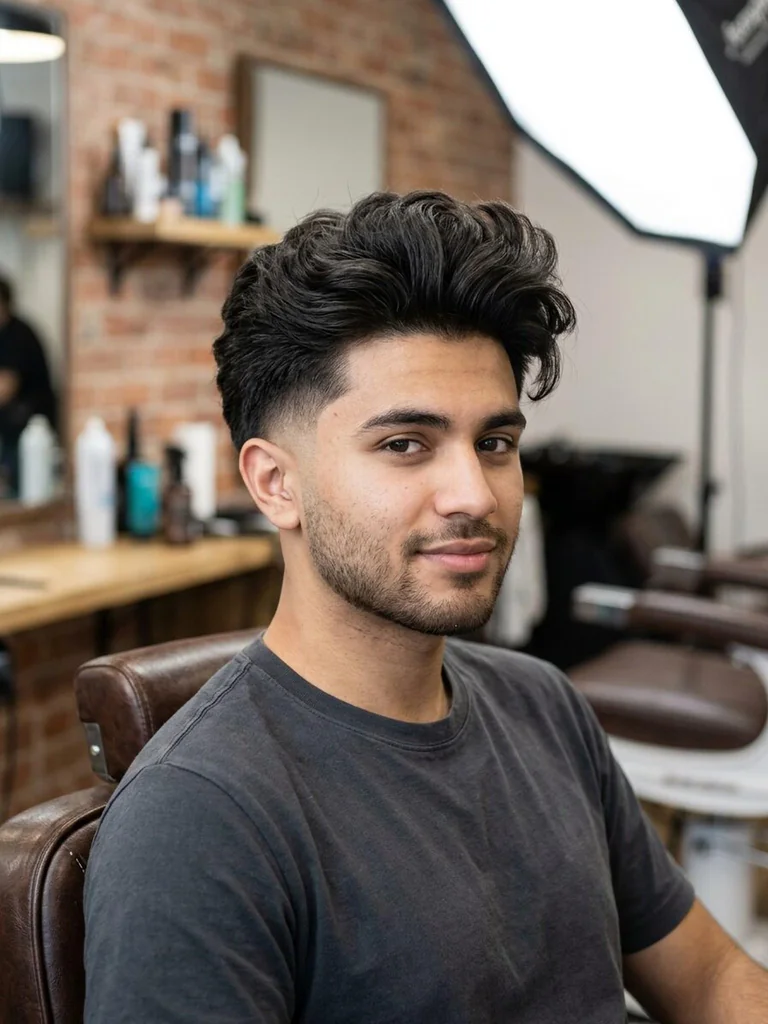
Protect the hair with heat protectant before blow drying. Blow dry the top upward with a round brush. Tell the barber to leave about three inches on top. Ask for a low taper on the sides. Press a small amount of light cream through the curls after drying. Curly hair holds this volume best, because the curl pattern lifts the front. Trim every three to four weeks, or the top starts to look heavy.
28. Faded Mohawk Cut
Narrow strip runs down the center, about two inches wide. Top hair in the strip is about two inches long. Strip is textured and points up, with the front slightly taller. Sides fade to skin from the temples. Back follows the same fade to a tapered neckline. Wide mohawks use a broad strip, so this narrow version keeps the shape compact.

Lift the strip up with fingertips after applying clay. Work a pea-size amount of matte clay through dry hair first. Tell the barber to leave about two inches down the center. Ask for the sides faded to skin. Straight hair holds the strip best. Thick hair needs thinning at the crown, or the top puffs up. Trim every two to three weeks, or the sides grow out and the strip loses shape.
29. Straight Edgar Fringe
Blunt fringe is level across the forehead and stops above the brow. Top is flat and even, with no lift at the crown. Hair on top sits about an inch long and brushes forward. Sides fade to skin from the temples. Back follows the same fade to a tapered neckline. Textured fringes use choppy ends, so this blunt edge gives a sharper front line.

Push the fringe forward with a fine-tooth comb after applying clay. Rub a pea-size amount of matte clay through damp hair first. Tell the barber to leave about an inch on top. Ask for a mid skin fade on the sides. Straight hair suits this cut best, because the blunt edge stays level. Trim every two weeks, since the fringe grows past the brow fast and the edge loses its line.
30. Textured Razor Fade
Razor cut gives fine, soft ends and a lighter finish on top. Top hair reaches about two inches in thin, uneven layers. Layers sweep up and forward from the forehead. Sides fade to skin from the temples. Back follows the same fade to a tapered neckline. Front hair rises above the brow in separate, wispy strands. Scissor texture uses thicker ends, so this razor cut feels lighter.
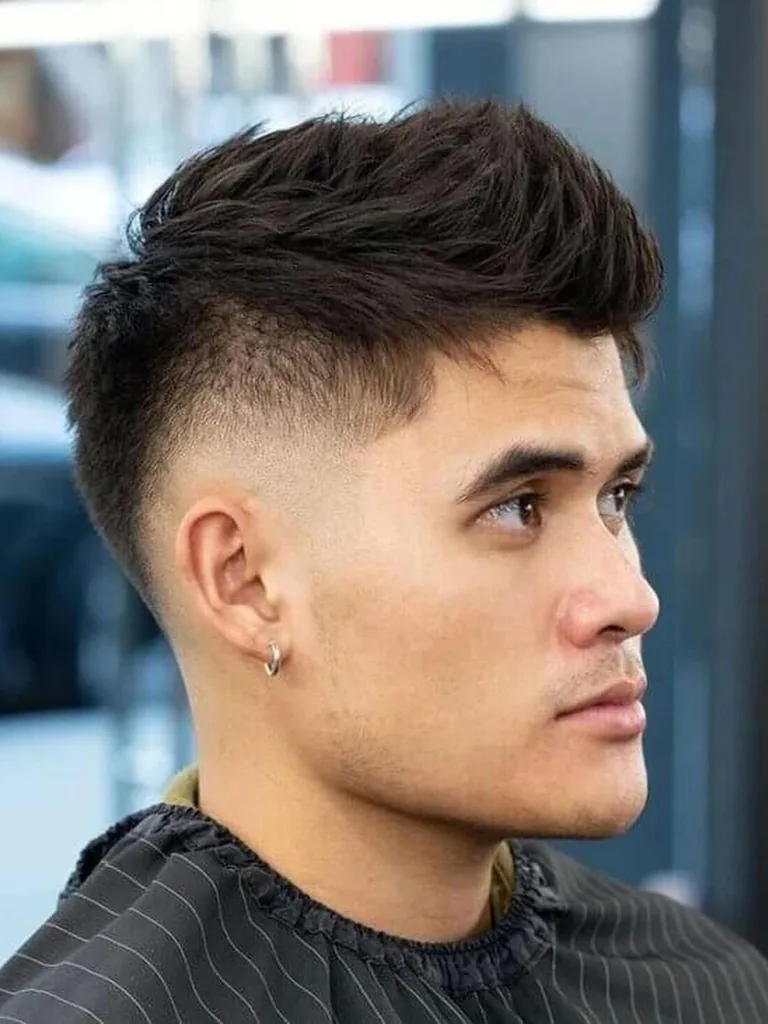
Separate the front strands with fingers after applying clay. Work a pea-size amount of matte clay through dry hair first. Tell the barber to leave about two inches on top. Ask for a mid skin fade on the sides. Fine hair suits this cut well, because razor ends add lift without weight. Short haircuts for men with razor texture need a trim every three weeks. Fine ends grow out uneven, so the sweep starts to fall flat.
Conclusion
Match the top to hair texture first, because that choice shapes every other step. Ask for the fade height by name, then state the top length in inches or by guard number. Use a pea-size amount of matte clay on damp hair, then comb or push it into place. Thick hair needs thinning at the crown, or the top puffs up as it grows. Short haircuts for men stay neat when trims land before the sides cover the ears. Book the next trim at the chair, then save one photo of the cut for the next visit.
About Me
Hi, I am Beck, the voice behind Hairzaa. I share simple, real-life hairstyles, cuts and color ideas that busy women can actually do, because confidence starts in the morning mirror. Every style here is tested in real life first, so you can look beautiful without the fuss.