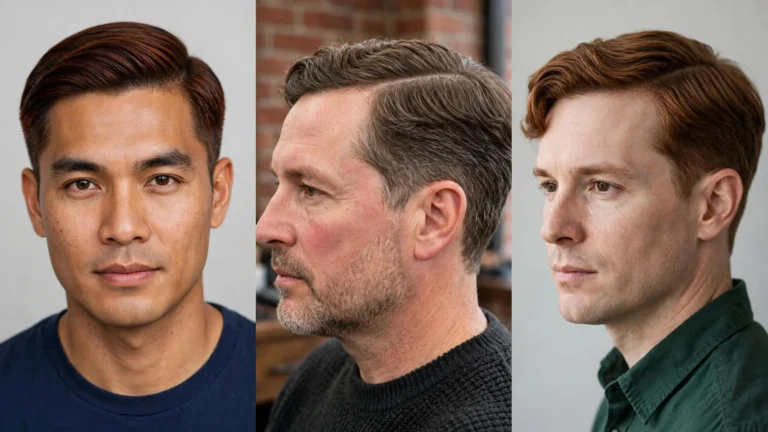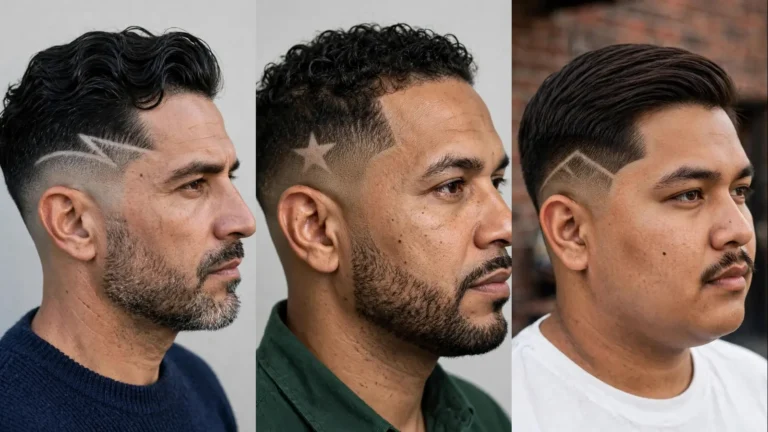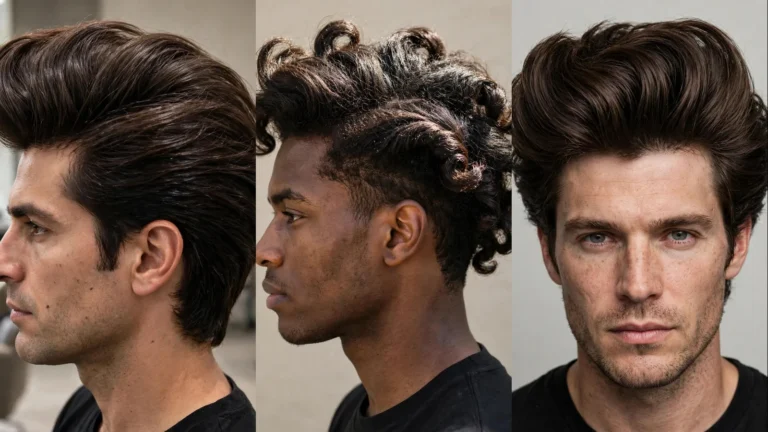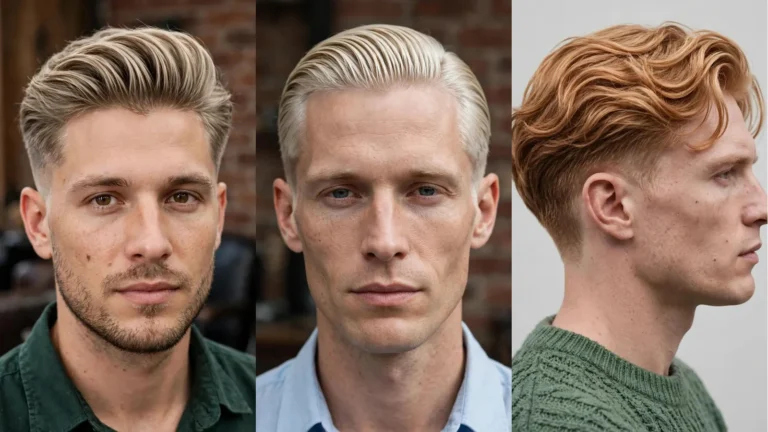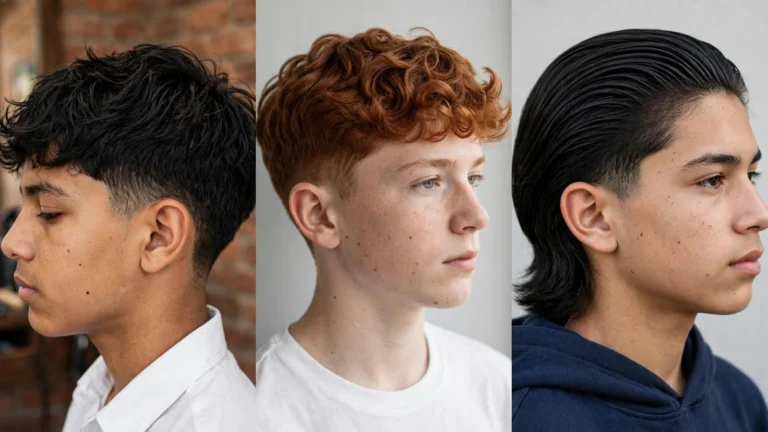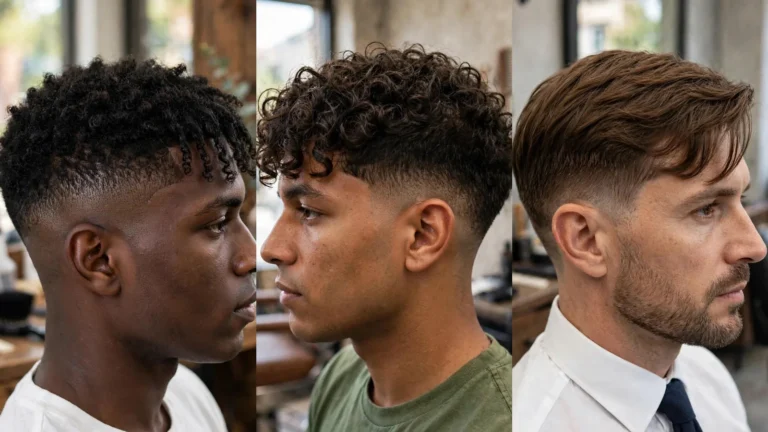
Many men need a comb over haircut that stays tidy through a long workday. Longer hair on top sweeps across to one side, while sides and back stay shorter. Straight and wavy hair hold the shape best. Short sides need a trim every three to four weeks.
Crops, slicked tops, curls, and high sides all sit inside the same range. Texture, shine, and side length shift the result more than length alone. Pick by hair thickness, part side, and how much time goes into morning styling. Side part placement changes the whole shape, so test both sides before a cut.
1. Low Fade Side Sweep
Close sides keep focus on the longer top, where hair sweeps across from a left part. Fade blends hair from very short near the ears to longer hair above. Top length runs near two inches, with enough weight to lie flat. Back tapers into the same short length, and the neckline stays clean and square. Low start sets it apart from a mid fade, which climbs higher toward the temples.

Ask for a low fade with short sides and a gradual blend. Use a number two guard at the bottom, blending up to a number four at the sides. Guard means the clip-on guide that sets clipper length. Leave near two inches on top, with the part on the left. Set part helps a comb over haircut hold shape from wash to wash. Trim sides every two to three weeks, because a fade softens and loses its edge fast.
2. Mid Fade Hard Part
Firm line marks this cut, with top hair swept across from a shaved part line. Hard part means a thin shaved line that marks where the part sits. Mid fade starts around the temples and drops to short hair near the ears. Top holds near three inches, swept flat with a slight lift at the front. Shaved line sets it apart from a soft part, which shows no clear edge.

Rub a small amount of pomade through damp hair, then push the top across from the shaved line. Use fingers first to set direction, then smooth the surface with a brush. Pomade adds hold and a light shine without stiffness. Keep product off the shaved line, because product fills the line and hides the edge. Dry the front upward for a few seconds, so the lift holds through the day.
3. High Skin Fade Sweep
Strong contrast drives this cut, with a long top set against bare sides. Skin fade blends the sides down to bare skin near the ears and neck. High fade starts well above the temples, close to the crown. Top runs near three inches and sweeps back and across in one sheet. High start sets it apart from a low fade, which keeps more hair on the sides.

Book a trim every two weeks, because skin fades show growth sooner than longer sides. Ask the barber to keep the highest blend point near the crown. Wash the top, then dry it back and across while it stays damp. Light cream adds control without shine, which means the top stays soft and moves freely. Check the back in a mirror after two weeks, so the grow-out stays even.
4. Classic Taper Side Part
Gray hair carries this cut, with a neat top swept across from a right part. Top holds near two inches, brushed flat with a slight wave. Taper shortens hair bit by bit toward the neckline and sideburns, keeping some length there. Sides stay longer than a fade, with a soft edge above the ears. Longer sides set it apart from a fade, which drops to very short hair fast.

Gray hair tends to feel coarse, so a light cream softens the top without weight. Rub cream through damp hair, then brush across from the part. Ask for a taper that keeps length at the sideburns, because that length suits a natural hairline. Trim every four weeks, since a taper grows out more gently than a fade. Brush the top each morning, so the part stays in place.
5. Textured Volume Sweep
Lift and broken texture shape this cut, with the top pushed up in loose pieces. Top runs near three inches, cut with short layers that let strands separate. Sides stay short with a soft fade that starts near the temples. Matte finish leaves no shine, which sets it apart from a slicked cut. Volume at the front gives the cut its height, while sides stay flat.
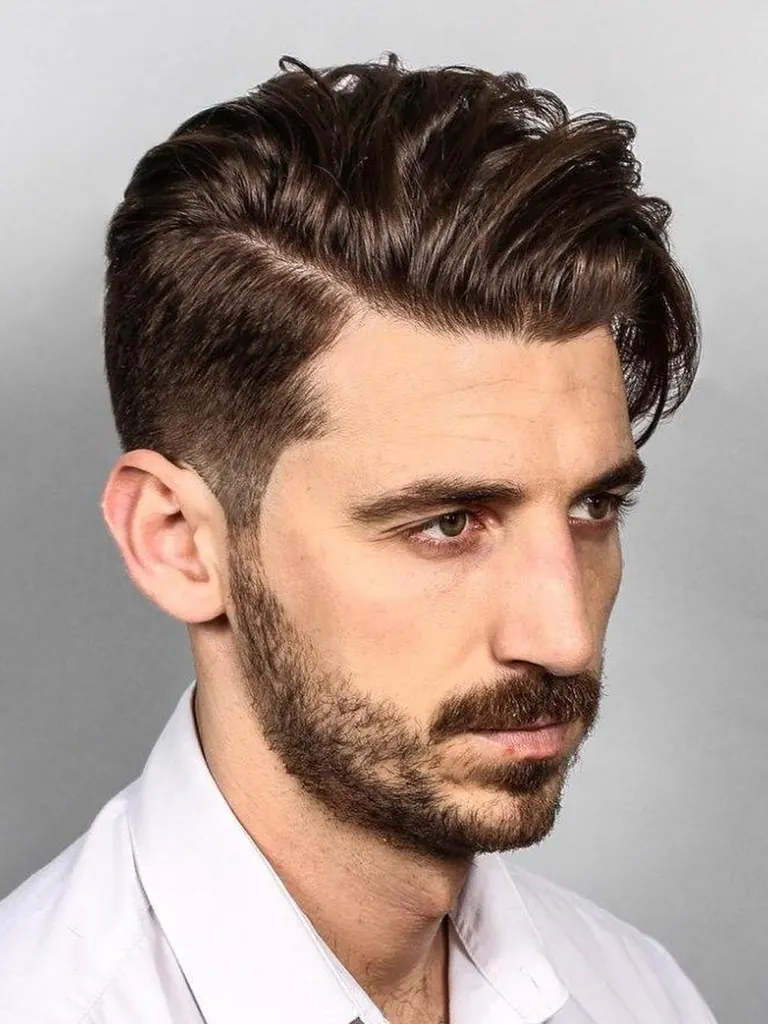
Dry the top upward with fingers, using a heat protectant first to guard against heat damage. Work matte clay through dry hair, then pinch small pieces apart for texture. Clay holds the lift without shine, which means the shape lasts past midday. Start with less product than seems needed, because extra clay weighs the top down. Restyle with damp fingers later, so the cut survives a long day.
6. Slicked Side Sweep
Shine defines this cut, with the top smoothed across from a left part. Top runs near three inches, with strands lying in the same direction. Sides drop to a high fade that starts above the temples. Glossy finish sets it apart from a matte textured cut, which breaks the top into pieces. Flat top and bare sides give the cut its neat, pressed shape.
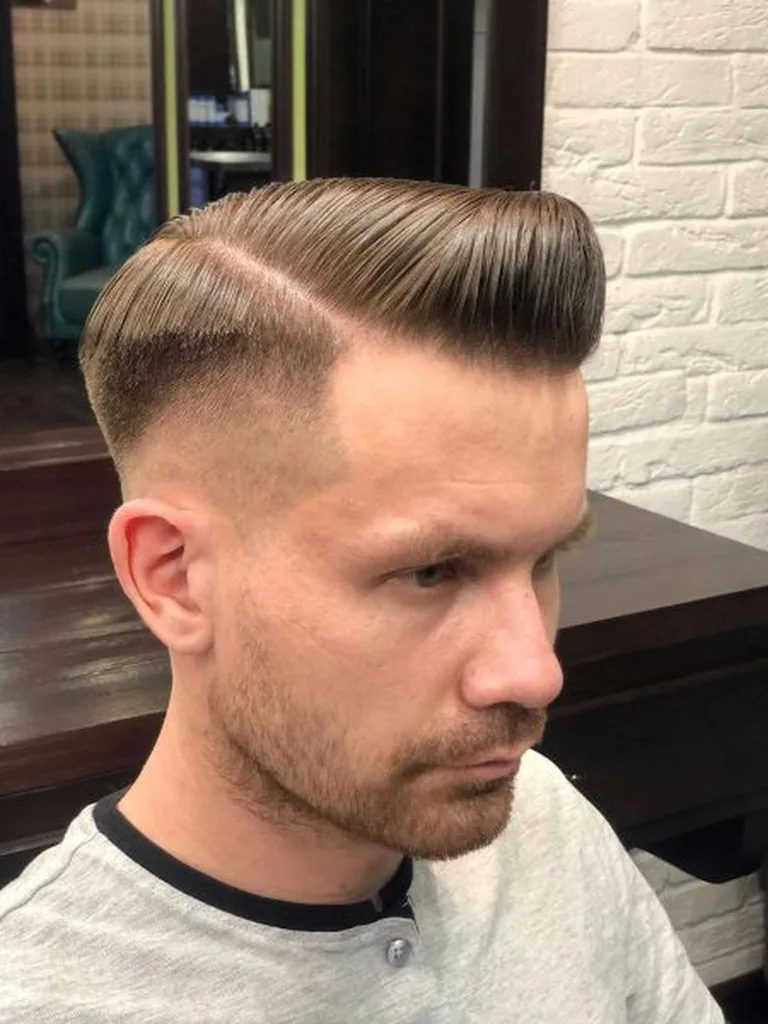
Choose pomade for shine and hold, working it through damp hair from front to back. Push the top across from the part with a brush, then smooth stray strands flat. Pomade keeps the surface glossy, which means the cut holds its shape in wind. Use a small amount first, because too much pomade turns greasy by noon. Rinse product out at night, so buildup stays off the scalp.
7. Pompadour Side Sweep
Height at the front drives this cut, with the top swept up in a tall wave. Pompadour lifts hair high at the front, then sweeps it back and aside. Top runs near four inches at the front, shorter toward the crown. Sides stay short with a soft taper that keeps some length at the sideburns. Tall front sets it apart from a flat side sweep, which keeps the top low.

Blow dry the front upward with a round brush. Use a heat protectant first to guard against heat damage. Work matte clay through the top, then push the front up and across. Clay holds height without shine, which means the wave keeps its shape. Dry the sides flat first, because flat sides make the front look taller. Trim the top every four weeks, so the length stays easy to lift.
8. Undercut Swept Top
Sharp disconnect marks this cut, with a long top set against sides cut to one short length. Undercut keeps the sides and back at one short length, with no blend into the top. Top runs near four inches, swept across from a left part in a smooth sheet. Sudden step between top and sides sets it apart from a faded cut, which blends the two together.

Tell the barber to cut the sides to one guard length with no blending. Ask for a number two guard on the sides and back, keeping the top long. Keep the part in the same place, because the disconnect looks best with a set part. Style with pomade on damp hair, then brush the top across in one direction. Grow the top a little longer, so the sweep gains weight.
9. Short Taper Sweep
Compact top and soft sides shape this cut, with hair swept across from a left part. Top holds near one and a half inches, lying flat with a slight lift at the front. Taper shortens the sides bit by bit toward the neckline, keeping some length at the sideburns. Short top sets it apart from longer sweeps, which need more styling time.

Trim every four to five weeks, because a taper grows out more gently than a fade. Ask for a taper that keeps length at the sideburns and neckline. Work a light cream through damp hair, then brush across from the part. Cream adds light hold without stiffness, which means the short top stays in place. Skip heavy product here, because weight flattens a short top fast.
10. Long Flowing Side Sweep
Length drives this cut, with the top falling across the forehead in a long, smooth sheet. Top runs near five inches, reaching past the brow when brushed forward and across. Sides stay short with a soft taper that keeps length near the ears. Long top sets it apart from a short sweep, which ends above the brow.

Mist sea salt spray through damp hair, then let the top air dry in its swept direction. Spray adds light grip and texture, which means long strands stay separated. Brush the top across while damp, because the direction sets as hair dries. Trim the ends every six weeks, so split ends stay off the sweep. Tie the top back on windy days, so the shape survives the trip.
11. Wavy Textured Sweep
Waves shape this cut, with the top pushed up and across in loose, bending strands. Top runs near three inches, with natural waves left visible instead of brushed flat. Sides stay short with a soft fade that starts near the temples. Visible waves set it apart from a straight textured cut, which shows no bend.

Waves hold this shape with little help, so work light cream through damp hair. Push the top up and across with fingers, then let waves dry in place. Cream adds soft hold without stiffness, which means waves keep their bend. Skip a brush here, because brushing pulls waves flat. Trim the top every five weeks, so the waves keep their shape.
12. Curly Side Part
Curls define this cut, with the top swept across from a left part in soft, round coils. Top holds near three inches, with curls left whole instead of combed flat. Sides stay short with a soft taper that keeps length near the ears. Round curls set it apart from a wavy sweep, which bends in looser arcs.
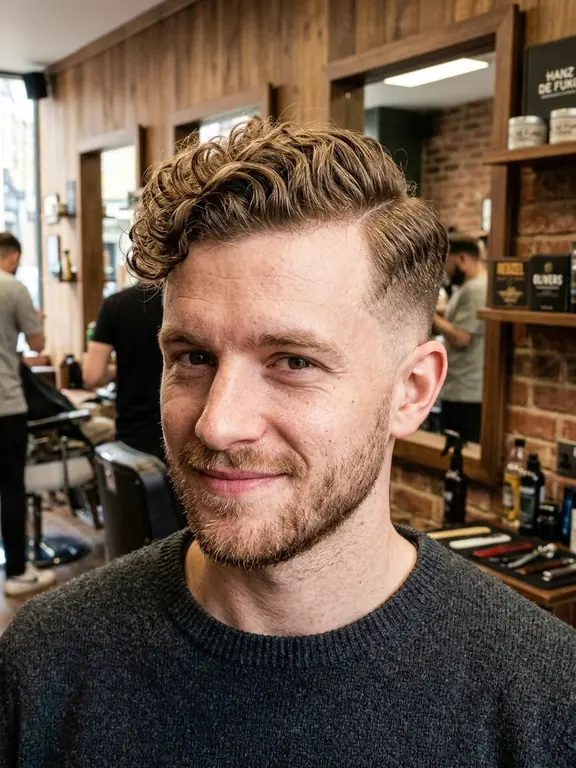
Try a longer curl version next, with the top left a half inch longer for more drop. Ask the barber to cut curls dry, because wet curls shrink as they dry. Work light cream through damp curls, then shape the part with fingers. Cream adds definition and moisture, which means curls stay soft and separate. Avoid brushing dry curls, because brushing breaks the curl shape apart.
13. Short Neat Side Part
Tidy finish marks this cut, with a short top brushed flat from a left part. Top holds near one and a half inches, with strands lying in one direction. Sides stay short with a soft taper that keeps length at the sideburns. Short length sets it apart from longer side parts, which need more product.

Request a number three guard on the sides, blending up to a number four near the top. Leave near one and a half inches on top, with the part on the left. Spread light cream through damp hair, then brush across from the part. Cream adds light hold, which means the short top stays flat all day. Trim every four weeks, because short sides show growth fast.
14. Drop Fade Side Sweep
Curve behind the ear defines this cut, with the fade dipping low at the back. Drop fade curves down behind the ear, so the shortest hair follows the head shape. Top runs near two inches, swept across from a left part in a flat sheet. Dipping curve sets it apart from a straight fade, which keeps the same height all around.
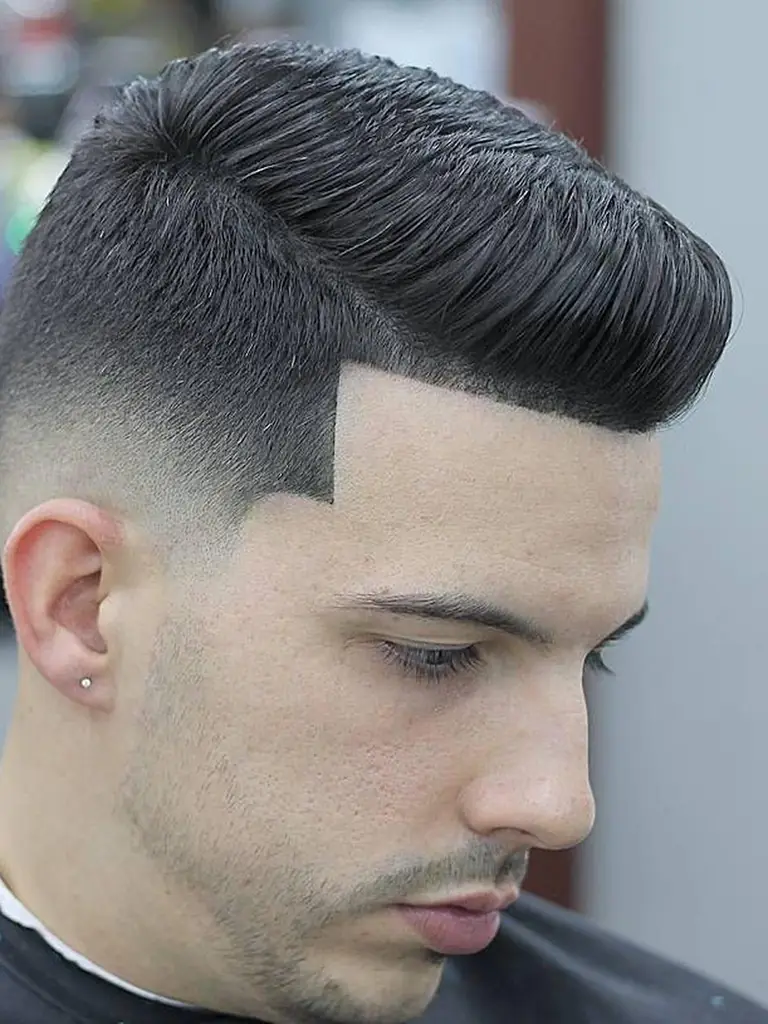
Check the curve in a mirror after the cut. Drop fade hides its shape from the front, because the dip sits at the back. Ask the barber to keep the dip smooth, with no sharp corner behind the ear. Style with pomade on damp hair, then brush the top across from the part. Pomade holds the flat top, which means the curve stays the focus. Book a trim every three weeks, so the dip keeps its shape.
15. Burst Fade Sweep
Arc around the ear shapes this cut, with the fade curving in a half circle behind the ear. Burst fade arcs around the ear, leaving more length at the nape than a straight fade. Top runs near two inches, swept across from a left part with a slight lift. Arc shape sets this comb over haircut apart from a straight mid fade, which drops evenly all around.

Name a burst fade that arcs around the ear, keeping length at the nape. Use a number two guard at the bottom of the arc, blending up to a number four above. Leave near two inches on top, with the part on the left. Work matte clay through dry hair, then push the top across with fingers. Clay holds the lift without shine, which means the arc stays visible.
16. Temple Fade Side Part
Short temples mark this cut, with the fade focused tight around the temples. Temple fade, also called a temp fade, shortens hair only near the temples and sideburns. Top runs near two inches, swept across from a right part in a flat sheet. Focused temples set it apart from a full fade, which shortens the whole side.

Grow the top a little longer next, with near three inches for a heavier sweep. Ask the barber to keep the fade tight to the temples only. Work light cream through damp hair, then brush across from the part. Cream adds light hold, which means the flat top stays smooth. Trim the temples every two to three weeks, because short temple hair shows growth fast.
17. Skin Taper Side Sweep
Smooth finish marks this cut, with the top swept across in a flat, even sheet. Top runs near two inches, brushed flat from a left part with a slight shine. Skin taper blends the sides down to bare skin near the ears, then keeps a little length above. Bare skin at the edges sets it apart from a regular taper, which keeps hair at the sideburns.

Smooth light cream through damp hair, then brush the top across from the part. Cream adds control and a slight shine, which means the flat top stays smooth. Keep the part on the same side each visit, because a set part holds the sweep in place. Ask the barber to blend the taper to skin only near the ears. Trim every two to three weeks, so the skin blend stays sharp.
18. Messy Textured Sweep
Loose strands shape this cut, with the top pushed across in uneven, piecey sections. Top runs near three inches, with ends left ragged instead of cut straight across. Sides stay short with a soft fade that starts near the temples. Loose pieces set it apart from a slicked sweep, which lies flat in one sheet.
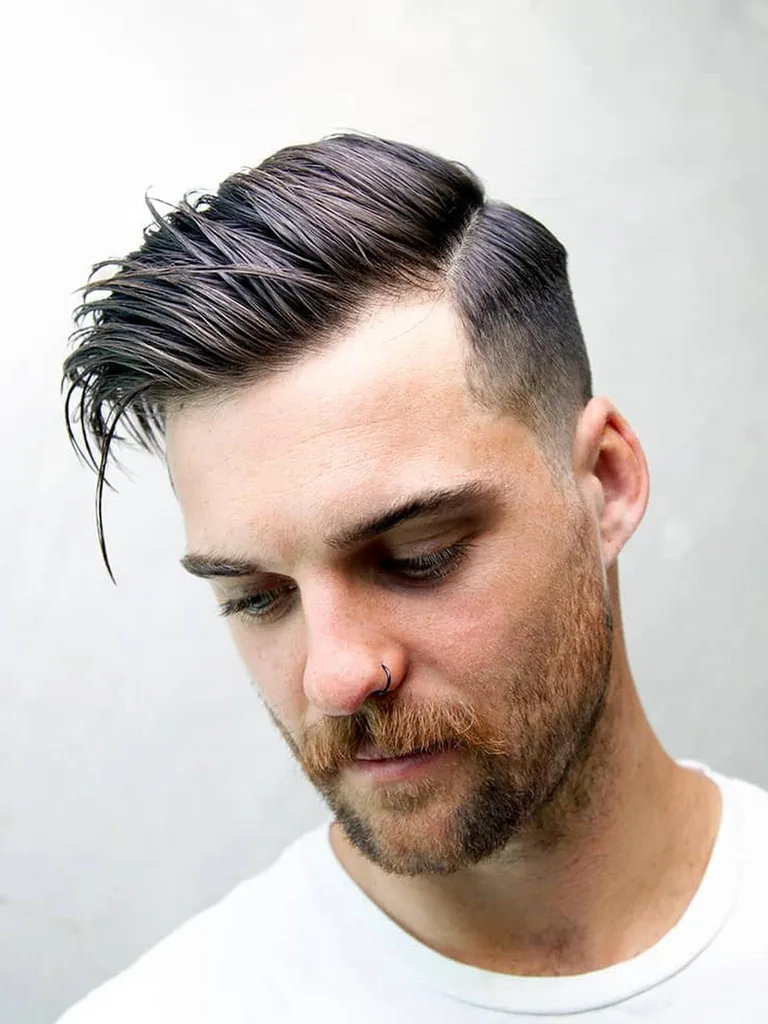
Pick matte clay for hold without shine, working it through dry hair with fingers. Push the top across in sections, then pull a few strands forward at the front. Clay holds loose pieces apart, which means the texture stays visible. Start with a small amount, because extra clay clumps strands together. Restyle with damp fingers later, so the shape lasts through the day.
19. Sharp Line Up Sweep
Straight edges mark this cut, with the hairline cut into crisp, square lines. Line-up cuts a straight edge along the hairline and temples, shaping a sharp border. Top runs near two inches, swept across from a hard part in a flat sheet. Square hairline sets it apart from a natural hairline cut, which keeps the hairline soft.

Book a touch-up every one to two weeks, because a line-up loses its edge as hair grows. Ask the barber to keep the hairline straight, with no rounding at the corners. Style with pomade on damp hair, then brush the top across from the hard part. Pomade holds the flat top, which means the edges stay the focus. Skip shaving the line at home, because one slip cuts the shape uneven.
20. Quiff Side Sweep
Lift at the front drives this cut, with the top swept up and across in a soft wave. Quiff lifts the front hair upward, then sweeps it to one side. Top runs near three inches at the front, growing shorter toward the crown. Front lift sets it apart from a flat side sweep, which keeps the top low.

Raise the front upward with fingers while drying, using a heat protectant first to guard against heat damage. Work matte clay through the top, then push the front up and across. Clay holds lift without shine, which means the quiff keeps its height. Dry the crown flat first, because a flat crown makes the front look taller. Trim the front every four weeks, so the lift stays easy to shape.
21. Low Taper Slick Sweep
Glossy finish marks this cut, with the top smoothed across in a flat, shining sheet. Top runs near two inches, brushed flat from a left part with strands in one direction. Low taper shortens the sides bit by bit, keeping length at the sideburns and neckline. Shine sets it apart from a matte taper cut, which leaves the top dull.

Too much pomade weighs the top down, so start with a small amount on damp hair. Work pomade through the top, then brush across from the part in one direction. Pomade adds shine and hold, which means the flat top stays smooth. Add a little more only if strands lift, because extra product turns greasy fast. Rinse product out at night, so buildup stays off the scalp.
22. Mid Taper Wavy Sweep
Bending strands shape this cut, with the top swept across in soft waves. Top runs near three inches, with waves left visible across the front. Mid taper starts around the temples and shortens the sides bit by bit. Back follows the same taper, and the neckline keeps a natural shape. Soft taper sets it apart from a mid fade, which drops to very short hair fast.

Loose strands hold this shape with little help, so work light cream through damp hair. Push the top across with fingers, then let waves dry in place. Cream adds soft hold, which means waves keep their bend through the day. Ask for a mid taper that keeps length at the sideburns, because that length suits a soft edge. Trim every four weeks, so the taper keeps its shape.
23. High Taper Curly Sweep
Contrast drives this cut, with tight curls on top set against short, tapered sides. Top holds near three inches of tight curls, swept across from a left part. High taper starts near the crown and shortens the sides bit by bit. Back follows the same taper, and the neckline ends clean. Tight curls set it apart from a wavy taper cut, which bends in looser arcs.
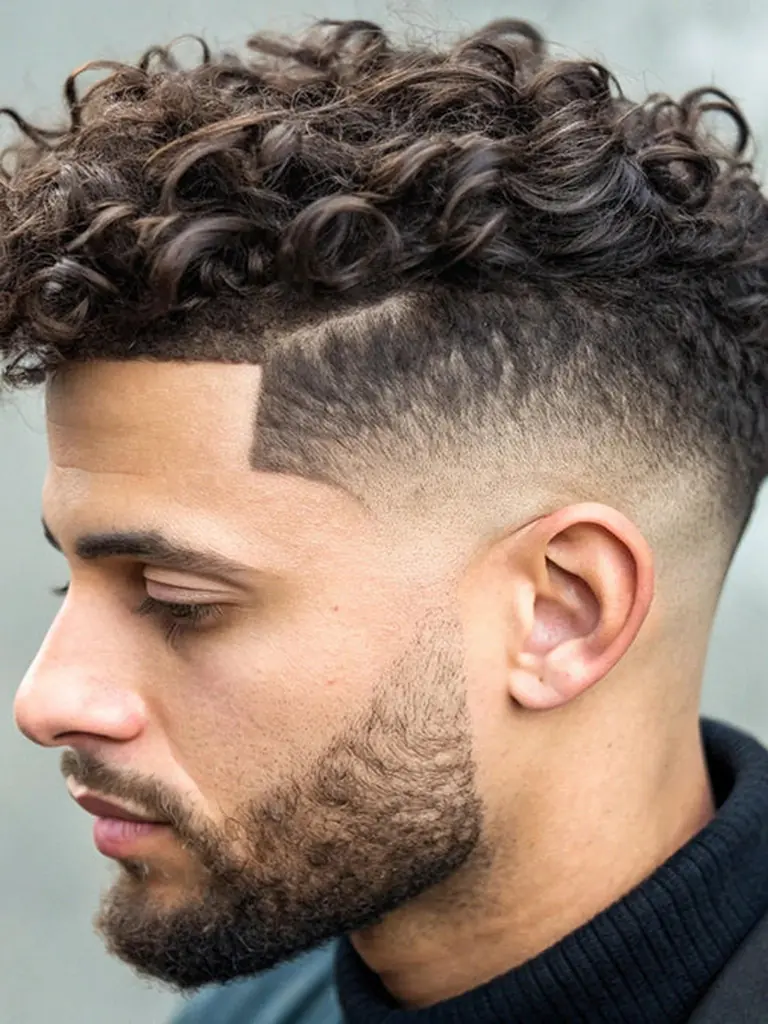
Pick light cream for curls, working it through damp hair with fingers. Shape the part with fingers, then let curls dry in place. Cream adds definition and moisture, which means curls stay soft and separate. Ask the barber to cut curls dry, because wet curls shrink as they dry. Trim the sides every three weeks, so the taper keeps its height.
24. Forward Fringe Sweep
Downward fall marks this cut, with the top brushed down and across the forehead. Top runs near three inches at the front, falling forward over the brow. Sides stay short with a soft taper that keeps length near the ears. Low fringe sets it apart from a swept-back cut, which pushes hair away from the face.
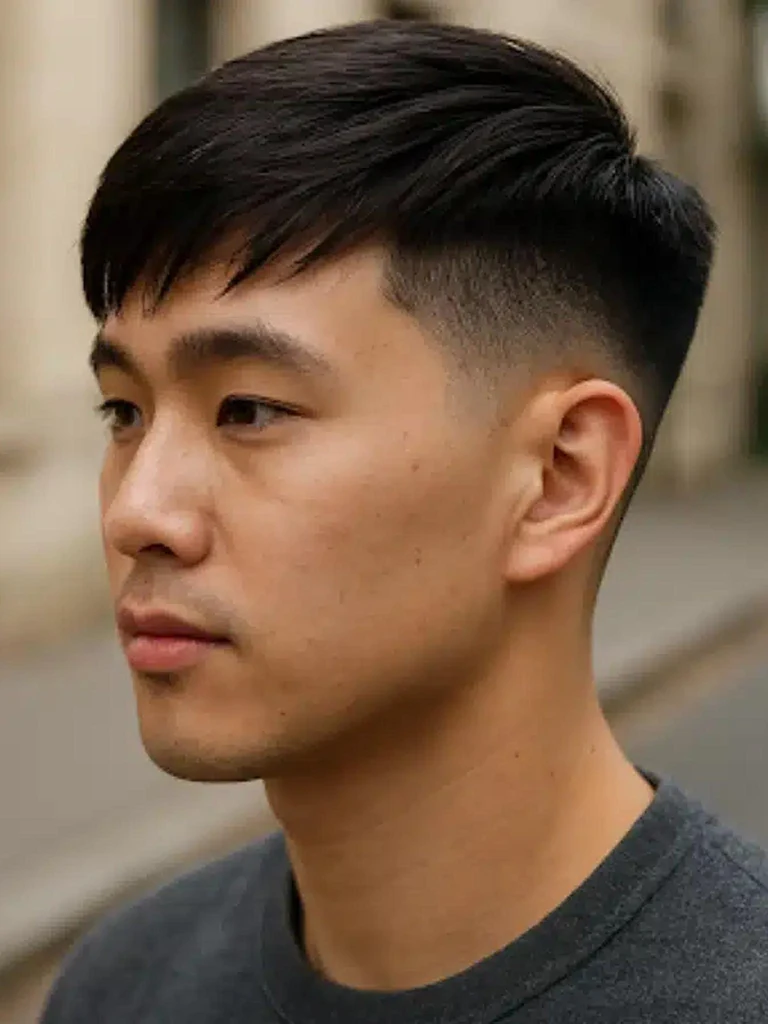
Brush the fringe to the side on some days, for a different shape without a new cut. Ask the barber to keep the front long enough to reach the brow. Smooth light cream through damp hair, then brush the fringe forward and across. Cream adds light hold, which means the fringe stays in place. Trim the front every four weeks, so the fringe stays off the eyes.
25. Swept Back Volume Cut
Direction sets this cut apart, with the top pushed back from the face instead of across. Top runs near four inches, swept straight back with volume at the front. Sides stay short with a soft taper that keeps length at the sideburns. Backward sweep sets it apart from a side part cut, which brushes hair across the head.

Leave near four inches on top, with the sides tapered and the back kept short. Tell the barber the top goes straight back, with no part. Work matte clay through damp hair, then push the top back with fingers. Clay holds volume without shine, which means the sweep keeps its height. Dry the front upward first, because lift at the front shapes the whole cut.
26. Textured Fade Side Part
Broken texture marks this cut, with the top cut into short, separated pieces. Top runs near two inches, with point cutting used to break up weight. Point cutting snips into the ends with the scissor tips, so strands separate. Sides drop to a mid fade that starts around the temples. Separated pieces set it apart from a smooth side part, which lies flat in one sheet.
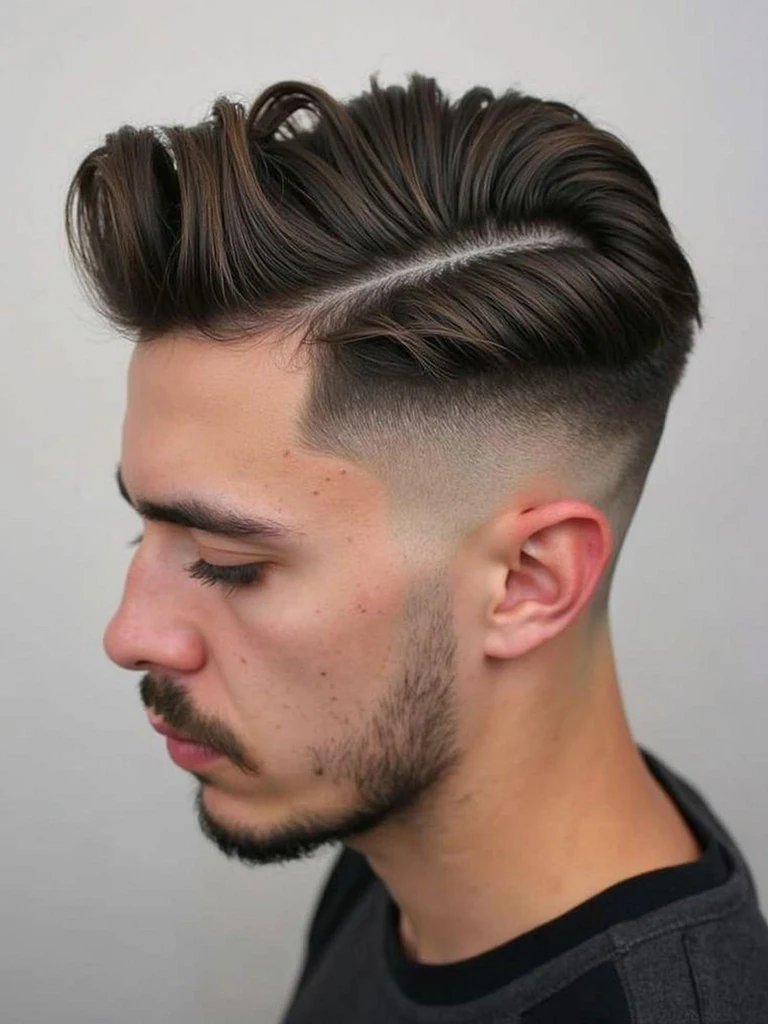
Mist sea salt spray through damp hair, then push the top across with fingers. Spray adds light grip and texture, which means pieces stay separated. Dry the top with fingers, because a brush smooths the texture flat. Ask the barber for point cutting on the ends, so the top keeps its broken shape. Trim every four weeks, so the ends stay light.
27. Thick Hair Side Sweep
Weight drives this cut, with a thick top swept across in a full, heavy sheet. Top runs near three inches, with thick strands lying flat from a left part. Sides stay short with a soft taper that keeps length near the ears. Thick top sets it apart from a fine hair sweep, which needs lift to hold shape.

Heavy hair needs weight removed, so ask the barber for texturizing on the top. Texturizing thins small sections, so thick hair moves more freely. Ask for point cutting on the ends too, because blunt ends make thick hair sit heavy. Work matte clay through dry hair, then push the top across with fingers. Trim every four weeks, so the top stays light.
28. Feathered Side Sweep
Soft ends mark this cut, with the top brushed across in light, feathered layers. Top runs near three inches, with ends cut to taper off instead of ending blunt. Sides stay short with a soft fade that starts near the temples. Feathered ends set it apart from a blunt side sweep, which ends in a straight line.
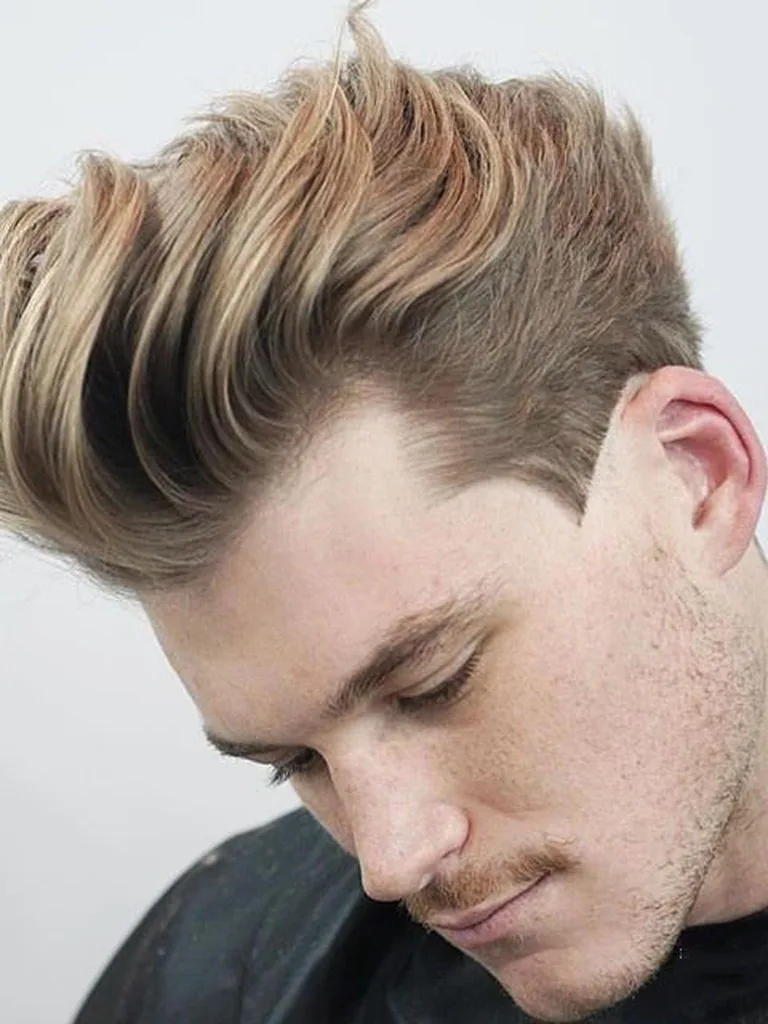
Brush the top across while drying, using a heat protectant first to guard against heat damage. Lift the roots as hair dries, because lift at the roots keeps the sweep from lying flat. Rub light cream through the ends, then brush across from the part. Cream adds soft hold, which means feathered ends stay separated. Trim the ends every five weeks, so the feathered shape stays light.
29. Disconnected Side Sweep
Sharp step marks this cut, with a long top set against sides cut much shorter. Top runs near four inches, swept across from a hard part in a smooth sheet. Sides stay at one short length, with a clear line where top meets side. Clear step sets it apart from a faded sweep, which blends top and sides together.
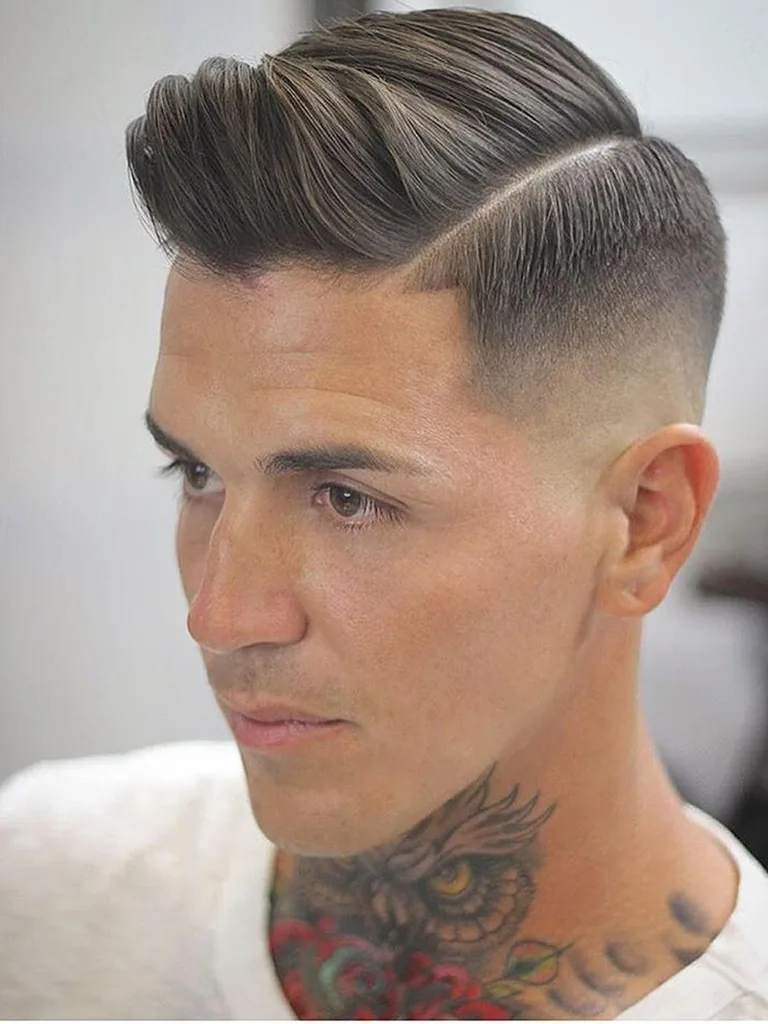
Trim the sides every two weeks, because the step looks uneven as sides grow. Ask the barber to keep the line between top and sides crisp. Work pomade through damp hair, then brush the top across from the hard part. Pomade holds the smooth top, which means the step stays the focus. Grow the top longer, so the sweep gains weight over time.
30. Graduated Side Sweep
Gradual blend marks this cut, with the sides moving step by step from short to long. Top runs near two inches, swept across from a left part in a flat sheet. Sides blend upward in small steps, with no clear line between lengths. Step-by-step blend sets it apart from a sharp fade, which drops fast to short hair.
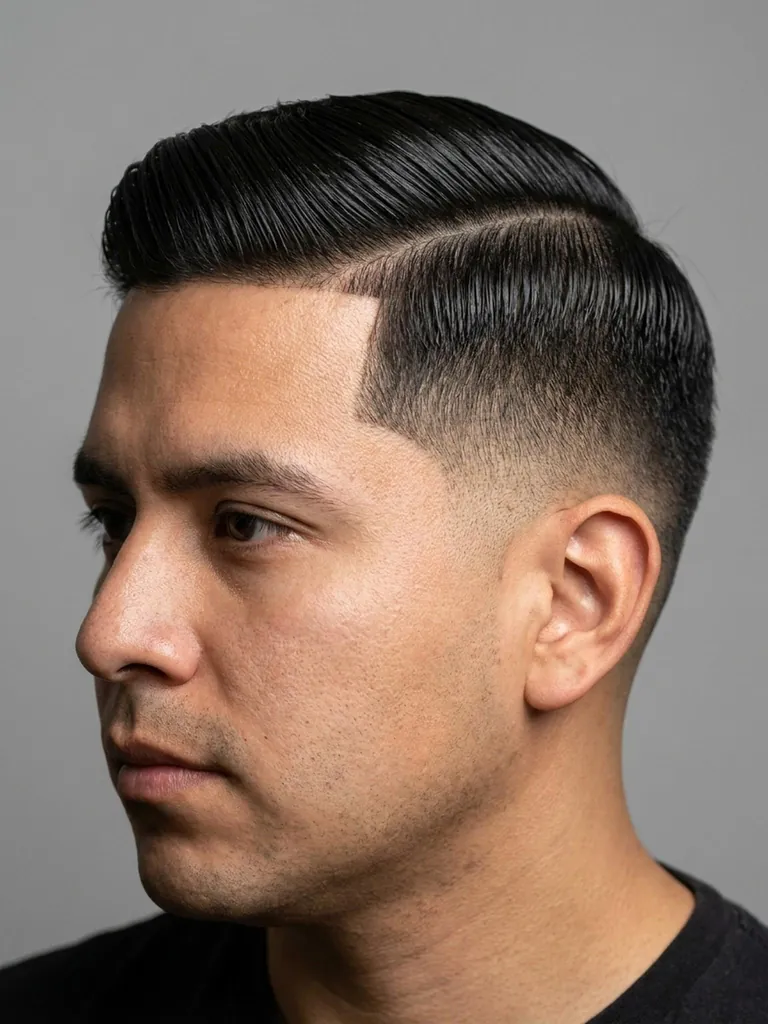
Request a graduated blend with the guard stepped up one number at a time. Start with a number two guard at the bottom, then a number three, then a number four above. Leave near two inches on top, with the part on the left. Work light cream through damp hair, then brush across from the part. Cream adds light hold, which means the flat top stays smooth all day.
Conclusion
Side part placement and fade height decide most of the result. Ask for the guard number and fade start by name, so each visit repeats the same shape. Matte clay holds texture without shine, while a light cream suits smoother tops best. Sides stay neat when a comb over haircut gets a trim every three to four weeks. Rushing the blow dry leaves the part soft, so dry hair fully before any product goes on. Book a trim, name the fade height at the chair, and keep the part side the same.
About Me
Hi, I am Beck, the voice behind Hairzaa. I share simple, real-life hairstyles, cuts and color ideas that busy women can actually do, because confidence starts in the morning mirror. Every style here is tested in real life first, so you can look beautiful without the fuss.